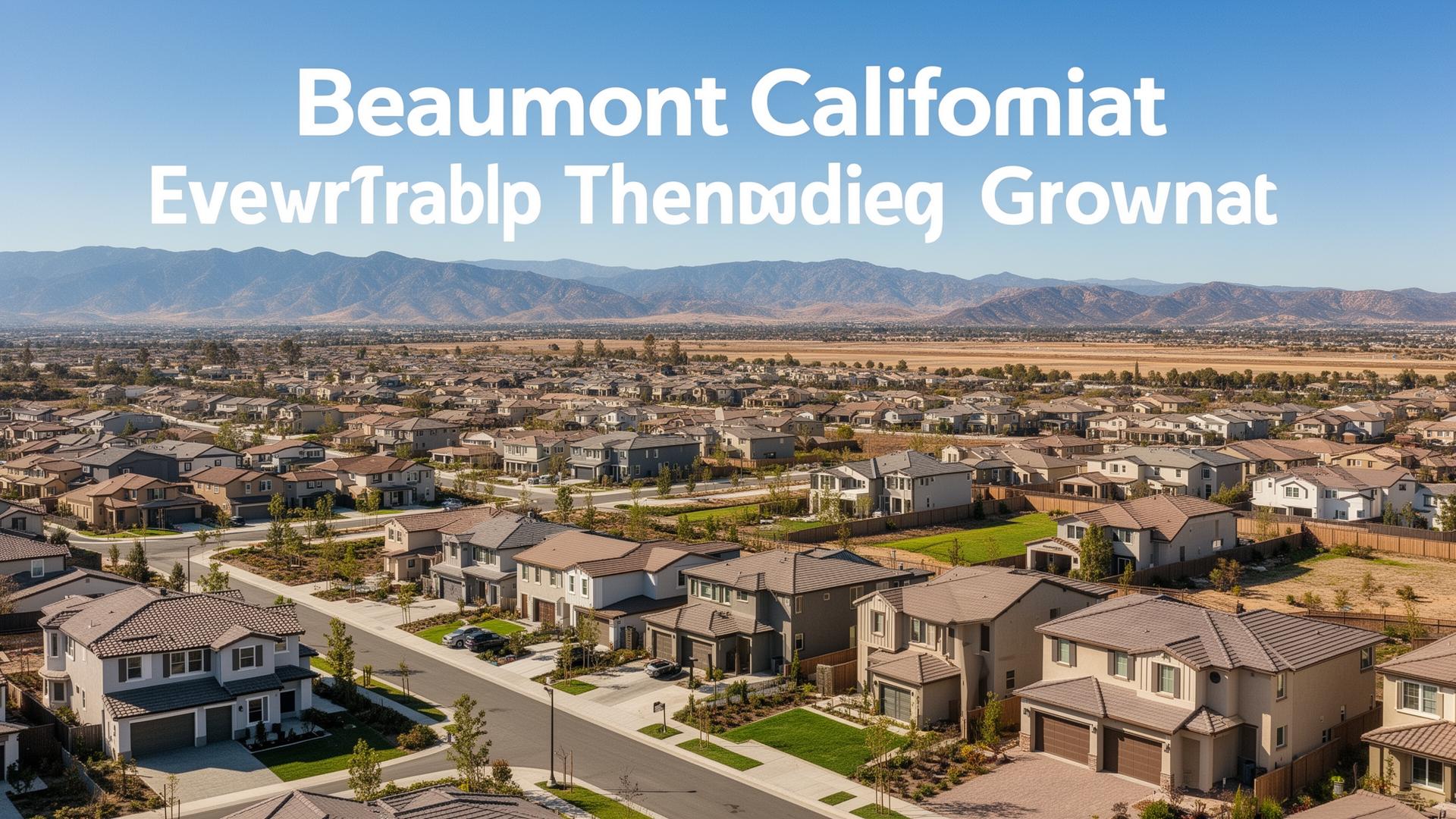
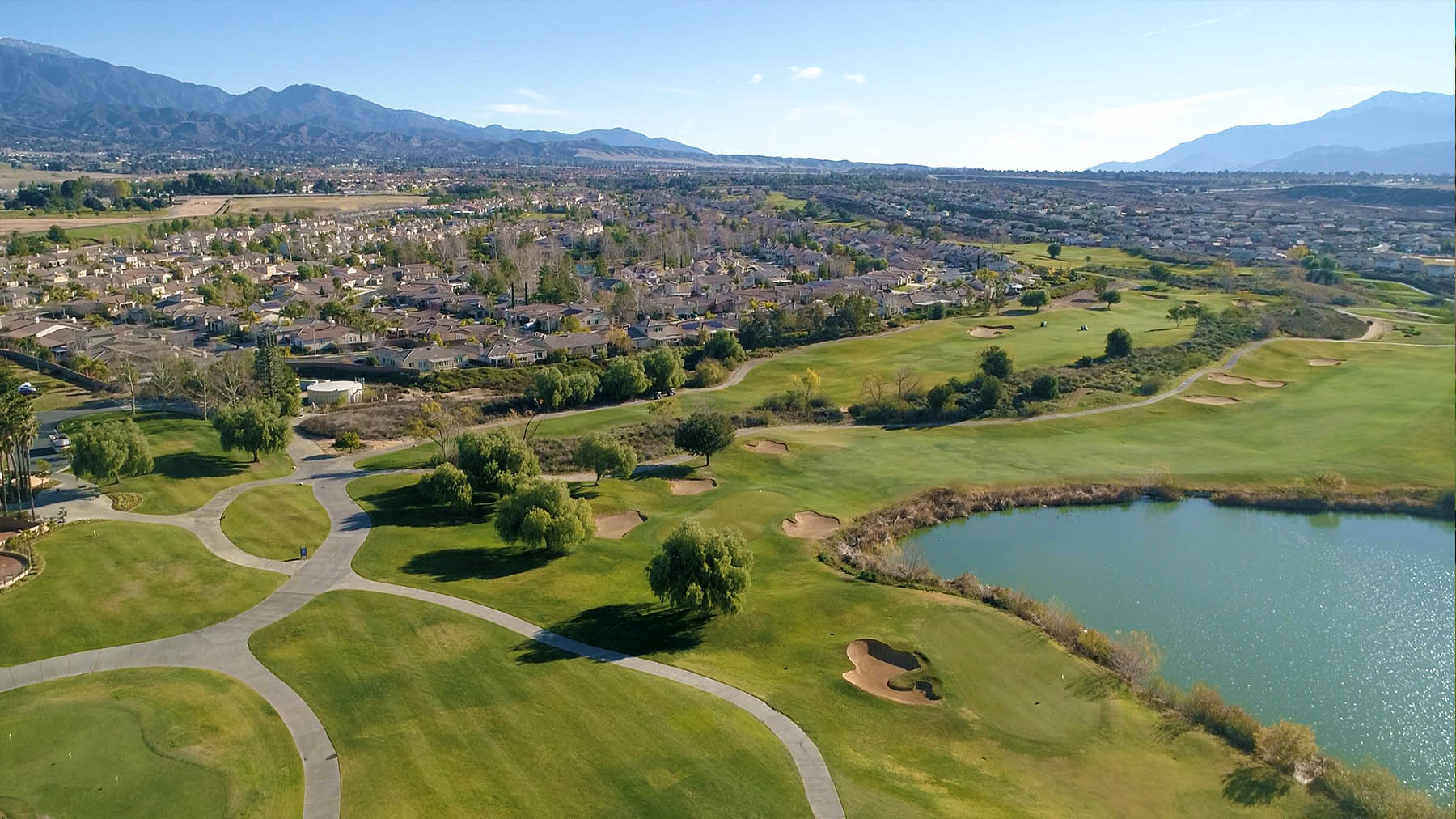
Nestled at the summit of the pass between the San Gorgonio and San Jacinto mountain ranges in Riverside County, Beaumont, California, functions as a rapidly growing suburban hub that balances historical small-town roots with modern residential expansion. Known for its elevated topography, cooler climate relative to lower desert basins, and strategic location along Interstate 10, the city attracts families, commuters, and retirees seeking relatively accessible housing within the Inland Empire region.
Geographical Setting and Climate
Beaumont sits at an elevation of approximately 2,600 feet, which significantly distinguishes its climate and environmental profile from neighboring communities in the Coachella Valley or the western end of the Inland Empire. This high-elevation positioning creates a Mediterranean climate characterized by warm, dry summers and cool, occasionally chilly winters.
Elevation and Topography
The city's altitude yields microclimatic conditions that often feature lower average temperatures and less humidity than lower-lying desert areas. Strong winds frequently sweep through the San Gorgonio Pass, a natural gap between towering peaks that channels air currents between the coastal basin and the desert. Residents experience distinct seasonal changes, including occasional winter frost and, on rare occasions, light snowfall, contrasting sharply with coastal Southern California norms.
Surrounding Infrastructure and Access
Geographically, Beaumont serves as a crucial gateway between the Inland Empire and the desert communities to the east. Interstate 10 runs directly through the area, providing primary arterial access westward toward San Bernardino, Los Angeles, and Orange County, and eastward toward Palm Springs and the Coachella Valley. State Route 60 also converges nearby, offering alternative commuting routes toward Riverside and Los Angeles.
Historical Evolution and Growth
The area now known as Beaumont has transformed from a stagecoach stop and agricultural settlement into a sprawling master-planned residential community. Understanding its trajectory requires examining its agricultural origins and the modern real estate booms that reshaped its boundaries.
Early Foundations and Incorporation
Before European settlement, the region was inhabited by the Cahuilla and Serrano indigenous peoples, who utilized the pass for trade and seasonal migration. In the mid-19th century, the site emerged as a stopping point for travelers along the Bradshaw Trail and the Southern Overland Mail route. Originally named San Gorgonio, the settlement was later renamed Beaumont—meaning "beautiful mountain" in French—by investors who purchased the land in the late 1880s to capitalize on its scenic vistas and agricultural potential.
Agricultural Era and the Railroad
The expansion of the Southern Pacific Railroad through the pass catalyzed early economic development, enabling local farmers to ship deciduous fruits, particularly apples, cherries, and almonds, to broader markets. Beaumont established a reputation as a prominent apple-producing region, celebrating this heritage with annual festivals. However, twentieth-century shifts in water availability, real estate economics, and regional development gradually shifted the local economy away from agriculture toward commerce and residential housing.
Modern Urban Expansion
Over the past three decades, Beaumont has evolved from a quiet rural town into one of the fastest-growing municipalities in Riverside County. Master-planned communities, such as Tournament Hills and Solera, introduced thousands of single-family homes, attracting buyers priced out of coastal Southern California markets. This rapid population growth necessitated substantial investments in local infrastructure, schools, and commercial retail centers along Second Street and the Interstate 10 corridor.
Demographics and Community Profile
Beaumont’s population has expanded dramatically since the turn of the twenty-first century, drawing a diverse mix of working professionals, young families, and active adults.
Population Trends
According to the United States Census Bureau and local municipal data, Beaumont’s population surged from fewer than 12,000 residents in 2000 to over 50,000 residents in subsequent decades. This expansion reflects broader demographic shifts within the Inland Empire, where relative housing affordability compared to Los Angeles and Orange counties drove continuous suburban migration.
Housing and Neighborhoods
The housing stock in Beaumont is predominantly modern, featuring single-family detached homes built within master-planned neighborhoods. Many developments incorporate community amenities such as parks, walking trails, and clubhouses. Additionally, the city hosts prominent 55-plus active adult communities, making it a favored destination for retirees seeking managed neighborhoods with golf courses and social programming.
Economy, Employment, and Infrastructure
While Beaumont functions largely as a bedroom community for commuters traveling to employment centers in San Bernardino, Riverside, and the western Inland Empire, local economic drivers continue to evolve.
Commuting Patterns and Regional Employment
A significant portion of the resident workforce commutes outside city limits. Major regional employment hubs include logistics and distribution centers in Moreno Valley and Redlands, healthcare systems in San Bernardino and Loma Linda, and government offices in Riverside. Interstate 10 serves as the primary artery for these daily commutes, though traffic congestion during peak hours remains a notable consideration for residents.
Local Commerce and Services
Within Beaumont, retail and service sectors concentrate along major thoroughfares like Beaumont Avenue (State Route 79) and Second Street. Major grocery chains, national dining franchises, and local businesses provide daily conveniences. The city government actively encourages commercial development to improve the local jobs-to-housing balance and reduce outward commuting dependency.
Municipal Services and Community Amenities
Local governance and infrastructure are managed to support the expanding population while maintaining public safety and recreational opportunities.
City Government and Public Safety
Beaumont operates under a council-manager form of government, with an elected city council appointing a professional city manager to oversee municipal operations. Public safety services are provided through local police and fire departments, with fire protection integrated into the Riverside County Fire Department framework in cooperation with Cal Fire.
Parks, Recreation, and Schools
The Beaumont Unified School District oversees public education, operating multiple elementary schools, middle schools, and comprehensive high schools to accommodate the growing student population. For recreation, the city maintains numerous neighborhood parks, sports fields, and a community center. The nearby San Bernardino National Forest and local regional parks offer outdoor activities such as hiking, camping, and wildlife viewing.
Comparative Overview of Living in Beaumont, CA
To evaluate Beaumont against broader regional alternatives, prospective residents and analysts examine several core livability factors.
| Feature | Beaumont, CA | Coastal Southern California | Coachella Valley |
|---|---|---|---|
| Median Housing Cost | Moderate relative to coastal metros | High to very high | Moderate to high |
| Climate | Four distinct seasons, breezy, cooler summers | Mild year-round coastal temperatures | Extremely hot summers, mild winters |
| Primary Economy | Commuter-based, local retail, logistics proximity | Diverse corporate, tech, entertainment, trade | Tourism, hospitality, healthcare, agriculture |
| Elevation | ~2,600 feet (Mountain pass summit) | Sea level to low elevation | Below sea level to low desert floor |
| Development Style | Master-planned communities, suburban growth | Dense urban, established older suburbs | Resort-style, master-planned, golf communities |
Frequently Asked Questions
What is the weather like in Beaumont, CA?
Beaumont features a Mediterranean climate with warm, dry summers and cool winters. Because of its elevation at roughly 2,600 feet, temperatures are typically milder during summer than in the nearby desert or low inland valleys. Strong winds are common due to its location in the San Gorgonio Pass.
Is Beaumont considered a good place for commuters?
Beaumont is a popular choice for commuters working in the Inland Empire, such as Riverside, San Bernardino, and Redlands, via Interstate 10 or State Route 60. However, commuting further west into Los Angeles or Orange County involves significant driving distances and heavy peak-hour traffic through the pass.
What types of housing are available in Beaumont?
The housing market consists largely of single-family homes in master-planned communities. The city also features specialized active adult and senior living communities equipped with recreational amenities, golf courses, and community clubhouses.
How has Beaumont's population changed recently?
Beaumont has experienced rapid residential growth over the past two decades, transforming from a small agricultural town into a thriving municipality with over 50,000 residents. This expansion has driven continuous development in local retail, schools, and infrastructure.
Practical Next Steps for Prospective Residents
Individuals considering a move to Beaumont should evaluate daily commute routes during peak traffic hours to understand travel times to target workplaces. Visiting local neighborhoods during different times of the week helps gauge wind conditions, traffic flow, and community atmosphere. Reviewing school district boundaries and local property tax rates—including standard Mello-Roos community facility district assessments common in master-planned developments—ensures comprehensive financial planning before purchasing property.