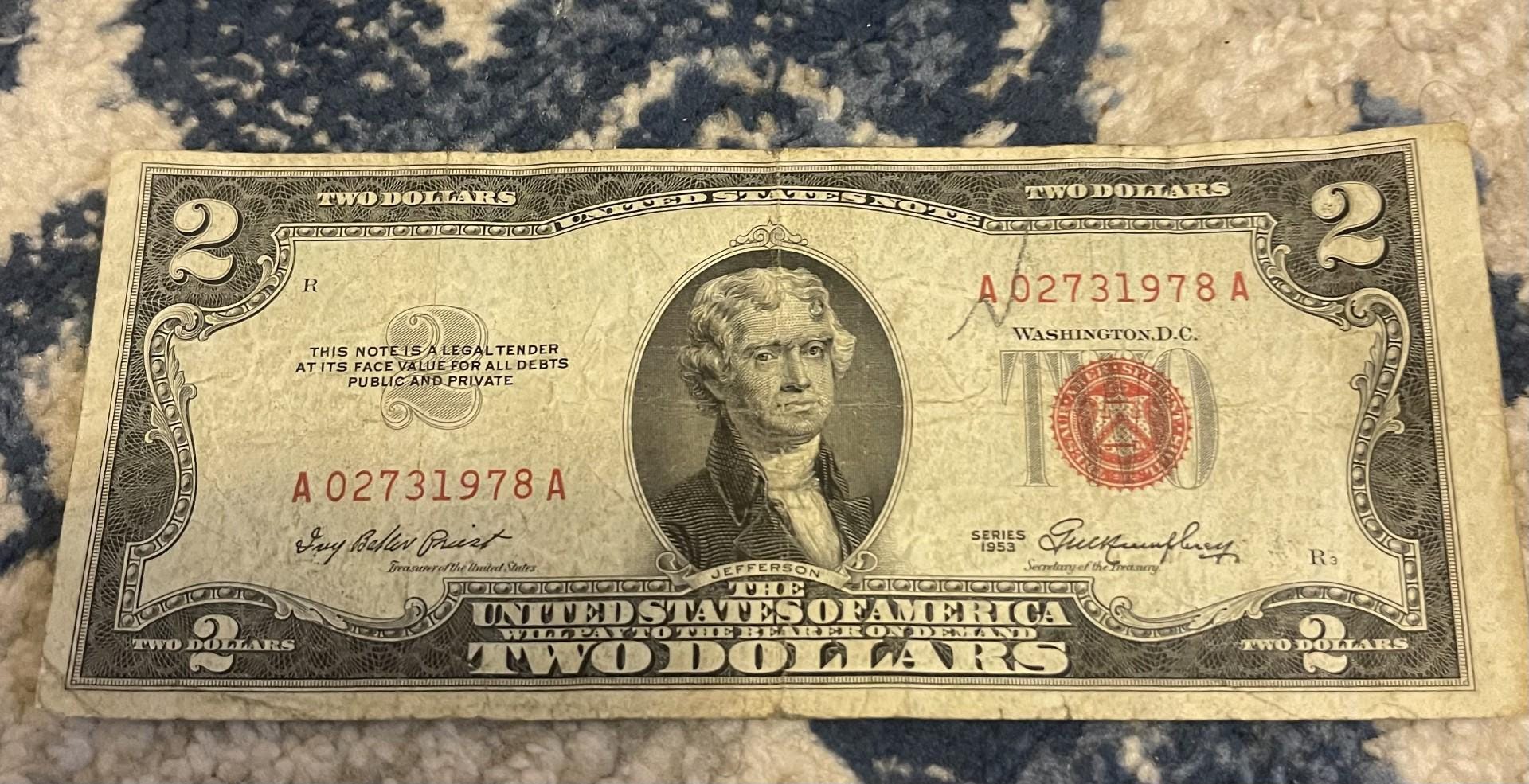
The 1953 $2 Red Seal note is a specific type of United States currency known as a United States Note (or Legal Tender Note), easily identifiable by its distinct red treasury seal and red serial numbers. In 2026, most circulated examples are worth between $3 and $10, while "Star Notes" or those in Choice Uncirculated condition can command prices from $25 to over $100 depending on the specific series letter and centering.
Unlike the modern $2 bills found in circulation today, which feature green seals and represent Federal Reserve Notes, the 1953 series belongs to a legacy era of American paper money. These notes were issued directly by the U.S. Treasury rather than the Federal Reserve System. For collectors and casual finders alike, understanding the nuances of the 1953 series—including the significance of the "A," "B," and "C" designations—is essential for determining the true market value of the bill.
The Historical Context of United States Notes
To understand the "1953 2 red," one must first understand the distinction between United States Notes and Federal Reserve Notes. United States Notes are the oldest form of paper currency still in circulation in the U.S., first authorized by the Legal Tender Act of 1862 during the Civil War. They were often called "Greenbacks," though the 20th-century versions are defined by their red ink.
By 1953, the U.S. monetary system was transitioning. While the Federal Reserve had become the primary issuer of currency, a statutory requirement remained that a certain amount of United States Notes be kept in circulation. The 1953 $2 bill was part of this effort. These notes were not backed by gold or silver in the way Silver Certificates were; rather, they were backed by the "full faith and credit" of the U.S. government.
The Series of 1953 was the first major design change for the $2 United States Note since 1928. While the physical size of the note remained the "small size" standard adopted in 1928, the 1953 series introduced subtle changes in the placement of the seal and the wording of the obligation clause.
Identifying Features of the 1953 $2 Red Seal
Identification is the first step in valuation. A 1953 $2 bill has several key physical characteristics that distinguish it from the 1928 series and the modern 1976 series.
The Obverse (Front)
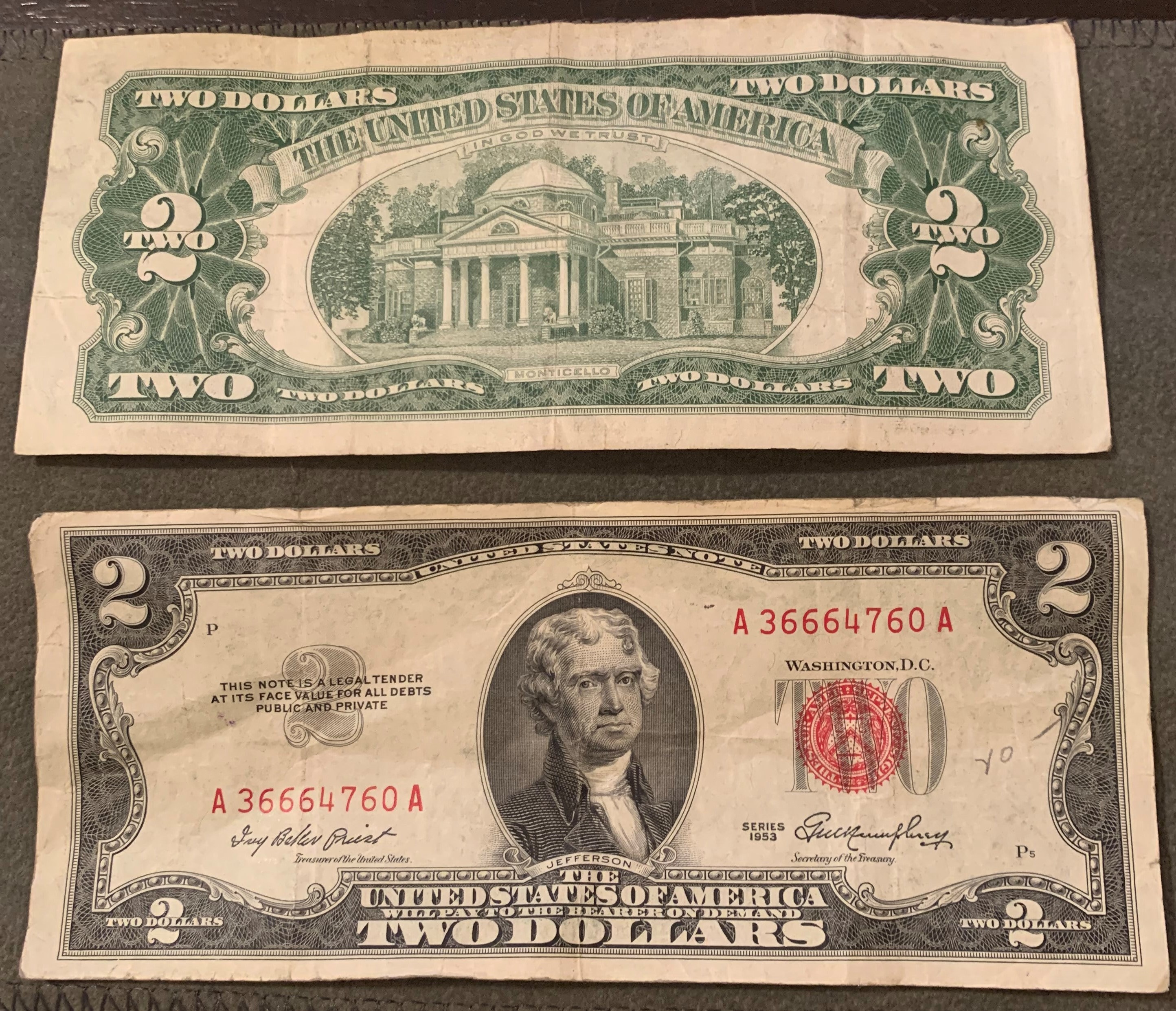
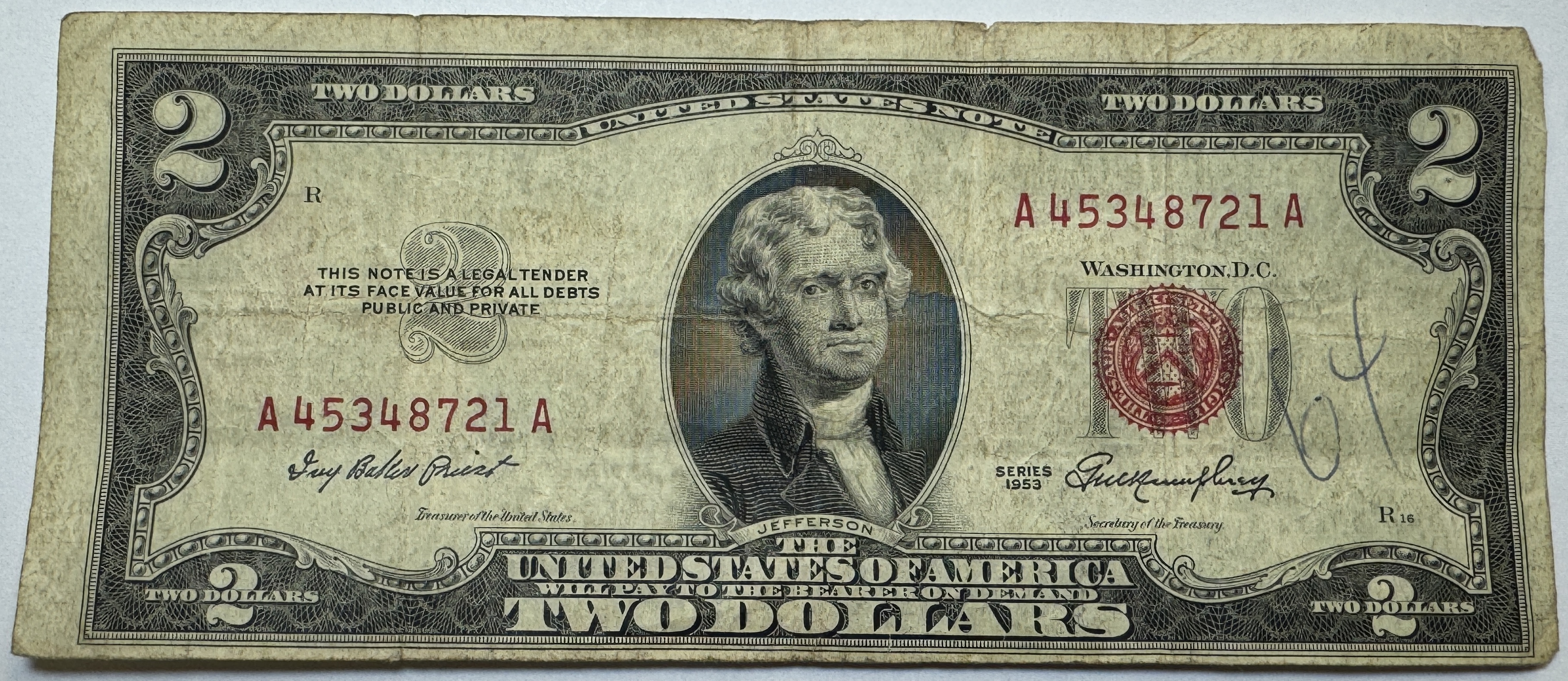
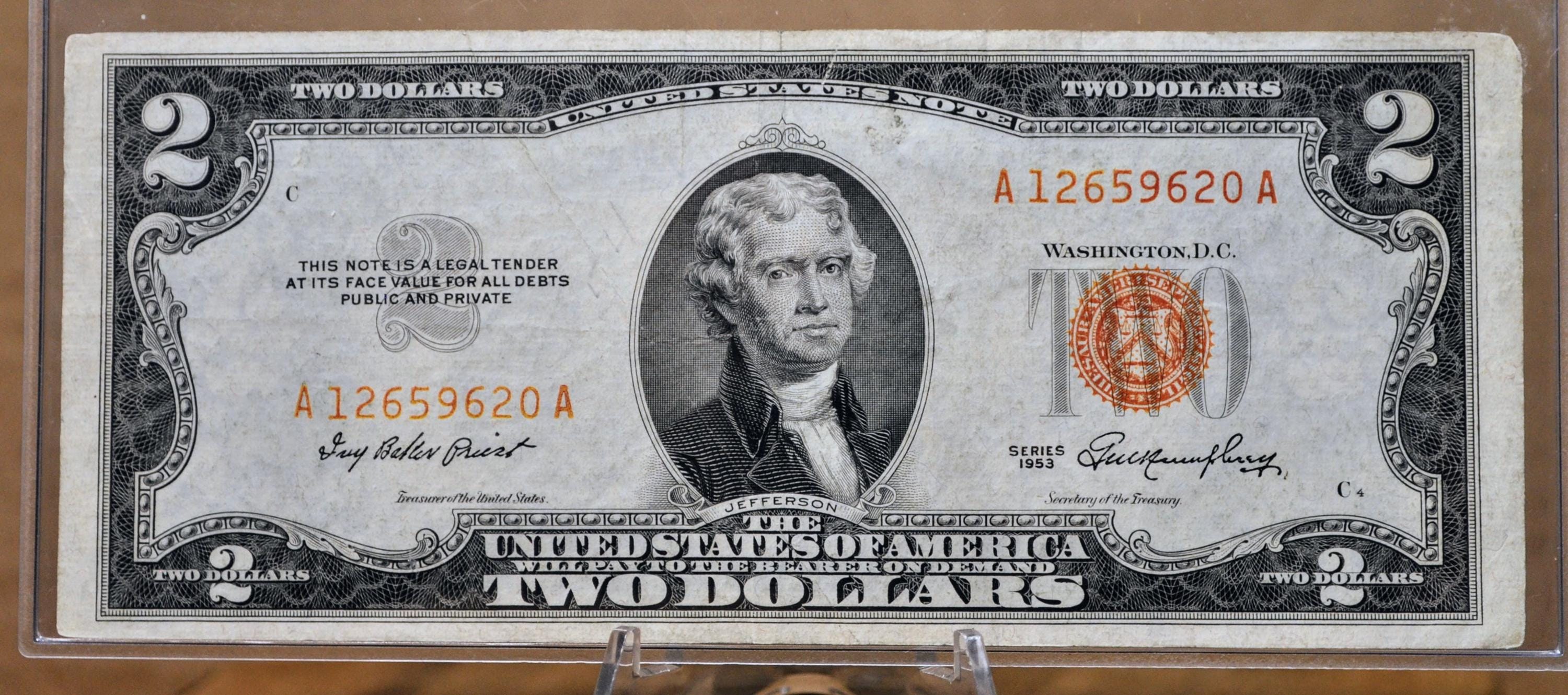
The front of the note features a portrait of Thomas Jefferson, the third President of the United States. To the left of the portrait is the large numeral "2" with the red Treasury Seal superimposed over the word "TWO." On the right side, the serial numbers are printed in red ink.
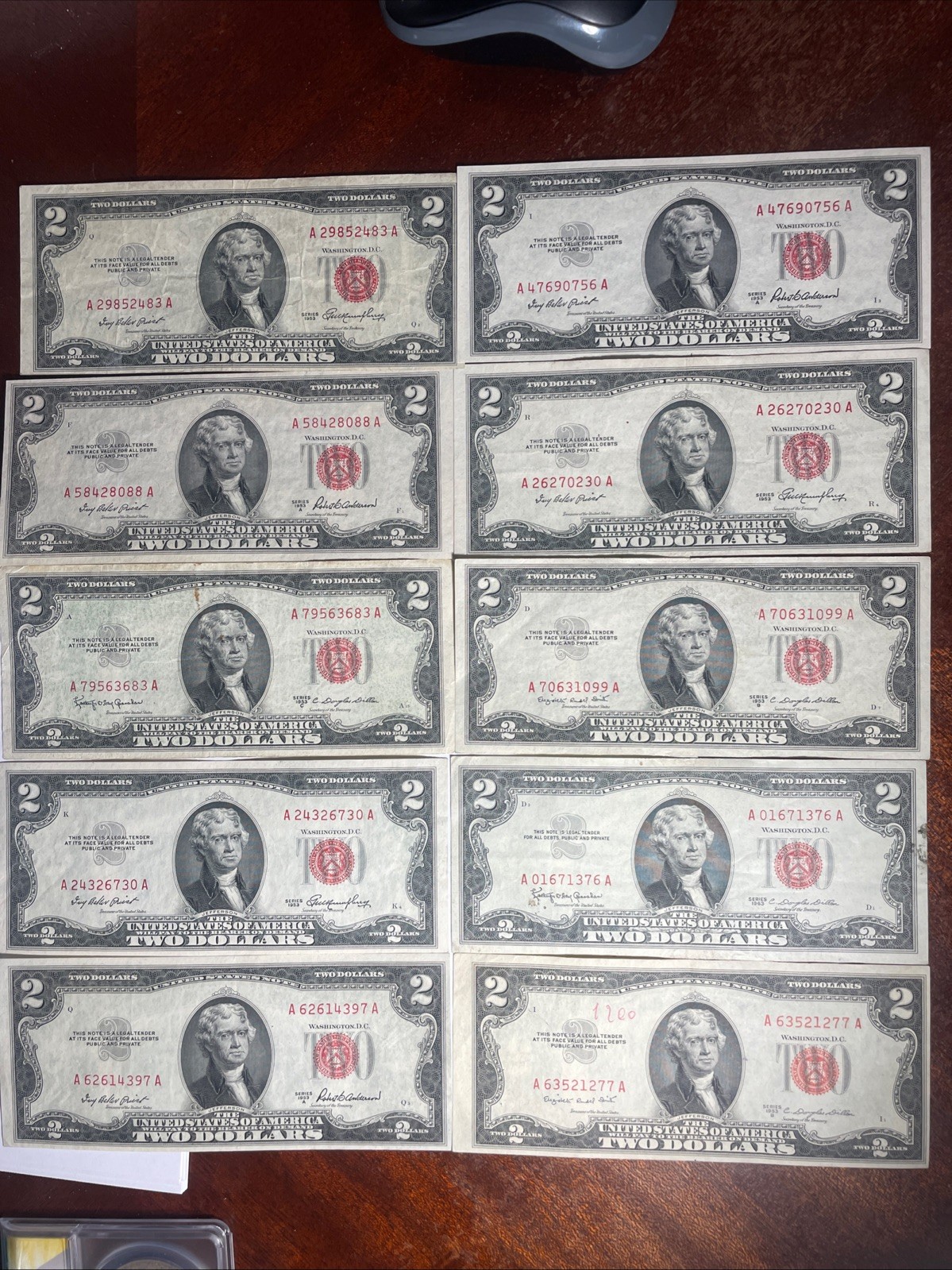
One of the most important identifying marks is the Series Date. You will find "Series 1953" printed to the right of Jefferson’s portrait. Depending on when the bill was printed, there may be a small letter (A, B, or C) following the year. This letter indicates a change in the Treasurer of the United States or the Secretary of the Treasury.
The Reverse (Back)
The reverse of the 1953 $2 note features Monticello, Jefferson's estate in Virginia. It is important to note that this design is different from the modern $2 bill. Modern $2 bills (Series 1976 and later) feature a vignette of the signing of the Declaration of Independence. If your red-seal note has Monticello on the back, it is a standard 1928 or 1953 series design.
The Obligation Clause
Look closely at the text on the note. It states: "The United States of America will pay to the bearer on demand two dollars." Below this, it notes: "This note is a legal tender at its face value for all debts public and private." This specific wording is a hallmark of the United States Note.
Decoding the Series Letters: 1953, 1953A, 1953B, and 1953C
In the world of numismatics, the signatures on a bill often dictate its rarity. The "1953 2 red" exists in four distinct varieties based on the signatures of the Treasury officials in office at the time of printing.
| Series | Treasurer | Secretary of the Treasury | Rarity/Value Note |
|---|---|---|---|
| 1953 (Plain) | Ivy Baker Priest | George M. Humphrey | Most common series. |
| 1953A | Ivy Baker Priest | Robert B. Anderson | Very common in circulated grades. |
| 1953B | Elizabeth Rudel Smith | C. Douglas Dillon | Slightly lower mintage; higher demand. |
| 1953C | Kathryn O'Hay Granahan | C. Douglas Dillon | Last of the 1953 series; higher value in top grades. |
While all four varieties were printed in the millions, the 1953B and 1953C versions are often sought after by collectors looking to complete a "signature set." In 2026, a 1953C note in Gem Uncirculated condition is generally harder to find than a plain 1953 note in the same condition.
Determining the Value of Your Note
The value of a 1953 $2 red seal is primarily driven by its condition (grade) and whether it is a Star Note.
Standard Circulated Grades
Most 1953 $2 bills found in old collections or "tucked away" are in circulated condition. This means they have folds, creases, dirt, or slight discoloration.
- Average Circulated (Fine to Very Fine): $2.50 – $5.00.
- Extra Fine (Nearly new but with a few folds): $6.00 – $12.00.
Uncirculated Grades
A note that looks like it just came from the bank—perfectly crisp, no folds, sharp corners, and original paper wave—is worth significantly more.
- Choice Uncirculated (MS 63-64): $20.00 – $45.00.
- Gem Uncirculated (MS 65-66): $50.00 – $90.00.
The Premium for "Star Notes"
Check the serial number. Does it start or end with a small solid star (★) instead of a letter? If so, you have a Star Note. Star notes were printed to replace notes that were damaged during the printing process. Because they are much rarer than standard notes, they carry a high premium.
- Circulated 1953 Star Note: $15.00 – $35.00.
- Uncirculated 1953 Star Note: $100.00 – $250.00+.
Values for star notes can fluctuate based on the specific series (1953A Stars vs. 1953C Stars), but they are always more valuable than their non-star counterparts.
The Role of Professional Grading
For notes that appear to be in "perfect" condition, professional grading by services such as Paper Money Guaranty (PMG) or PCGS Banknote is often worth the investment. Grading scales go from 1 to 70.
A 1953 $2 note graded as PMG 66 EPQ (Exceptional Paper Quality) will sell for a massive premium compared to a "raw" (ungraded) uncirculated note. Collectors pay for the certainty that the note has not been "pressed" or chemically cleaned to appear newer than it is. If you believe your note is worth more than $100, professional authentication is a recommended next step in 2026.
Comparison: 1953 Red Seal vs. Other $2 Bills
It is easy to confuse the 1953 series with other $2 notes. Here is how they compare in the 2026 market:
- 1928 Red Seal: These look very similar but have the "Series 1928" date. They are generally worth more than the 1953 series, with prices starting at $10–$15 for circulated copies.
- 1963 Red Seal: This was the last series of the red-seal $2 bill. It is very common and carries values almost identical to the 1953 series.
- 1976 Green Seal: These are the modern $2 bills with the Declaration of Independence on the back. Unless they have an unusual serial number or a printing error, they are only worth face value ($2).
Collectibility and Investment Potential
Is the 1953 $2 red seal a good investment? Generally, these notes are considered "entry-level" collectibles. Because millions were printed and many were saved as souvenirs, the supply is high enough to keep prices affordable.
However, the market for red-seal currency has shown steady growth over the last decade. As 1950s-era currency becomes physically older and more specimens are lost to damage or poor storage, the value of high-grade examples continues to rise. In 2026, the demand for "Type Sets" (collecting one of every type of note) remains strong, ensuring that the 1953 $2 note will always have a buyer.
Common Errors to Look For
While rare, printing errors on the 1953 series can skyrocket the value into the thousands. Look for:
- Miscut Notes: Where the design is off-center or shows part of another bill.
- Inking Errors: Large smears of red or black ink covering the design.
- Double Prints: Where the seal or serial numbers are printed twice or upside down (inverted overprints).
Preservation and Care
If you own a 1953 $2 red seal, preserving its condition is vital. Every fold or smudge reduces its numismatic value.
- Avoid PVC Sleeves: Do not use cheap plastic sleeves that contain PVC, as the chemicals can "leach" and turn the paper oily or yellow over time. Use Mylar or PVC-free archival-quality holders.
- Do Not Clean: Never attempt to wash or iron a banknote. Collectors can easily detect "processed" notes, and cleaning a bill will often strip away its original sheen (luster), reducing its value by 50% or more.
- Store in a Cool, Dry Place: Humidity is the enemy of paper currency. It leads to foxing (brown spots) and mold.
Frequently Asked Questions
Is the 1953 $2 red seal still legal tender?
Yes. All United States currency issued since 1861 remains legal tender at face value. You could technically spend a 1953 $2 bill at a grocery store for $2 worth of goods, though this is not recommended as its collector value is higher than its face value.
Why is the seal red instead of green?
The red seal indicates that the bill is a United States Note. Green seals indicate Federal Reserve Notes, blue seals indicate Silver Certificates, and gold seals indicate Gold Certificates. The colors were used to help bank tellers and the public quickly identify the "type" of backing the currency had.
Where can I sell my 1953 $2 red seal?
In 2026, the best venues for selling are reputable local coin shops, specialized currency auctions (like Heritage Auctions or Stacks Bowers), or online marketplaces. For standard circulated notes, a local coin shop is the most convenient option, though you should expect to receive a "wholesale" price (roughly 50-70% of retail value).
Are there any "rare" serial numbers for the 1953 series?
Yes. Collectors look for "fancy" serial numbers, such as:
- Low Numbers: e.g., 00000123.
- Radars: Numbers that read the same forward and backward (e.g., 12344321).
- Repeaters: Numbers that repeat (e.g., 12121212).
- Solid Numbers: All the same digit (e.g., 55555555). These can add hundreds of dollars to the value of a 1953 note.
Conclusion and Next Steps
The 1953 $2 red seal note is a fascinating artifact of mid-century American history. While it won't make most owners wealthy overnight, it serves as an excellent gateway into the world of paper money collecting.
If you have recently acquired one, your next step should be to assess its condition under a bright light. Look for folds or "pinholes" (common in older notes that were stapled to documents). Once you have determined the grade and checked for a "star" in the serial number, place the note in a protective archival sleeve. Whether you choose to keep it as a piece of history or sell it to a collector, the 1953 red seal remains a classic example of the artistry and complexity of U.S. currency.