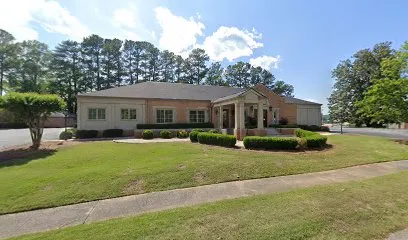
Acree Davis refers to Acree-Davis & Associates, a specialized independent insurance adjusting and appraisal firm based in the Southeastern United States. The firm primarily facilitates the resolution of property insurance claim disputes through the formal appraisal process and umpire services, acting as a technical intermediary to determine the accurate value of property loss when insurers and policyholders disagree.
The world of insurance claims is often fraught with complexity, particularly when a catastrophic event leads to significant property damage. When a homeowner or business owner files a claim, the insurance company provides an estimate of the damages. However, if the policyholder believes the estimate is insufficient to cover the actual costs of repair or replacement, a deadlock can occur. This is where firms like Acree Davis provide essential services. By specializing in the "Appraisal Clause" of insurance policies, they offer a path to resolution that avoids the high costs and lengthy timelines of traditional litigation.
The Role of Acree Davis in the Insurance Ecosystem
Acree-Davis & Associates operates within a specific niche of the insurance industry known as alternative dispute resolution (ADR). While many people are familiar with insurance adjusters who work directly for the carrier, Acree Davis represents a different facet of the industry: the independent appraiser and umpire.
Independent Adjusting vs. Appraisal Services
It is important to distinguish between a standard independent adjuster and an insurance appraiser. An independent adjuster is often hired by an insurance company to investigate a claim, determine coverage, and estimate damages. In contrast, an appraiser is typically brought in after a dispute has already arisen regarding the "amount of loss." Acree Davis is frequently retained to act as an appraiser for one of the parties or to serve as a neutral umpire to oversee the entire process.
Geographic Specialization and Expertise
The firm is heavily rooted in the Gulf Coast region, specifically operating out of Mobile, Alabama. This geographic location is significant because the area is prone to specific types of property damage, including hurricane-force winds, storm surges, and flood-related issues. Expertise in these specific perils is vital because the engineering and construction requirements for coastal properties often differ from inland structures. Acree Davis leverages this regional knowledge to provide valuations that reflect local building codes, material costs, and labor rates as of 2026.
The Insurance Appraisal Process Explained
To understand the value provided by Acree Davis, one must understand the mechanics of the appraisal clause found in most standard property insurance policies (such as ISO Form HO-3). This clause is designed to resolve disagreements over the "amount of loss" without going to court.
Invoking the Appraisal Clause
When an impasse is reached, either the insurer or the policyholder can make a written demand for an appraisal. Once invoked, each party selects a "competent and disinterested" appraiser. Acree Davis is often selected as the appraiser for a party because of their technical proficiency in property damage assessment.
The Role of the Appraisers
The two selected appraisers—one representing the insurer and one representing the policyholder—separately evaluate the claim. They examine the physical damage, review repair estimates, and analyze the cost of materials. Their goal is to reach an agreement on the value of the property and the amount of the loss. If the two appraisers agree on a figure, that amount becomes binding, and the claim is settled.
The Selection of an Umpire
If the two appraisers cannot agree, they select a third party known as an "umpire." Acree Davis frequently serves in this capacity. The umpire’s role is to review the differences between the two appraisers and make a final determination. Under the standard appraisal clause, an agreement signed by any two of the three (the two appraisers and the umpire) sets the final amount of the loss.
Technical Proficiency: Estimation and Documentation
A primary reason for the reputation of Acree Davis is their mastery of modern estimation technology. In 2026, property valuation is no longer a matter of simple guesswork; it requires sophisticated software and a deep understanding of construction economics.
Use of Industry-Standard Software
The firm utilizes industry-leading platforms such as Xactimate and Symbility. These tools allow for highly granular estimates that account for:
- Localized Material Costs: Prices for lumber, roofing materials, and specialized coastal hardware.
- Labor Rates: Real-time data on what contractors are charging in specific zip codes.
- Waste Factors: Accurate calculations of material overhead required for complex architectural designs.
Scope vs. Pricing Disputes
Acree Davis excels at identifying the root of a dispute. Disagreements usually fall into two categories: pricing (how much a specific repair costs) or scope (what actually needs to be repaired). For example, an insurance company might agree that a roof needs to be repaired but disagree on whether the entire slope needs replacement. Acree Davis provides the technical documentation—often involving drone photography, moisture mapping, and infrared thermography—to support a definitive scope of work.
Comparison of Resolution Paths for Property Claims
When a dispute arises, policyholders have several options. The following table compares the appraisal process (the primary domain of Acree Davis) with other common methods.
| Feature | Appraisal (Acree Davis) | Mediation | Litigation (Lawsuit) |
|---|---|---|---|
| Primary Goal | Determine "Amount of Loss" | Reach a voluntary settlement | Resolve legal/coverage issues |
| Binding Nature | Binding (once award is signed) | Non-binding | Binding (subject to appeal) |
| Duration | Typically 30–90 days | 1–2 days (session) | 1–3 years |
| Neutral Party | Umpire | Mediator | Judge and Jury |
| Expertise | Technical/Construction | Negotiation | Legal/Procedural |
| Cost | Moderate (Appraiser fees) | Low to Moderate | High (Attorneys and Experts) |
The Legal and Ethical Boundaries of Appraisal
While Acree Davis provides a critical service, it is essential to understand the limitations of the appraisal process. Appraisal is specifically for determining the value of a loss, not for interpreting the legal language of an insurance policy.
Coverage vs. Valuation
If an insurance company denies a claim because they believe a specific peril (like a slow leak) is excluded by the policy, an appraiser cannot generally override that exclusion. The appraiser's job is to say, "If this loss is covered, this is how much it costs to fix." Disputes over coverage are legal issues that typically require an attorney or a judicial ruling. However, in many jurisdictions, "causation" (what caused the damage) is considered part of the appraisal process, making firms like Acree Davis even more vital in determining if wind or water was the primary driver of a loss.
The "Disinterested" Requirement
Ethics are paramount in this field. An appraiser must be "disinterested," meaning they should not have a financial stake in the outcome of the claim beyond their professional fee. Acree Davis maintains its standing in the industry by adhering to strict ethical guidelines, ensuring that their valuations are based on objective data rather than a desire to favor one side. This neutrality is why they are frequently sought after to serve as umpires, as both insurers and policyholders trust their impartiality.
Why Expertise in the Southeastern United States Matters
Operating in Alabama, Mississippi, and Florida requires a specialized understanding of both the environment and the regulatory landscape. Acree Davis navigates these complexities daily.
- Valuation Manuals: Different states have varying rules on "Actual Cash Value" (ACV) versus "Replacement Cost Value" (RCV). Understanding how depreciation is applied—and whether labor can be depreciated—is a nuanced technical skill that varies by state law.
- Building Code Upgrades: Following a major storm, local municipalities often update building codes. Acree Davis ensures that appraisals include "Ordinance or Law" coverage, which pays for the additional costs required to bring a building up to the current 2026 codes.
- Environmental Factors: Coastal regions face unique challenges like salt-spray corrosion and high-velocity hurricane zones (HVHZ). An appraiser without regional expertise might underestimate the cost of specialized windows or corrosion-resistant fasteners required by law in these areas.
Benefits of Hiring a Specialized Firm
For a policyholder or an insurer, the decision to hire a firm like Acree Davis often comes down to accuracy and efficiency.
- Professional Estimating: Most homeowners are not construction experts. A professional appraiser can identify "hidden" damages, such as structural racking or compromised insulation, that a standard adjuster might overlook.
- Leveling the Playing Field: Insurance companies employ full-time experts. Hiring an independent firm ensures that the policyholder has access to the same level of technical expertise and software-driven data.
- Conflict Resolution: Disputes are emotionally draining. The appraisal process provides a structured, professional framework that removes the emotion from the negotiation and focuses purely on the physical facts of the property damage.
Frequently Asked Questions
What is the difference between an appraiser and an umpire?
An appraiser is hired by one party (either the policyholder or the insurance company) to estimate the loss. An umpire is a neutral third party selected by the two appraisers to resolve differences between their estimates. Acree Davis performs both roles, depending on the specific needs of the case.
Is the decision made by Acree Davis in an appraisal binding?
Yes, in most cases. When Acree Davis acts as an appraiser or umpire, and an "Appraisal Award" is signed by at least two of the three participants (the two appraisers and the umpire), that amount is legally binding on both the insurance company and the policyholder. It can usually only be overturned in court if there is evidence of fraud or a significant procedural error.
How much do appraisal services cost?
Fees are typically based on an hourly rate or a flat fee for the specific project. It is important to note that most insurance policies state that each party pays its own appraiser and splits the cost of the umpire 50/50. Acree Davis provides fee schedules upon request for their professional services.
Can Acree Davis help if my claim was denied entirely?
If your claim was denied based on a policy exclusion (a "coverage dispute"), the appraisal process might not be the immediate next step. However, if the denial is based on a disagreement over what caused the damage (e.g., the insurer says it's wear and tear, but you say it's storm damage), Acree Davis can often provide the technical assessment needed to challenge that finding.
How long does the appraisal process typically take?
While it varies depending on the complexity of the property (commercial buildings take longer than residential homes), most appraisals involving Acree Davis are completed within 30 to 90 days. This is significantly faster than the 12 to 24 months often required for a lawsuit to reach a conclusion.
Final Recommendation
If you are facing a significant discrepancy between your property damage estimate and the amount offered by your insurance carrier, the first step is to carefully review your policy's Appraisal Clause. If the disagreement is strictly about the value of the repairs or the extent of the damage, engaging a firm like Acree Davis can be a decisive move.
Before officially invoking appraisal, ensure you have a clear, itemized estimate of your own to compare against the insurer's offer. If the gap remains large, contact a professional appraiser to discuss the merits of your case. For properties in the Southeastern United States, leveraging a firm with local expertise and a background in coastal damage is often the most efficient way to secure a fair and accurate settlement.