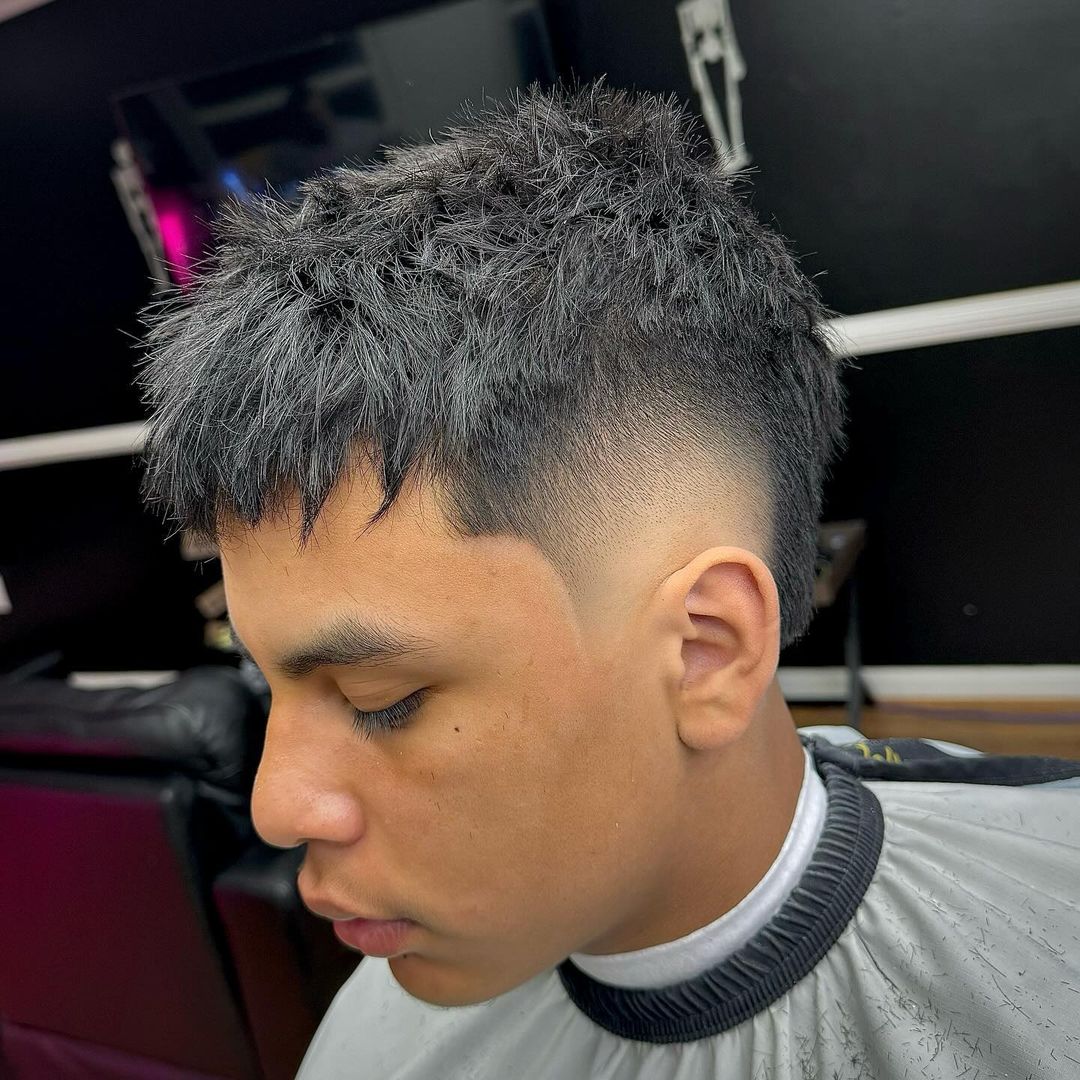
The burst fade with textured fringe is a modern, high-contrast haircut that pairs a semicircular fade radiating behind the ear with a forward-swept, heavily layered top. This style balances clean, skin-tight sides with a messy, voluminous fringe, making it a versatile choice for various face shapes and hair textures in 2026.
Understanding the Anatomy of the Burst Fade with Textured Fringe
The modern men's grooming landscape relies heavily on hybrid cuts that combine structural precision with relaxed, organic top sections. The burst fade with textured fringe exemplifies this design philosophy. By uniting two distinct barbering techniques—the radial burst fade and the choppy, scissor-cut textured crop—this hairstyle delivers both clean aesthetics and expressive styling potential.
What is a Burst Fade?
A burst fade is characterized by a fade line that "bursts" outward in a circular or semicircular pattern around the ear, leaving longer hair intact at the nape of the neck. Unlike a traditional drop fade or low taper, which follows a straight horizontal or downward trajectory toward the neckline, the burst fade creates a distinct sunburst effect.
- The Pivot Point: The center of the fade sits directly behind the ear, usually aligning with the mastoid process.
- The Graduation: Barbers use clippers with guards ranging from zero (skin) up to a #2 or #3, blending the hair tightly around the ear while preserving the natural weight and length in the back.
- Versatility: The burst fade can be executed as a low, mid, or high fade, depending on how expansive the circular transition zone is relative to the crown and neckline.
What is a Textured Fringe?
While the sides and back maintain sharp geometric contrast, the top of the head features a textured fringe. This element focuses on removing weight from the crown down to the hairline using techniques like point cutting, slide cutting, and texturizing shears.
- Forward Movement: The hair is directed forward over the forehead, often stopping anywhere from mid-forehead to just above the eyebrows.
- Layering: Instead of a blunt, straight-across micro-bang, the textured fringe consists of jagged, uneven ends that create natural separation and movement.
- Volume and Flow: Texturizing creates micro-layers that allow lightweight styling products to build structure without making the hair look heavy or greasy.
Hair Types and Face Shape Compatibility
Achieving a successful burst fade with textured fringe requires evaluating your natural hair type, density, and facial structure. While the cut is adaptable, minor adjustments are necessary to ensure the style complements your features.
Hair Texture and Density Considerations
Hair behavior dictates how well the textured fringe will sit and how much daily maintenance the cut demands.
- Straight Hair: Straight hair provides a clean, sharp look for the burst fade sides, but the top may lie too flat if it lacks natural body. Regular use of texturizing powder or matte clay is essential to give straight hair the piece-y separation characteristic of this style.
- Wavy Hair: Wavy hair is arguably the most ideal texture for a textured fringe. The natural bend in the hair creates built-in volume and movement, reducing the amount of styling product needed to achieve a dynamic finish.
- Curly Hair: Curly or coily hair can pull off a striking variation of this cut, often referred to as a burst fade crop with curls. The fringe maintains its tight curl pattern while cascading forward, offering a high-contrast look between the tight skin fade and the textured curls on top.
- Thin or Fine Hair: Individuals with fine hair must ask their barber to be conservative with weight removal. Over-texturizing fine hair can make it look sparse or see-through near the hairline. A sea salt spray or volume-boosting mousse can help add perceived density.
Matching the Cut to Your Face Shape
Haircuts act as framing tools that can visually alter the proportions of the face.
| Face Shape | Suitability | Recommended Adjustments |
|---|---|---|
| Oval | Excellent | Virtually any variation works well; maintain balanced volume on top and standard fade height. |
| Round | Good | Keep the sides tight with a mid-to-high burst fade to elongate the face, and wear the fringe slightly angled or textured upward. |
| Square | Excellent | The sharp angles of a square jaw complement the crisp lines of a burst fade; the soft fringe helps offset a strong forehead. |
| Diamond / Triangular | Moderate | Avoid overly tight high fades that accentuate wide cheekbones or narrow chins; opt for a low burst fade with a slightly wider fringe to balance proportions. |
How to Communicate This Haircut to Your Barber
Achieving the exact look you want starts with clear communication. Barbers interpret terminology differently, so bringing reference photos and using precise descriptive language prevents miscommunication.
Key Terminology to Use
When sitting in the chair, give your barber a roadmap of what you expect from both the sides and the top.
- Specify the Fade Type: Ask explicitly for a "burst fade," noting whether you prefer a low, mid, or high placement. Clarify whether you want it taken down to skin (bald fade) or left with a shadow using a short guard.
- Define the Neckline: Discuss how you want the back to look. Many wearers pair a burst fade with a blocked neckline, a V-shape, or a natural rounded taper.
- Explain the Top Length: State your desired length on top in inches or centimeters, rather than relying on vague terms like "short" or "medium."
- Instruct on Texturizing: Explicitly request "point cutting" or "slide cutting" to remove bulk and create texture, emphasizing that you want a choppy, piece-y fringe rather than a blunt line.
Step-by-Step Styling Guide for Daily Wear
Styling a burst fade with textured fringe takes about five to ten minutes once you establish a routine. The primary goal is to establish directional airflow and apply products that provide matte hold without weighing the hair down.
Essential Tools and Products
- Blow Dryer: Equipped with a concentrator nozzle to direct airflow forward and downward.
- Pre-Styler: Sea salt spray or lightweight volume tonic for damp hair.
- Finishing Product: Matte styling clay, texturizing paste, or styling powder depending on your hair's natural hold requirements.
- Wide-Tooth Comb or Fingers: Fingers are generally preferred for this style to keep the texture organic and separated.
Daily Styling Routine
- Prep Damp Hair: Start with towel-dried, clean hair. Spray a generous amount of sea salt spray evenly from roots to ends to provide grip and thermal protection.
- Blow Dry Forward: Set your blow dryer to medium heat and medium speed. Using your fingers or a vent brush, sweep the hair forward and down toward your forehead. Direct the airflow from the crown forward to flatten the cowlicks and encourage the fringe to lay correctly.
- Cool Shot: Switch the blow dryer to the cool setting for 30 seconds once the hair is 90% dry. This locks the forward direction and volume into place.
- Apply Finishing Product: Take a nickel-sized amount of matte clay or styling paste. Rub it thoroughly between your palms and fingertips until it disappears.
- Distribute and Piece Out: Work your hands through the hair from back to front, ensuring the product reaches the roots. Use your fingertips to pinch and pull individual sections of the fringe forward, creating the signature textured, choppy appearance. Avoid flattening the top against your scalp.
- Set (Optional): If you need all-day hold against humidity or wind, finish with a light mist of flexible-hold hairspray, keeping the can at least twelve inches away from your head.
Maintenance and Upkeep
A burst fade with textured fringe is a high-maintenance haircut on the sides and back, but relatively low-maintenance on top. Because the fade relies on crisp contrast, hair growth quickly blurs the clean lines around the ear.
Managing Maintenance Intervals
- Side Touch-Ups: To keep the burst fade looking sharp, visit your barber every 2 to 3 weeks for a clean-up around the ears and neckline.
- Full Haircut: Every 4 to 6 weeks, schedule a complete haircut to trim the top, re-establish the layers in the textured fringe, and reset the proportions of the style.
- Between-Visits Care: If you are comfortable using home grooming tools, a trimmer can clean up stray hairs below the ear and along the neckline between professional visits, though cutting into the fade line itself is not recommended.
Frequently Asked Questions
How often do I need to get a burst fade with textured fringe trimmed?
To maintain the sharp contrast of the burst fade, you should visit a barber every two to three weeks for a fade touch-up. The top can go four to six weeks between cuts, depending on your preferred overall length.
Can I get a burst fade if I have a receding hairline?
Yes, a burst fade with textured fringe is actually a great option for receding hairlines. The forward-swept fringe naturally conceals thinning areas or a high hairline at the temples while the faded sides draw attention away from the perimeter.
What is the best product for a textured fringe?
Matte clay and texturizing powder are the top choices. Matte clay provides strong hold without shine, preserving a natural, dry look, while texturizing powder instantly boosts volume and creates separation at the roots.
Does a burst fade work on curly hair?
Absolutely. A burst fade with curly hair on top creates a striking contrast between the clean-shaved skin around the ear and the voluminous, textured curls cascading forward over the forehead.
How do I stop my fringe from sticking straight up?
If your hair resists lying flat or forward, your styling technique or hair growth pattern (cowlick) is likely the culprit. Always blow-dry your hair straight forward from the crown while it is damp, using a concentrator nozzle, and finish with a blast of cool air to set the cuticle in the desired direction.
Next Actions
To execute this look successfully, find a barber experienced in modern textured crops and fade work, and bring at least two clear reference photos showing both the side profile (to highlight the burst fade arc) and the front (to demonstrate the desired fringe length and texture). Invest in a quality matte clay and a blow dryer with a nozzle attachment to streamline your daily morning styling routine.