Navigating the Fresno Superior Court traffic division requires understanding citation types, deadlines, and options like traffic school, payment plans, or contesting a ticket. This guide explains how to look up records, manage court dates, clear failures to appear, and settle infractions efficiently in California.
When you receive a traffic ticket in Fresno County, California, dealing with the citation promptly is essential to avoid compounding fines, driver's license suspension, or a civil assessment. The Traffic Division of the Superior Court of California, County of Fresno, handles infractions ranging from basic speeding tickets to equipment violations and commercial vehicle infractions. Whether you choose to pay your fine, attend traffic school to mask a point, or schedule a court appearance to contest the officer’s claims, knowing the structural procedures can save you time, money, and administrative headaches.
This comprehensive guide breaks down everything you need to know about managing your Fresno Superior Court traffic case in 2026, from initial lookup and procedural deadlines to defense strategies and payment assistance.
Understanding Your Fresno Traffic Citation
A traffic citation issued by the California Highway Patrol (CHP), the Fresno Police Department, or another local law enforcement agency is not automatically a finding of guilt. Instead, it is a promise to appear in court or resolve the matter by a specified due date listed on the bottom of the ticket or courtesy notice.
The Anatomy of a California Traffic Ticket
When you look at your citation, you will notice a unique case number or citation number at the top. This identifier is necessary for tracking your case within the Fresno Superior Court database. The citation will outline the specific Vehicle Code (VC) violations you are accused of committing, whether the infraction is "fixable" (correctable), and whether a mandatory court appearance is required.
- Infractions vs. Misdemeanors: Most standard traffic violations—such as speeding, running a red light, or failing to yield—are classified as infractions. Infractions carry fines and DMV points but do not carry the possibility of jail time. However, certain serious violations, such as driving under the influence (DUI) or reckless driving causing injury, are classified as misdemeanors and require a mandatory court appearance.
- Correctable Violations ("Fix-It Tickets"): If your ticket includes violations for expired registration, broken taillights, or failure to carry proof of insurance, these are typically correctable violations. You can often have a law enforcement officer or authorized inspection station sign off on the correction and submit proof to the court along with a dismissal fee.
Locating Your Case in the Fresno Superior Court System
Before you can take any action, you must find your case in the court's database. Courtesy notices are typically mailed to the address on your driver's license within two to three weeks of receiving the ticket. However, mail delays happen, and waiting for a notice does not excuse you from your legal obligation to resolve the citation by the due date.
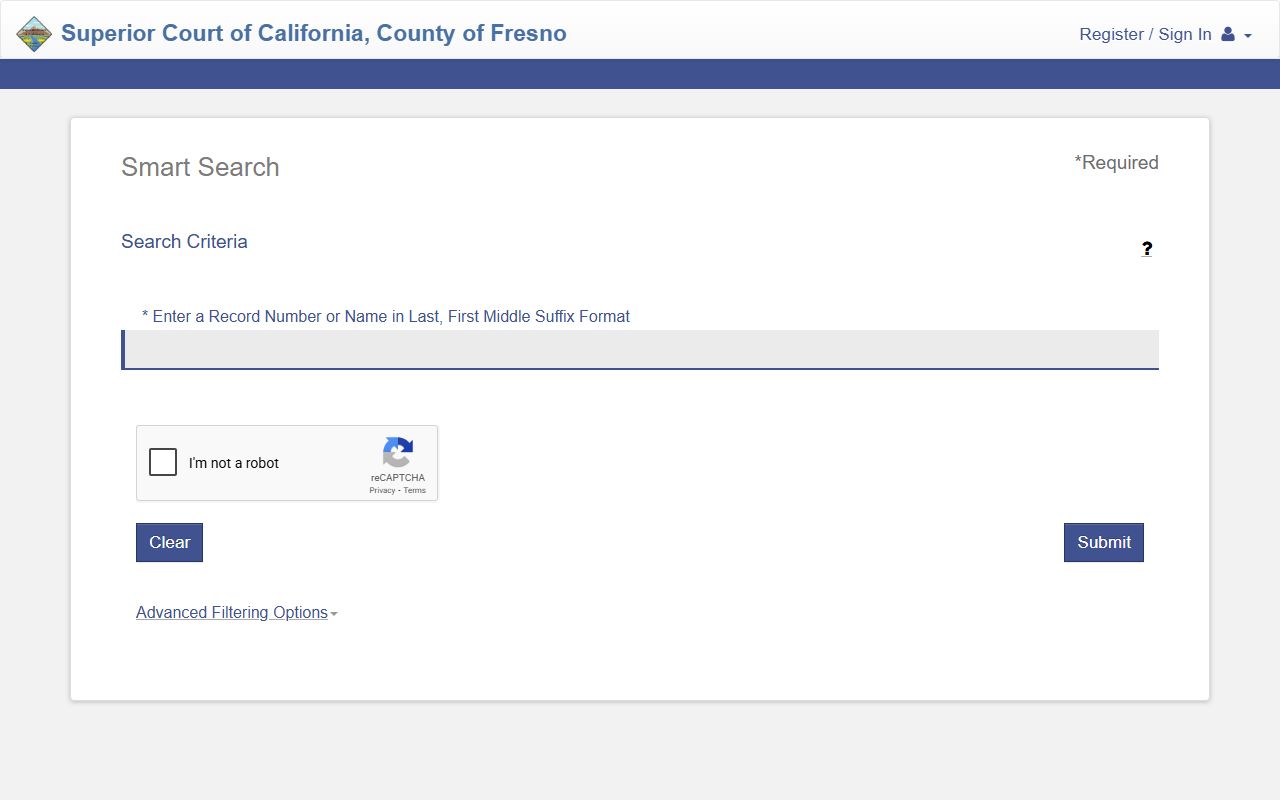
You can search for your case online through the official Fresno Superior Court Traffic Portal. To perform a search, you will generally need:
- Your citation number, or
- Your driver's license number and date of birth, or
- Your first and last name matching the ticket.
If your case does not appear online immediately after receiving the ticket, it means the law enforcement agency has not yet filed the citation with the court. Keep checking periodically, but ensure you address it before the date printed on your physical ticket.
Core Options for Resolving a Traffic Infraction
Once your citation is active in the Fresno Superior Court system, you generally have four primary options for resolution. Selecting the right path depends on your driving record, the severity of the violation, and your personal circumstances.
| Option | Best Suited For | Primary Benefit | Potential Drawbacks |
|---|---|---|---|
| Pay the Bail / Fine | Drivers who admit guilt and want a quick resolution. | Closes the case immediately without court appearances. | Results in a DMV point on your driving record; insurance rates may rise. |
| Traffic Violator School | Eligible drivers with a clean record within the past 18 months. | Masks the conviction point from your public DMV record. | Requires paying the full fine, a court administrative fee, and tuition for the school. |
| Request a Court Trial | Drivers who believe they are innocent or that the citation was issued in error. | Opportunity to present evidence and question the citing officer. | Requires appearing in person; you must pay the fine or post bail if found guilty. |
| Request an Arraignment / Trial by Written Declaration | Drivers wishing to contest the ticket without physically appearing in court. | Allows you to submit a written defense by mail. | Requires depositing the full bail amount upfront with your paperwork. |
Step-by-Step Guide to Traffic School Eligibility
Attending traffic school is one of the most effective ways to protect your driving record from the negative impact of a point accumulation. However, eligibility rules are strictly enforced by the California Department of Motor Vehicles (DMV) and the Fresno Superior Court.
Eligibility Requirements
To qualify for traffic school in Fresno County, you generally must meet the following criteria:
- Valid License: You must possess a valid driver’s license (commercial driver’s license holders have separate, stricter regulations regarding traffic school).
- No Recent Traffic Schools: You cannot have attended traffic school for another ticket issued within the 18 months immediately preceding the date of your current citation.
- Non-Commercial Vehicle: The violation must have occurred while driving a non-commercial vehicle.
- Not a Misdemeanor: The violation must be an infraction point count violation, not a misdemeanor or a violation carrying a mandatory court appearance.
- No Alcohol/Drugs: The offense cannot involve drugs or alcohol.
Completing the Process
If you are eligible, you can request traffic school online, by mail, or in person at the Fresno Superior Court traffic division.
- Fees Involved: You will be required to pay the full bail amount of the ticket plus a non-refundable state-mandated administrative fee to the court. Additionally, you will pay a separate tuition fee to the approved traffic school provider you choose (which can be completed online or in a classroom setting).
- Completion Deadline: Once approved, the court will grant you a specific window of time (typically 60 to 90 days) to complete the course. The traffic school provider will electronically transmit your certificate of completion directly to the court and the DMV.
Financial Hardship, Payment Plans, and Community Service
The cost of traffic fines in California can present a significant financial burden. The Fresno Superior Court provides mechanisms for individuals who demonstrate an inability to pay their fines in full all at once.
Requesting a Payment Plan
Under California law, individuals may request an installment payment plan through the court. You do not need to show proof of financial hardship to qualify for a standard payment plan, though an initial payment may be required.
- Setting up a payment plan prevents your account from being referred to a collection agency or having a civil assessment added.
- Missing a scheduled payment can result in the entire remaining balance becoming due immediately and may trigger additional administrative penalties.
Ability-to-Pay Determinations
If you have a low income or receive public assistance (such as Medi-Cal, SSI, or CalFresh), you can request an Ability-to-Pay Determination.
- The court may reduce your total fine amount based on your documented financial situation.
- The court may also convert all or part of your fines into community service hours, allowing you to work off the debt instead of paying cash.
Contesting a Citation: Trials and Written Declarations
If you believe the traffic stop was unjustified or that the citation contains factual errors, you have a constitutionally protected right to challenge it. Fresno Superior Court provides two distinct avenues for contesting a ticket.
Trial by Written Declaration (California Rule of Court 4.210)
You do not always have to go to court to fight a ticket. A Trial by Written Declaration allows you and the citing officer to submit your written statements and evidence to a judicial officer by mail.
- How it works: You must request a Trial by Written Declaration and deposit the full bail amount by your due date. The court will mail instructions and a form (TR-205). You fill out your statement of facts, attach any diagrams or photographs, and mail it back by the court's deadline.
- The Officer's Statement: The citing officer is also given time to submit a written declaration. The judicial officer reviews both statements and makes a ruling.
- Advantage: If the officer fails to submit their declaration by the deadline, the court will dismiss the case and refund your bail. If you are found not guilty, your bail is refunded in full. If you are found guilty, you have the right to request a "Trial de Novo" (a brand-new in-person trial) if you disagree with the outcome.
In-Person Court Trials
Choosing an in-person traffic trial requires you to appear at the Fresno Superior Court traffic division on your scheduled trial date.
- The Hearing: During the trial, the prosecution (represented by the citing officer or a prosecuting attorney) presents evidence and testimony to prove beyond a reasonable doubt that you committed the violation. You have the right to cross-examine the officer, present your own witnesses, submit physical evidence (such as dashcam footage or photographs), and testify on your own behalf.
- The Verdict: The judicial officer will render a verdict at the conclusion of the trial or mail a decision later. If found not guilty, the matter is closed and any posted bail is returned. If found guilty, the judge may impose the full fine or reduce it, and the violation will be reported to the DMV.
Consequences of Ignoring a Traffic Ticket
Failing to respond to a traffic citation or missing a scheduled court appearance carries severe legal and financial repercussions in California.
Civil Assessments and Collections
If you fail to appear or fail to pay by your due date, the Fresno Superior Court may assess a civil penalty (often referred to as a civil assessment) of up to $100 pursuant to California Penal Code Section 1214.1. Furthermore, delinquent accounts are frequently referred to private collection agencies, which can negatively impact your credit score and result in wage garnishments or state tax intercepts.
Driver's License Holds and Suspensions
The court can notify the California DMV to place a hold or suspension on your driver's license under California Vehicle Code Section 40509.5. Driving on a suspended license can lead to criminal misdemeanor charges, additional fines, and potential vehicle impoundment. Resolving an old or overlooked ticket typically requires paying the original fine, any civil assessments, and a clearance fee to restore your driving privileges.
Frequently Asked Questions About Fresno Traffic Court
Can I handle my Fresno traffic ticket entirely online?
Yes, the Fresno Superior Court provides online services for most standard infractions. You can look up your citation, pay your fines, request traffic school, request extensions on your due dates, and set up payment plans directly through their official web portal without visiting the courthouse.
What should I do if I missed my court date or payment deadline?
If your deadline has passed, your case may have incurred a civil assessment or been sent to collections. You should contact the Fresno Superior Court traffic division immediately—either by phone, online, or in person—to check the current status of your case, request a recall of any active holds, and discuss options for clearing the balance.
How long does a traffic violation stay on my DMV driving record?
Most standard traffic conviction points remain on your California DMV driving record for three years. More serious offenses, such as reckless driving or DUI-related infractions, can remain on your record for seven to ten years and will significantly impact your auto insurance premiums.
Can I get an extension on my traffic ticket due date?
Yes, the Fresno Superior Court generally allows drivers to request a one-time extension of their due date (typically an additional 30 to 60 days) to pay fines, complete traffic school, or provide proof of correction for fix-it tickets. Extensions can be requested online, through the mail, or via automated phone systems before the original deadline expires.
Do I need a lawyer for a traffic ticket in Fresno?
For standard traffic infractions, legal representation is generally not required, and many drivers represent themselves. However, if you are facing misdemeanor charges, commercial driver's license disqualification, or accumulation of too many points that threaten your livelihood, consulting with a qualified traffic defense attorney practicing in Fresno County is strongly advised.
Next Actions and Contact Recommendations
To resolve your Fresno traffic citation efficiently, take immediate action to look up your case details using your citation number on the Fresno Superior Court Traffic Portal. Verify your specific due date, weigh your options regarding traffic school or fine payments, and complete your chosen course of action well before the deadline to prevent additional fees, civil assessments, or driver's license holds.