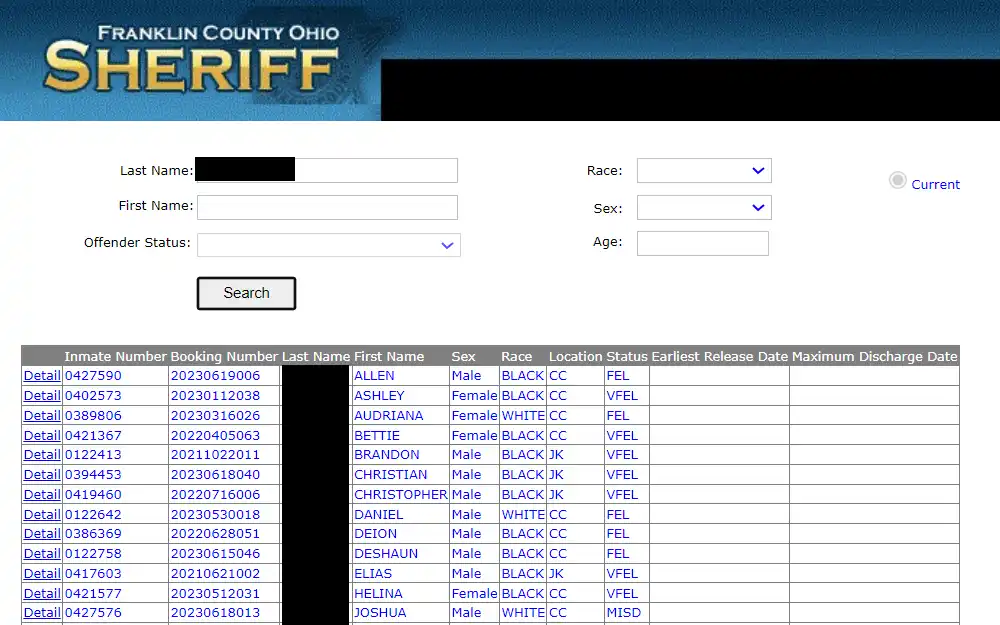
An Ohio mugshot search involves accessing booking photographs and arrest information maintained by local law enforcement or the state’s correctional department. Under the Ohio Public Records Act, these images are generally considered public records available for inspection. Most searches are conducted through county sheriff websites, court clerk portals, or the Ohio Department of Rehabilitation and Correction (ODRC) offender database.
Navigating the landscape of public records in Ohio requires an understanding of where data is housed and how the law protects or restricts access. Whether you are conducting a background check, verifying an arrest for legal reasons, or researching a specific case, knowing the distinction between municipal, county, and state records is the first step toward a successful search.
The Legal Framework: Ohio Public Records Act and Mugshots
In Ohio, the availability of mugshots is primarily governed by Ohio Revised Code (ORC) 149.43, known as the Ohio Public Records Act. This statute mandates that records kept by public offices, including law enforcement agencies, must be made available for inspection and copying to any member of the general public.
Booking Photos as Public Record
Historically, Ohio courts have upheld that booking photographs are public records because they document the actions of public officials (the police) and the processing of individuals into the justice system. However, the legal environment is not static. Over the last decade, there has been a growing debate regarding the balance between the "right to know" and the "right to privacy," particularly for individuals who are arrested but never charged or convicted.
As of 2026, while mugshots remain public, some law enforcement agencies have adopted policies to limit the proactive online "shaming" of individuals. This means that while a mugshot is still a public record you can request, it may not always be displayed in a high-visibility gallery on a sheriff’s homepage.
Restrictions and Exemptions
There are specific instances where an Ohio mugshot might be withheld from a public search:
- Investigatory Records: If the release of a photo would jeopardize an ongoing criminal investigation or reveal the identity of a confidential source.
- Juvenile Records: Mugshots of minors are generally protected and not available through standard public search portals.
- Expunged or Sealed Records: If a person successfully petitions the court to seal their record, the associated mugshot must be removed from public-facing government databases.
Where to Conduct an Ohio Mugshot Search
Because law enforcement in Ohio is decentralized, there is no single "master gallery" for every arrest in the state. Instead, you must determine which level of government is holding the individual.
1. County Sheriff Offices (Local Jails)
Most people looking for a mugshot are searching for someone recently arrested. In Ohio, the County Sheriff is responsible for the county jail. Most major counties provide an "Inmate Roster" or "Jail Inquiry" tool.
- Franklin County: The Franklin County Sheriff’s Office provides an online search tool where you can view current inmates, their charges, and their booking photos.
- Cuyahoga County: The Cuyahoga County Sheriff’s Department maintains a searchable database for the North and South jails in Cleveland.
- Hamilton County: The Hamilton County Sheriff’s Office jail records are often integrated with the Clerk of Courts search, providing a comprehensive look at both the arrest photo and the subsequent legal filings.
- Montgomery County: The Montgomery County Jail in Dayton offers a "Jail Site" search that includes active inmates and those released within the last 48 to 72 hours.
2. Ohio Department of Rehabilitation and Correction (ODRC)
If the individual has already been convicted of a felony and sentenced to a state prison, their mugshot will no longer be on a county jail website. Instead, you must use the ODRC Offender Search.
The ODRC database is a statewide tool that includes:
- Full name and aliases.
- Current incarceration status and location.
- A "Headshot" or mugshot taken upon entry into the prison system.
- Detailed sentencing information, including the "Expected Release Date."
3. Municipal Police Departments
Smaller city police departments (like those in Columbus, Cincinnati, or Akron) may hold an individual briefly before transferring them to a county facility. While these departments are subject to public records laws, they rarely maintain searchable online mugshot galleries. To obtain a photo from a municipal arrest, you often need to file a formal Public Records Request via the department's records clerk.
Step-by-Step Guide to Finding a Mugshot in Ohio
To perform a search efficiently, follow these steps to ensure you are looking in the right jurisdiction.
Step 1: Collect Identifying Information
At a minimum, you need the individual’s first and last name. Because many names are common, having a date of birth (DOB) or a middle initial is crucial for verifying you have the correct person.
Step 2: Determine the Status of the Individual
- Recently Arrested: Start with the County Sheriff’s office in the county where the arrest occurred.
- Currently in Prison: Use the ODRC statewide search.
- Historical Arrest: If the arrest happened years ago and the person is no longer in custody, you may need to search the County Clerk of Courts website. While they may not always display the photo, they will have the record of the case, which you can use to request the file from the arresting agency.
Step 3: Access the Online Portal
Navigate to the official ".gov" or ".us" website of the relevant agency. Avoid third-party "people search" sites during the initial phase, as these often charge fees for information that is free on government portals.
Step 4: Navigate the Results
When you find the record, look for a link labeled "View Image," "Booking Details," or "Inmate Information." In Ohio, the booking photo is usually accompanied by a list of charges (e.g., OVI, Assault, Theft) and the bond amount.
| Search Level | Primary Entity | Data Content | Best For |
|---|---|---|---|
| Local | Municipal Police | Arrest report, basic photo | Immediate post-arrest |
| County | Sheriff's Office | Jail roster, booking photo, bond | Current jail inmates |
| State | ODRC | Prison ID, updated photo, parole info | Convicted felons |
| Judicial | Clerk of Courts | Case files, dispositions, warrants | Legal history |
Third-Party Mugshot Websites and Ohio Law
A significant concern for many is the presence of private, third-party websites that scrape mugshots from sheriff sites and republish them. These sites often use search engine optimization (SEO) to ensure the mugshot appears when a person's name is Googled.
The Problem of "Mugshot Extortion"
In the past, many of these sites operated on a "pay-for-removal" model. Ohio has taken steps to curb this practice. Under ORC 2739.01, it is generally illegal for a person or entity to request or accept a fee to remove or modify criminal record information (including mugshots) if they are in the business of publishing such records.
Accuracy Issues
Third-party sites are notoriously slow to update. If a person is found not guilty or the charges are dropped, official government websites usually reflect this or remove the record. Third-party sites may keep the "arrest" photo live indefinitely, creating a misleading digital footprint.
How to Remove or Seal a Mugshot in Ohio
If you are the subject of a mugshot and want it removed from public view, you must follow the legal process for sealing or expunging records. In 2023 and 2024, Ohio significantly expanded these laws through Senate Bill 288, making it easier for more people to clear their records.
Sealing vs. Expungement
- Sealing a Record: The record still exists but is hidden from the general public. It is only accessible to law enforcement and certain government agencies.
- Expungement: The record is essentially deleted or destroyed.
The Removal Process
- Eligibility Check: Determine if your offense is eligible for sealing. Most first-time non-violent offenses are eligible after a certain waiting period (ranging from 6 months to several years depending on the level of the offense).
- File a Motion: You must file a motion to seal in the court where the case was heard.
- The Hearing: A judge will review your application. If there are no objections from the prosecutor and you meet the criteria, the judge will issue an order to seal the record.
- Notification: Once the order is signed, the court notifies the relevant agencies (Sheriff, BCI, Police) to remove the records from public access.
Once the official record is sealed, you can use the court order to demand that third-party websites remove your photo. Under Ohio law, they are often required to comply once they receive proof of sealing or expungement.
Technical Nuances of Ohio Record Searches
When using Ohio government databases, keep these technical tips in mind to avoid common pitfalls:
- Soundex Searches: Some Ohio court sites use "Soundex," which searches for names that sound like the one you typed. This is helpful if you aren't sure of the exact spelling (e.g., "Johnsen" vs. "Johnson").
- Wildcard Characters: Using an asterisk () can help if you only have a partial name. For example, "Smi" will bring up Smith, Smiley, and Smithson.
- The "Booking Number": If you cannot find a person by name, try searching by their booking number or inmate ID if you have it from a previous search. This is the most accurate way to track an individual through the system.
- VINElink: The Victim Information and Notification Everyday (VINE) system is a secondary tool. While its primary purpose is to notify victims of an inmate’s release, it serves as a powerful search tool for finding which jail an individual is currently being held in across the state.
Privacy and Ethical Considerations
While the "right to know" is a cornerstone of Ohio's legal system, the ethical implications of mugshot searches are significant. Arrest records are not proof of guilt. In the United States, individuals are presumed innocent until proven guilty in a court of law.
An Ohio mugshot search only proves that a person was arrested and booked; it does not necessarily mean they were convicted of a crime. Researchers and employers should always cross-reference mugshots with court dispositions to ensure they have the full story. Relying solely on a booking photo can lead to "false positives" in background checks, potentially violating the Fair Credit Reporting Act (FCRA) if used improperly for employment or housing decisions.
FAQs About Ohio Mugshot Searches
Are mugshots free to view in Ohio?
Yes, viewing mugshots on official government websites (Sheriff departments or the ODRC) is free. However, if you request a physical or certified copy of a booking photo from a records clerk, they may charge a nominal fee for the cost of duplication.
How long does a mugshot stay on an Ohio sheriff’s website?
This varies by county. Some counties, like Franklin or Hamilton, keep records online for several years. Others may remove the photo from their active "Inmate Roster" as soon as the individual is released from custody, though the record remains available via a formal public records request.
Can I find a mugshot from a different state on an Ohio database?
No. Ohio databases only contain records for arrests made within Ohio or for individuals serving time in Ohio state prisons. For out-of-state records, you must search the specific state or county where the arrest occurred.
Why can't I find a mugshot for a recent arrest?
There are several reasons a mugshot might not appear:
- The individual was processed but not yet photographed.
- The arrest was made by a federal agency (like the FBI or DEA), in which case the record would be in a federal database.
- The individual is a juvenile.
- The agency has a delay in syncing their jail management software with their public website.
Does Ohio have a statewide mugshot database?
There is no single "mugshot-only" database. The closest equivalent is the ODRC Offender Search for prison inmates or the Ohio Attorney General’s Bureau of Criminal Investigation (BCI), though BCI records (background checks) are not generally available for public web-browsing and require a fingerprint-based request.
Is it legal for a website to charge me to remove my mugshot in Ohio?
No. Ohio law specifically prohibits "mugshot extortion." If a website demands payment to remove a public record image, they may be in violation of state statutes. You should contact the Ohio Attorney General’s office if you encounter such a site.
Final Recommendations for Conducting a Search
When performing an Ohio mugshot search, always prioritize official government sources. Start with the County Sheriff’s office for the most recent arrests, and move to the ODRC portal for convicted individuals. If you are looking for your own records or those of a client for the purpose of removal, ensure you are familiar with the 2026 standards for record sealing under the Ohio Revised Code.
Always remember that an arrest is not a conviction. For a complete picture of an individual's criminal history, a mugshot search should be paired with a search of the relevant County Clerk of Courts to see the final outcome of the charges. This ensures that the information you are using is not only current but also contextually accurate.