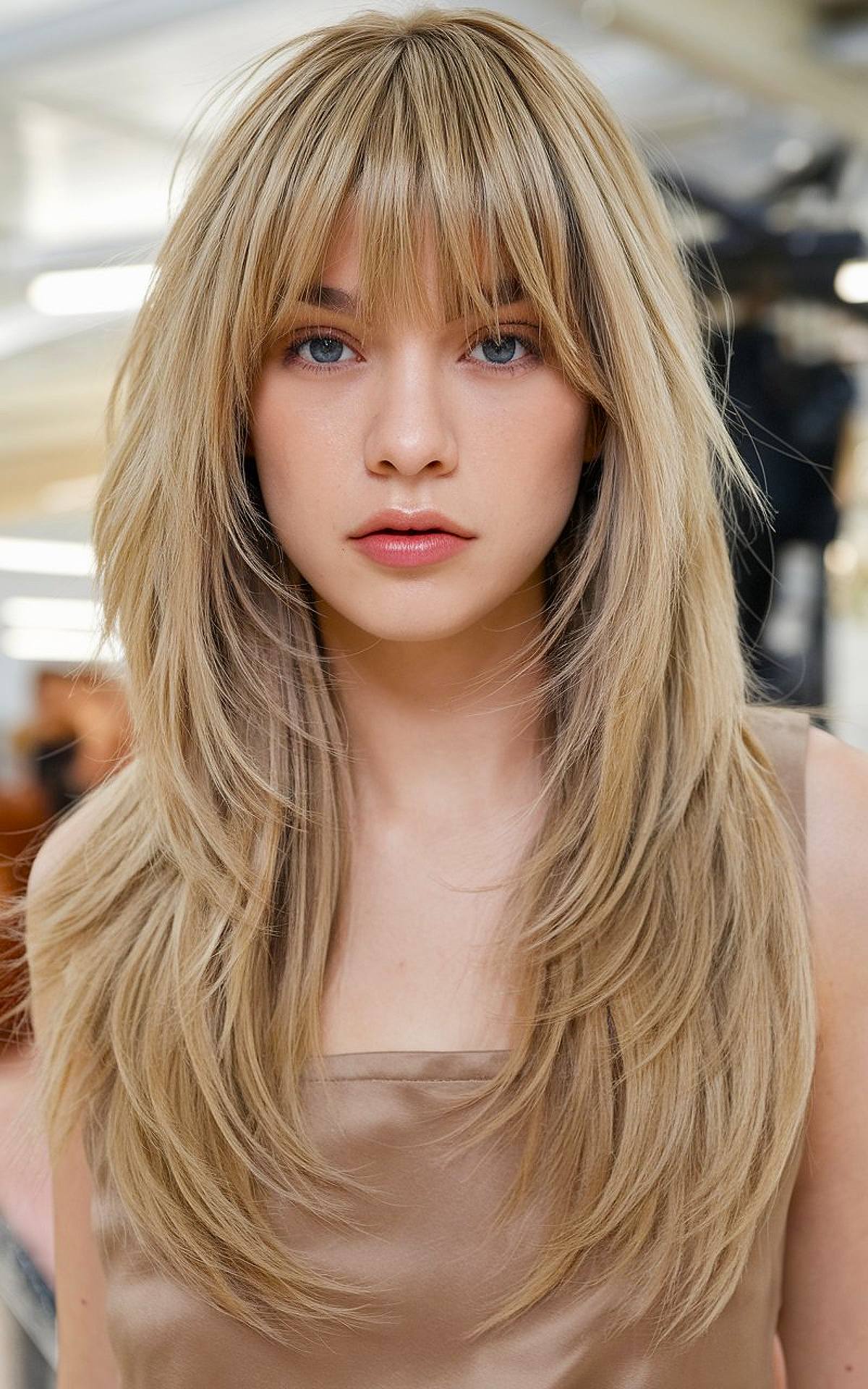
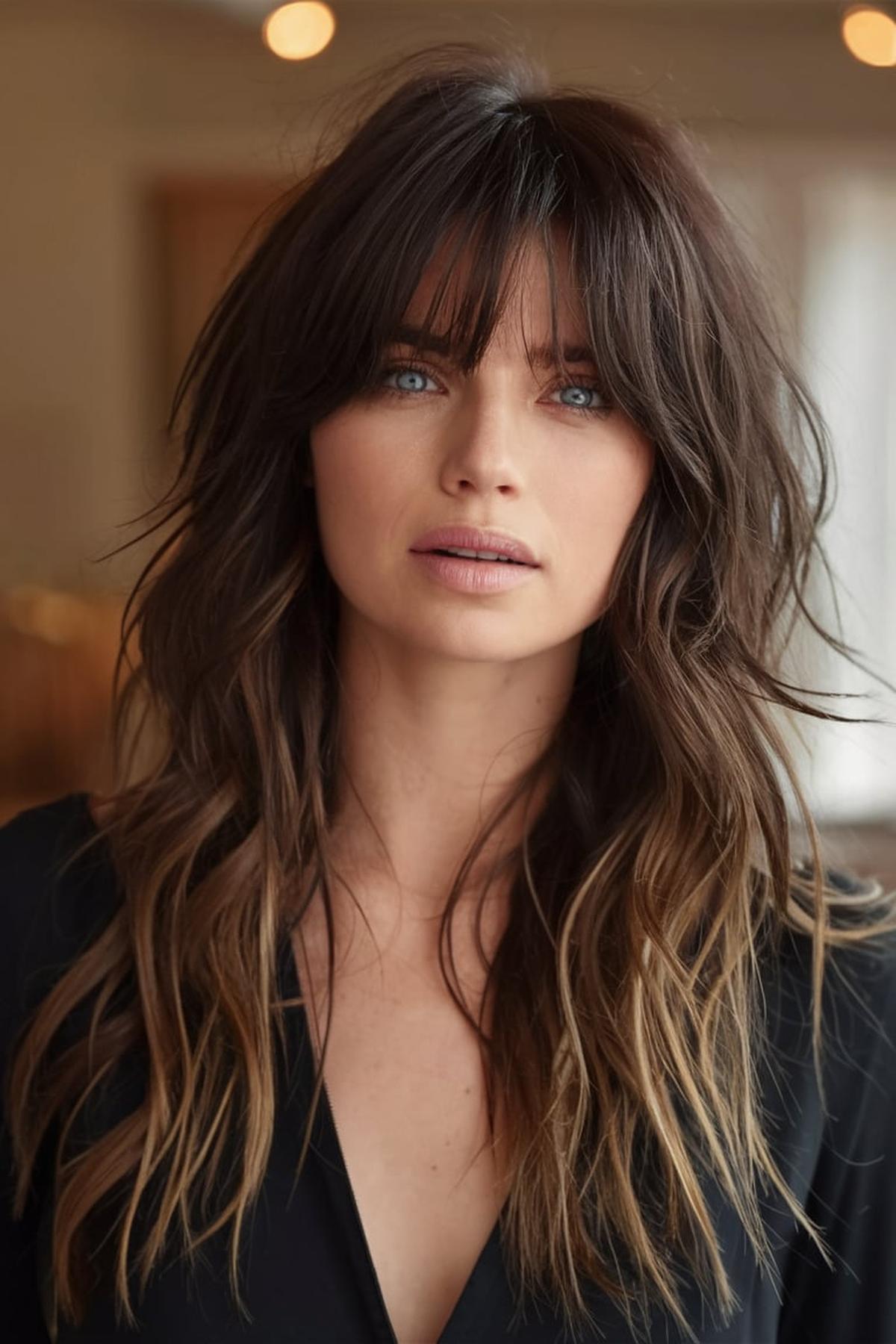
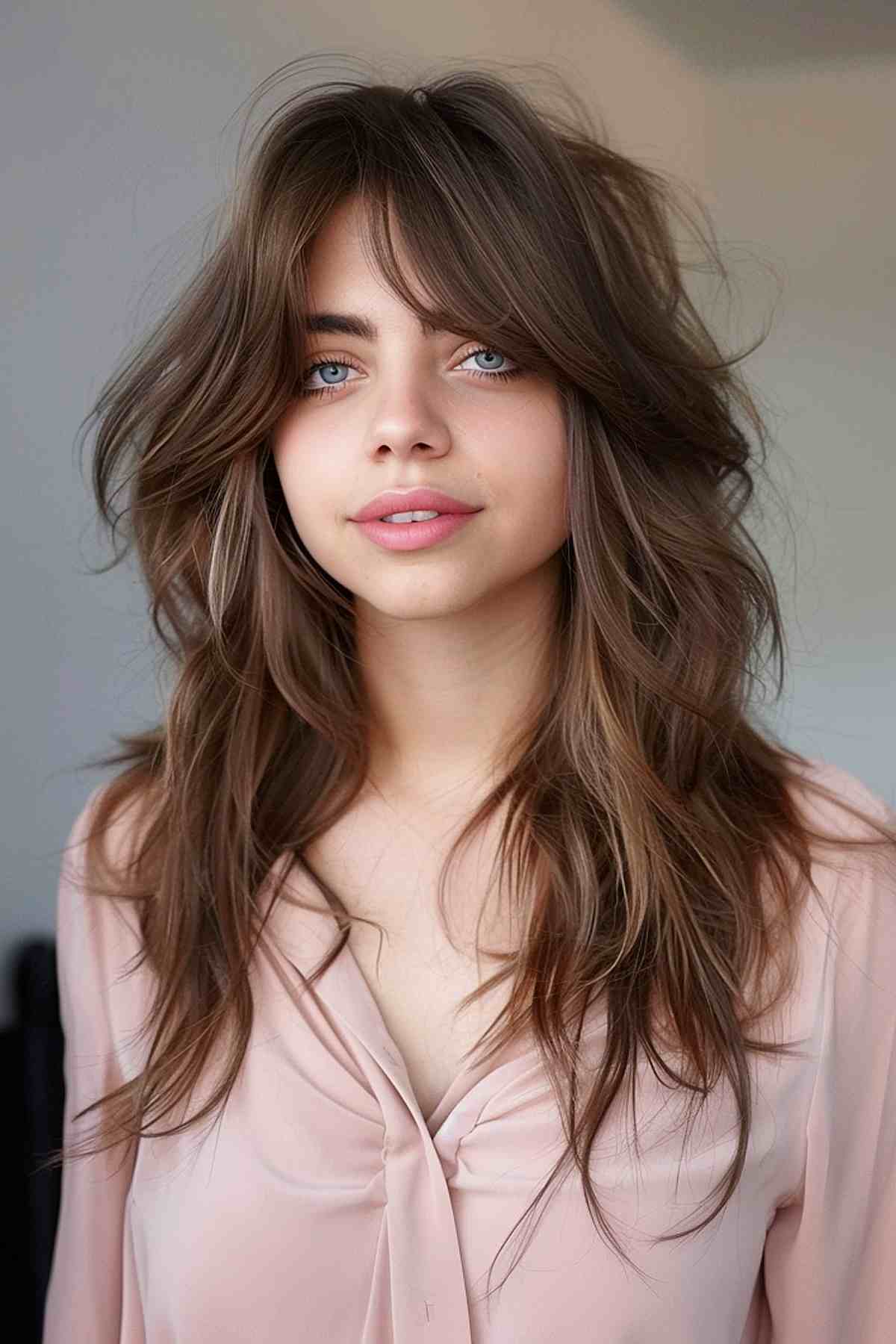
A choppy long haircut is a textured, multi-layered style that utilizes varying lengths to create movement, volume, and an "undone" aesthetic. Unlike traditional blended layers that transition smoothly, choppy layers are intentionally defined and visible, offering a modern, edgy look that works across various hair densities to either remove weight or add much-needed body.
The choppy long hairstyle has evolved significantly by 2026, moving away from the stark, aggressive transitions of the early 2000s toward a more sophisticated, "lived-in" texture. This style serves as the perfect middle ground for individuals who want to maintain their length while injecting personality and volume into their hair. Whether you are dealing with fine, flat strands or an overwhelming amount of thick hair, the choppy long cut offers a customizable solution that adapts to your specific hair geometry.
The Anatomy of a Choppy Long Haircut
To understand why the choppy long cut remains a staple in 2026, one must look at its structural components. It is not merely a "layered cut"; it is a strategic exercise in weight distribution. A stylist focusing on a choppy long look concentrates on three primary areas: the crown, the mid-lengths, and the perimeter.
Internal vs. External Layering
In a choppy long cut, "external layers" are the visible ones that sit on the surface of the hair. These provide the visual "choppiness" and texture. However, the secret to a successful 2026 variation lies in "internal layering." This involves cutting shorter pieces underneath the top section of hair to act as a scaffold, pushing the longer hair up and creating volume that doesn't fall flat by midday.
The Role of Disconnection
Traditional layering follows a mathematical progression where each layer is linked to the one above it. A choppy long cut often utilizes "disconnection." This means some sections are intentionally not blended. By leaving a gap between a short layer and a long one, the hair gains a more jagged, modern silhouette that mimics natural movement.
Face-Framing Elements
Most choppy long styles are paired with face-framing pieces that start anywhere from the cheekbone to the chin. In 2026, the trend has shifted toward "curtain choppiness," where the front sections are heavily textured to blend seamlessly into the rest of the long, jagged layers.
Compatibility: Who Should Choose a Choppy Long Cut?
While the choppy long hairstyle is versatile, its execution must be tailored to the individual's face shape and hair texture. A "one-size-fits-all" approach often leads to results that are either too wispy or too bulky.
Face Shape Analysis
- Oval Faces: This shape is the most versatile. You can experiment with very short choppy layers starting at the brow level to highlight the eyes, or keep them lower for a more elongated look.
- Round Faces: For rounder faces, the goal of a choppy long cut is to create vertical interest. Layers should typically start below the chin to avoid adding width to the cheeks. The choppiness helps break up the circular symmetry of the face.
- Square Faces: To soften a strong jawline, layers should be cut with a focus on the mid-lengths. Texturizing the ends of the hair prevents a "boxy" look and adds softness to the overall silhouette.
- Heart Faces: People with heart-shaped faces benefit from choppy layers that start around the jawline. This adds volume to the lower half of the face, balancing a wider forehead.
Hair Texture and Density
The technical approach to a choppy long cut changes drastically based on what the stylist is working with:
- Fine Hair: The goal here is to create the illusion of thickness. By adding choppy layers, you prevent the hair from looking "stringy." However, the layers must not be too deep, or they will remove too much of the hair's foundation.
- Thick Hair: For those with high density, the choppy long cut is a functional necessity. It allows the stylist to "carve out" weight from the interior, making the hair feel lighter and more manageable without sacrificing the appearance of a long mane.
- Wavy/Curly Hair: Choppy layers are excellent for curls as they prevent the dreaded "triangle" shape. By varying the lengths, curls can stack on top of each other more naturally.
Professional Cutting Techniques for 2026
Achieving the perfect "choppy" look requires more than just standard shears. Stylists in 2026 use a combination of tools to achieve the desired degree of texture and "grit."
Point Cutting
This is the foundational technique for any choppy style. Instead of cutting straight across the hair, the stylist holds the shears vertically and snips into the ends. This creates a notched, irregular edge rather than a blunt line. The deeper the point cut, the more "shattered" the ends will look.
Razor Cutting
For maximum "choppiness" and a feathered finish, many professionals prefer a straight razor. Razor cutting allows for incredibly soft, tapered ends that look natural rather than mechanical. This is particularly effective for the face-framing sections of a choppy long style.
Slide Cutting
This involves opening the shears slightly and sliding them down the hair shaft. It is used to remove bulk and create "invisible" layers that contribute to the choppy feel without creating obvious "steps" in the hair.
The "Ghost Layer" Technique
A popular refinement in 2026 is the "ghost layer." These are very thin, choppy layers hidden beneath the top layer of hair. They provide the movement of a choppy cut while allowing the surface of the hair to look relatively smooth and polished.
Comparison: Choppy Long vs. Other Popular Styles
It is easy to confuse the choppy long cut with other layered styles like the shag or the wolf cut. The following table highlights the key differences to help you decide which path to take.
| Feature | Choppy Long Cut | Classic Long Layers | The Long Shag (2026) |
|---|---|---|---|
| Layer Definition | High (Visible "chops") | Low (Seamless blending) | Very High (Extreme texture) |
| Volume Source | Mid-lengths and ends | Overall flow | Crown-heavy volume |
| Maintenance | Medium (Needs texture product) | Low (Air-dry friendly) | High (Requires daily styling) |
| Best For | Texture and movement | Professional/Polished looks | Edgy/Retro aesthetics |
| Ends Finish | Shattered/Point-cut | Blunt or slightly softened | Heavily thinned/Razored |
Styling and Product Requirements
A choppy long haircut is a "style-dependent" cut. While the architecture of the cut provides the foundation, you need the right products to make those layers "pop." In 2026, the focus is on products that provide "grip" without the "crunch."
The 2026 Styling Kit
- Dry Texturizing Spray: This is the most critical product for a choppy long look. It adds volume and "grit," allowing you to pinch and pull at specific layers to define them. Unlike hairspray, it allows for movement.
- Matte Pomade or Hair Wax: For the very ends of the hair, a tiny amount of matte wax can help emphasize the "choppy" nature of the cut. It prevents the ends from looking frizzy and gives them a piecey, defined appearance.
- Weightless Mousse: If you have fine hair, applying a volumizing mousse to damp hair before blow-drying provides the "lift" necessary to keep the choppy layers from falling flat.
- Heat Protectant with Bond Builders: Since choppy styles often involve more manipulation (curling irons or flat irons), using a modern 2026 heat protectant that also repairs disulfide bonds is essential for maintaining hair health.
How to Style at Home
To get the best out of your choppy long cut, follow these steps:
- Rough Dry: Use your fingers instead of a brush to dry your hair until it is about 80% dry. This preserves natural texture.
- Directional Blow-Drying: Dry the top sections in different directions to create "chaos" at the roots, which enhances the choppy feel.
- Alternate Curls: If using a curling wand, wrap sections in alternating directions (one toward the face, one away). Leave the last two inches of the ends out of the iron to maintain that jagged, choppy finish.
- The "Shake Out": Once the hair is cool, flip your head upside down and mist with texturizing spray. Shake the hair vigorously with your fingers to break up the curls into messy, choppy layers.
Maintenance and Salon Frequency
One of the myths of the choppy long haircut is that it is "low maintenance." While it looks effortless, maintaining the integrity of the "chops" requires regular attention.
As the hair grows, the weight of the ends begins to pull down the layers, causing the choppy effect to lose its "lift." For most hair types, a trim every 8 to 10 weeks is recommended. During these appointments, your stylist won't necessarily take off length from the bottom, but they will "dust" the internal and external layers to keep the texture fresh.
Over-washing is the enemy of the choppy look. This style actually looks better on "second-day" hair when the natural oils provide a bit of natural hold. Using a high-quality dry shampoo can help extend the life of your style between washes while adding even more texture to the crown.
Common Mistakes to Avoid
When requesting a choppy long cut, clear communication with your stylist is vital. Avoid these common pitfalls:
- Too Much Thinning: If a stylist overuses thinning shears, the choppy look can quickly turn into a "frizzy" look. Ensure they are using point-cutting or razoring for intentional texture rather than just thinning for the sake of it.
- Starting Layers Too High: If the first choppy layer starts too close to the crown without enough length at the bottom, you risk the "mullet" effect (unless that is your intentional goal).
- Ignoring the Perimeter: A choppy long cut still needs a solid foundation. If the very bottom of the hair is too thin, the whole style looks weak. Ensure the "baseline" of your hair remains thick enough to support the layers above.
FAQs about Choppy Long Hair
Will a choppy long haircut make my hair look thinner?
If executed correctly, no. In fact, for many people, the added texture and "lift" from the layers make the hair appear fuller and more voluminous. However, if too much weight is removed from the bottom (the perimeter), the ends can look sparse. A skilled stylist will balance the internal weight removal with a solid baseline.
Is the choppy long cut suitable for professional environments?
Absolutely. The "choppiness" can be dialed up or down. For a more professional look, the layers can be styled with a large round brush for a polished, "swingy" effect. For the weekend, you can use texturizing salt sprays for a more "undone" appearance.
How do I describe this to my stylist?
The best way is to bring photos, but technically, you should ask for "long layers with shattered ends and interior texturizing." Specify where you want the shortest layer to start (e.g., "I want my shortest layer to hit my collarbone"). Mention that you want "movement and visible texture" rather than "blended, soft layers."
Can I get a choppy long cut if I have pin-straight hair?
Yes, but be prepared to use more product. Straight hair doesn't naturally "hold" the separation of choppy layers as well as wavy hair does. You will likely need a texturizing paste or sea salt spray to keep the layers from simply laying flat against each other.
Does this style work with bangs?
Choppy long hair pairs exceptionally well with bangs, particularly "bottleneck" or "curtain" bangs. The key is to ensure the bangs are also textured so they don't look too "heavy" or blunt against the rest of the choppy layers.
Practical Recommendation: Your Next Action
If you are considering a choppy long haircut in 2026, the first step is to assess your daily styling commitment. While the cut provides the "look," the products provide the "vibe." Invest in a high-quality dry texturizing spray before your appointment so you are ready to style it from day one. When you go to the salon, ask your stylist to show you the "pinch and twist" technique—a method of applying product to small sections of your layers to emphasize the choppy ends. This small styling tweak is often the difference between a haircut that looks great in the salon and one that looks great every morning at home.