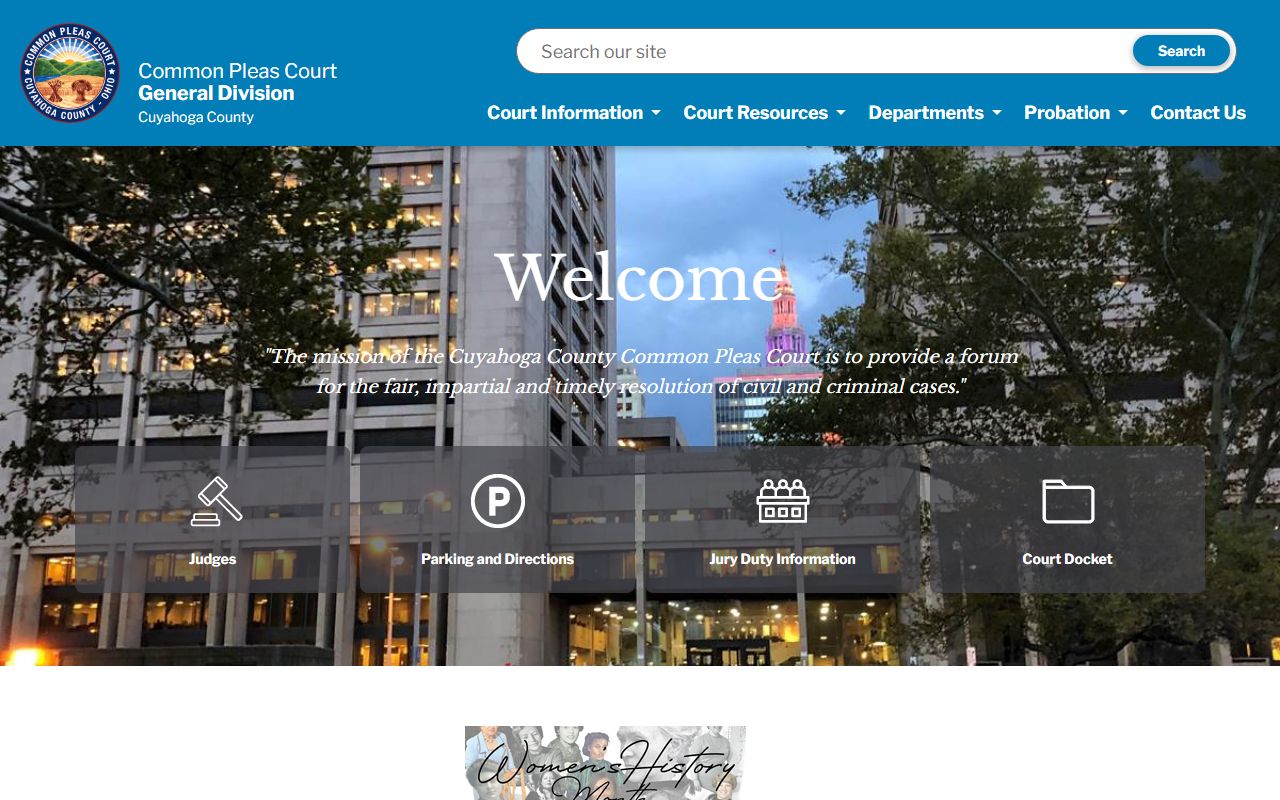
Accessing Cuyahoga County court records requires understanding the specific divisions, online portals, and public access terminals available through the Cuyahoga County Court of Common Pleas and local municipal courts in Ohio. Whether you are conducting background research, tracking litigation, or seeking historical legal documents, navigating these judicial archives involves utilizing both digital databases and in-person resources managed by the Clerk of Courts.
Understanding the Structure of Cuyahoga County Courts
Before searching for legal documentation, it is essential to understand that Cuyahoga County's judicial system is divided into distinct jurisdictions. Each court handles specific types of legal matters, maintains independent docket systems, and stores records according to unique administrative guidelines. Knowing the correct court division prevents wasted time and ensures accurate search results.
The Court of Common Pleas
The Cuyahoga County Court of Common Pleas is the trial court of general jurisdiction in the county. It handles cases that exceed the monetary or subject-matter limits of lower municipal courts. The Court of Common Pleas is further divided into specialized divisions:
- General Division: Handles felony criminal cases and civil actions where the disputed amount exceeds $15,000.
- Domestic Relations Division: Manages family law matters, including divorce, legal separation, annulment, civil protection orders, and child custody disputes originating within the county.
- Juvenile Division: Oversees cases involving minors, including delinquency, unruly behavior, traffic violations, dependency, neglect, and abuse, as well as paternity and child support enforcement.
- Probate Division: Processes matters related to the administration of estates, wills, trusts, guardianships, name changes, mental health commitments, and marriage licenses.
Municipal and Mayor’s Courts
In addition to the Court of Common Pleas, Cuyahoga County contains multiple municipal courts, such as the Cleveland Municipal Court and various suburban municipal courts (e.g., Lakewood, Garfield Heights, Parma, Shaker Heights). These courts handle misdemeanor criminal offenses, traffic violations, and civil lawsuits where the financial claim is $15,000 or less. If an incident occurred within a specific municipality rather than unincorporated county land, the local municipal court is often the correct repository for those records.
How to Search Cuyahoga County Court Records Online
Digital access has transformed how the public retrieves docket information, scheduled hearings, and judgment details. The Cuyahoga County Clerk of Courts provides online case docket systems for the Court of Common Pleas, allowing users to perform public searches free of charge.
Accessing the Court of Common Pleas Dockets
The primary online resource for the General, Domestic Relations, and Juvenile divisions is hosted on the official Cuyahoga County Clerk of Courts portal. Users can search records using several criteria:
- Case Number: The most precise search method. Case numbers typically follow a standardized format indicating the division, year, and sequence (e.g., CV-20-999999 or CR-21-123456).
- Party Name: Searching by individual or business name (Last Name, First Name). Narrowing parameters by date ranges or case types is recommended to manage large volumes of common names.
- Attorney Registration Number: Useful for legal professionals tracking filings associated with specific counsel.
Online Search Features and Limitations
While online docket portals provide extensive summaries of case activity, motion filings, and scheduling orders, certain restrictions apply:
- Sealed and Expunged Records: By Ohio law, criminal records that have been sealed or expunged are legally removed from public view and will not appear in standard online searches.
- Juvenile and Adoption Files: To protect minor privacy, Juvenile Division records and adoption files have restricted public access. Only authorized parties, legal counsel, or individuals with a specific court order can view these documents.
- Image Availability: While text dockets are generally accessible, complete digital document images for older cases may require an in-person visit or a formal records request, as historical files predating digital record-keeping must be digitized or pulled from physical archives.
Summary of Cuyahoga County Court Divisions and Records Access
| Court Division | Primary Case Types | Online Docket Availability | Typical Record Restrictions |
|---|---|---|---|
| Common Pleas - General | Felonies, civil suits ($15,000+), foreclosures | Available via Clerk of Courts website | Sealed/expunged criminal records |
| Common Pleas - Domestic | Divorce, custody, protection orders | Available via Clerk of Courts website | Certain sensitive family exhibits |
| Common Pleas - Juvenile | Delinquency, dependency, custody | Strictly restricted online access | High privacy; restricted to parties/counsel |
| Common Pleas - Probate | Estates, wills, guardianships, marriage | Available via Probate Court portal | Medical/psychiatric commitment files |
| Municipal Courts | Misdemeanors, traffic, civil ($15,000-) | Varies by municipality (e.g., Cleveland Municipal) | Local rules on expungements |
Conducting In-Person Searches and Requesting Physical Copies
When online databases do not provide the necessary documentation, or when certified copies are required for legal, employment, or immigration purposes, in-person research is necessary. The Cuyahoga County Justice Center, located in downtown Cleveland, houses the primary administrative offices and record rooms.
Preparing for an In-Person Visit
- Location: The Cuyahoga County Justice Center is situated at 1205 Ontario Street, Cleveland, OH 44113.
- Identification and Security: Visitors must pass through security screening. Bringing a valid government-issued photo identification is standard practice.
- Public Terminals: Dedicated public access computer terminals are available inside the Clerk’s office for searching electronic archives that may not be exposed on the external public internet portal.
- Archival Retrieval: For very old or inactive paper files, staff may need to retrieve documents from off-site storage. Submitting a request in advance via phone or email can reduce waiting times.
Fees for Copies and Certification
Obtaining physical or certified copies of court documents incurs standard statutory fees set by the county.
- Standard Copies: Charged per page for black-and-white printing.
- Certified Copies: Required for official use in other jurisdictions or administrative agencies. These include an embossed seal and an official signature from a deputy clerk, carrying an additional certification fee per document.
- Payment Methods: The Clerk's office typically accepts cash, major credit cards, and business checks, though service fees may apply to card transactions.
Understanding Ohio Public Records Law and Privacy Exemptions
Public access to judicial records in Ohio is governed by the Ohio Public Records Act and Rules of Superintendence for the Courts of Ohio. While the overarching legal framework presumes that court records are open to the public, significant exceptions protect individual privacy, safety, and fair trial rights.
Personal Identifiers and Redaction
Under Rule 45 of the Rules of Superintendence for the Courts of Ohio, filers are responsible for omitting or redacting personal identifiers from public documents unless required by law. These include:
- Social Security numbers
- Financial account numbers (bank accounts, credit cards)
- Driver’s license numbers When sensitive data must be submitted, filings are often accompanied by a non-public confidential information form.
Motion to Seal or Expunge
Individuals seeking to restrict public access to their criminal history in Cuyahoga County must file a formal application for sealing or expungement through the Common Pleas or Municipal Court where the case was adjudicated. Eligibility depends on the specific conviction status, statutory waiting periods, and whether the applicant has subsequent criminal involvement. Once a judge grants an order to seal, law enforcement and court agencies restrict access, and commercial background check databases are legally obligated to update their records.
Frequently Asked Questions About Cuyahoga County Court Records
Are all Cuyahoga County court records available online for free?
Most docket summaries, party names, hearing schedules, and basic case filings for the Court of Common Pleas are accessible online without a fee. However, viewing complete document images for certain sensitive cases, obtaining certified physical copies, or accessing restricted juvenile and probate files may require visiting the courthouse or paying statutory duplication fees.
How do I find out if someone has an active criminal warrant in Cuyahoga County?
Active arrest warrants and bench warrants are managed by the Cuyahoga County Sheriff's Department and local municipal police agencies rather than standard civil dockets. The Sheriff’s Department provides online warrant lookup tools on its official website, allowing users to search active misdemeanor and felony warrants by name.
Can I access records for cases that occurred decades ago?
Yes, historical records are preserved, but their format varies. Cases dating back several decades may exist only on microfilm, in physical paper ledgers, or in off-site archival storage. Retrieving these files often requires submitting a specific record request directly to the appropriate Clerk of Courts division, and processing times may be longer than instant digital searches.
What is the difference between a sealed record and an expunged record in Ohio?
While both terms refer to limiting public access to criminal history, an expunged record in Ohio historically meant physical destruction or permanent erasure of the record (though modern statutory updates have blurred administrative distinctions). A sealed record remains preserved securely within court and law enforcement files but is legally invisible to the public, employers, and landlords during standard background checks.
How do I obtain a certified copy of a divorce decree from Cuyahoga County?
To obtain a certified copy of a divorce decree, you must contact the Cuyahoga County Domestic Relations Court Clerk. You will need to provide the case number and the names of both parties. Requests can typically be made in person at the Justice Center or submitted via mail with the required copying and certification fees.
Next Actions and Official Resources
When initiating a search or resolving a legal records request, rely strictly on official county channels to ensure data accuracy and avoid third-party aggregator fees.
- Official Portal: Visit the Cuyahoga County Clerk of Courts to execute direct public docket searches and review current administrative schedules.
- Direct Inquiries: For complex filings, archival requests, or specific fee schedules, contact the Clerk's customer service department directly by phone or visit the Cuyahoga County Justice Center in downtown Cleveland during regular business hours.