A CSG payment refers to a transaction processed through CSG Systems International—specifically its payment division, CSG Forte. It is a secure method used by utility companies, government agencies, and telecommunications providers to collect funds from customers via credit cards, ACH transfers, and digital wallets through integrated online portals, IVR systems, or mobile applications.
As of 2026, CSG Systems International remains a cornerstone of the global billing and customer engagement landscape. While many consumers may not recognize the name "CSG" immediately, they interact with its infrastructure every time they pay a cable bill, a water utility charge, or a municipal fine. For businesses, CSG represents a sophisticated "fintech" ecosystem that bridges the gap between complex back-office revenue management and the front-end user experience.
This guide provides an in-depth analysis of CSG payments, covering how they function, why they appear on financial statements, the security protocols involved, and how both consumers and merchants can navigate the platform effectively.
The Architecture of a CSG Payment
To understand a CSG payment, one must distinguish between the parent corporation and its specialized payment gateway. CSG Systems International is a multi-billion dollar enterprise that provides Business Support Systems (BSS). CSG Forte, the dedicated payment arm, focuses specifically on the movement of money.
The Role of CSG Forte
CSG Forte acts as a Payment Service Provider (PSP). Unlike a simple credit card processor, Forte offers a unified platform for both Automated Clearing House (ACH) and card-based transactions. This dual capability is why it is the preferred partner for organizations that handle high volumes of recurring payments, such as insurance companies and property management firms.
In the 2026 payment landscape, the CSG architecture has evolved to support "omni-channel" experiences. This means a payment initiated via a mobile app is synchronized in real-time with the merchant’s ledger, the customer’s web portal, and the automated phone system (IVR). The integration ensures that if a customer pays their bill at a kiosk, they won't receive a late notice via email five minutes later.
Integration with BSS/OSS
For large-scale enterprises, especially in the "quad-play" (internet, TV, phone, and wireless) sector, a CSG payment is more than a transaction. It is a data point within a larger Operations Support System (OSS). When you make a payment, the CSG system updates your service status. For instance, if a service was suspended for non-payment, the CSG payment trigger can automatically signal the network to restore the user’s internet connection without human intervention.
Why "CSG" or "Forte" Appears on Your Bank Statement
One of the most common reasons individuals search for "CSG payment" is an unfamiliar line item on their credit card or bank statement. Because CSG Forte functions as a "white-label" provider, the branding on the payment portal usually reflects the merchant (e.g., "City Water Dept"), but the underlying clearing house may list the processor's name.
Common Statement Identifiers
- FORTE [Merchant Name]*: This indicates the transaction was processed by the Forte gateway.
- CSG PAYMENTS*: Often seen in the telecommunications sector.
- CSG TELECOM*: Specifically related to cable or satellite television providers.
- ACH DEBIT CSG SYSTEMS: Typically used for recurring monthly bill pays from a checking account.
If you see these terms, it is rarely a sign of fraud; rather, it is the technical record of a bill you likely paid through an official channel. However, in 2026, sophisticated phishing attempts sometimes mimic these identifiers, so it is always prudent to cross-reference the transaction amount with your recent utility or service bills.
Consumer Guide: How to Complete a CSG Payment
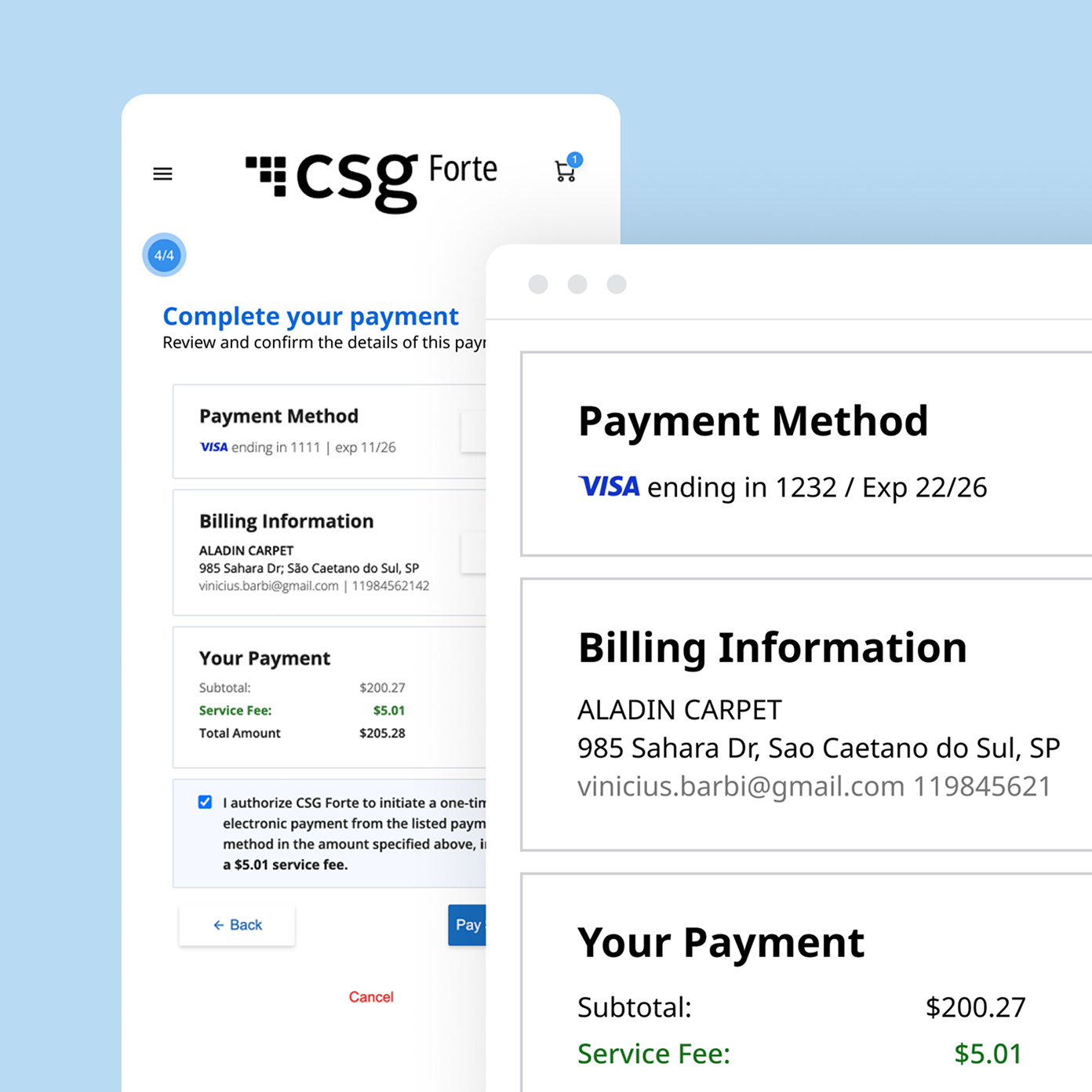
Making a payment through a CSG-powered portal is designed to be a frictionless experience. Depending on the merchant’s configuration, you generally have several paths to completion.
1. Online Portals and Guest Checkout
Most merchants utilizing CSG offer a "Quick Pay" or "Guest Pay" option. This allows users to settle a balance using only an account number and a zip code, bypassing the need for a full username and password. This is particularly useful for one-time payments like traffic fines or permit fees.
2. Recurring Auto-Pay
The core strength of the CSG ecosystem is its recurring billing engine. When a consumer signs up for "Auto-Pay," their payment credentials (credit card or bank routing information) are not stored by the merchant directly. Instead, they are "tokenized" within CSG’s secure vault. Every month, the system generates a request to charge the token, ensuring that the actual sensitive data is never exposed during the monthly billing cycle.
3. Interactive Voice Response (IVR)
For those who prefer or require phone-based payments, CSG provides PCI-compliant IVR systems. These systems allow you to type your card number into the phone keypad. The data is encrypted immediately, meaning even the customer service representative on the line cannot see your full credit card details.
Technical Specifications for Businesses and Merchants
For organizations looking to implement CSG Forte, the platform offers a "developer-first" approach. By 2026, the shift toward API-centric payment models has made CSG’s documentation a standard for enterprise-level integration.
API Integration and Webhooks
CSG Forte utilizes RESTful APIs, which allow developers to embed payment forms directly into their own websites or mobile apps. This is critical for maintaining "brand consistency." Instead of redirecting a customer to a third-party site (which can lower conversion rates), the payment happens behind the scenes.
Webhooks are another vital feature. When a payment is successfully processed, the CSG server sends an automated "ping" to the merchant's server. This triggers subsequent actions, such as emailing a receipt, updating a database, or shipping a product.
Fee Structures and Cost Considerations
While specific pricing is usually negotiated at the enterprise level, CSG Forte is known for a competitive fee structure that balances flat-rate ACH fees with percentage-based card processing.
| Component | Description | Typical 2026 Standard |
|---|---|---|
| ACH Processing | Flat fee for bank transfers. | $0.25 - $0.75 per transaction |
| Credit Card Fees | Percentage of the total transaction. | 2.1% - 3.5% (Varies by card type) |
| Gateway Fee | Monthly cost for accessing the platform. | $20 - $50 per month |
| Chargeback Fee | Cost incurred if a customer disputes a charge. | $25 per instance |
| PCI Compliance | Annual or monthly fee for security audits. | Varies by merchant volume |
Security Protocols: PCI-DSS and Beyond
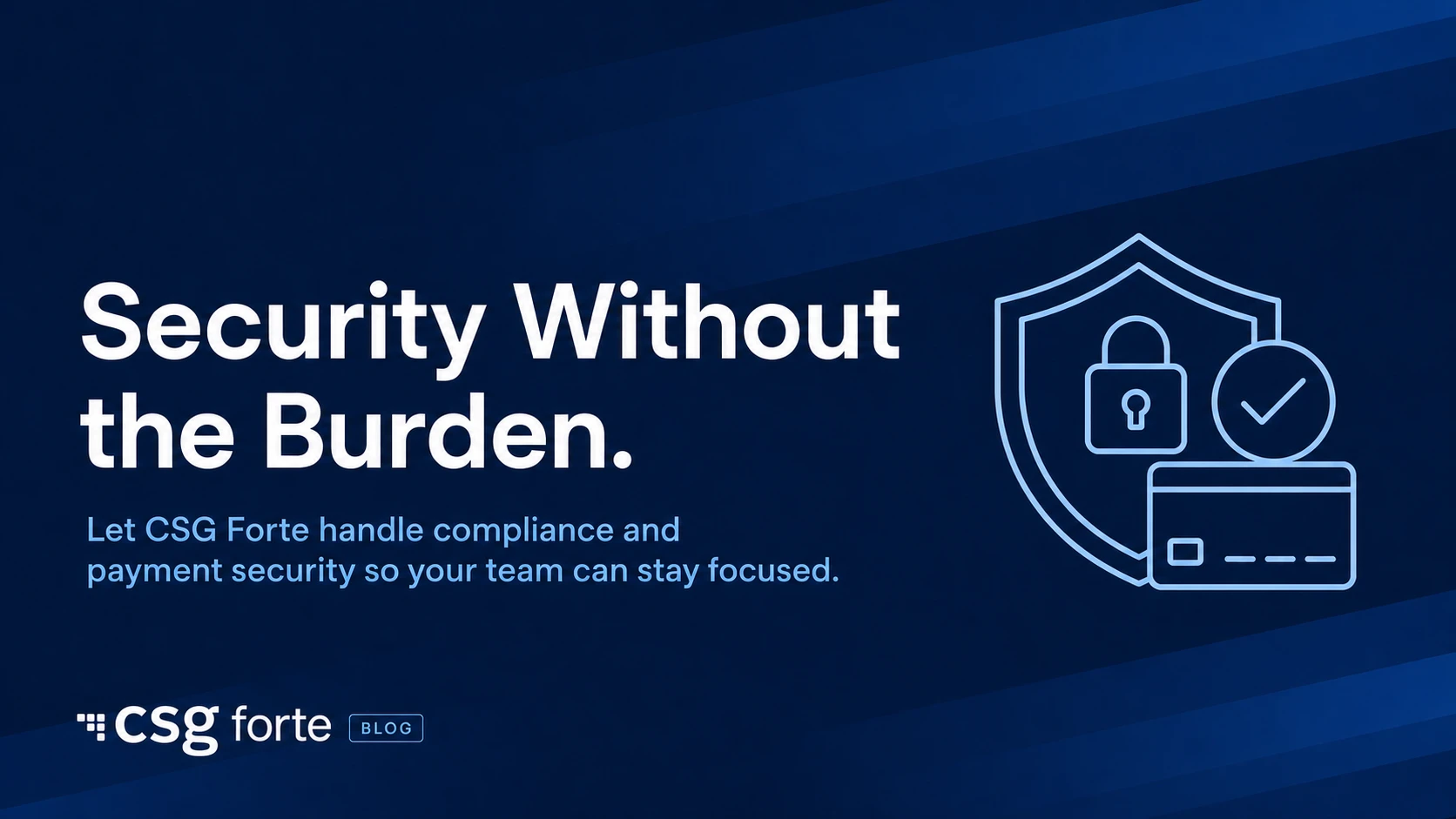
In 2026, the security of financial data is under constant threat from sophisticated cyber-attacks. CSG Payment systems employ multi-layered defense mechanisms to protect both the merchant and the consumer.
Tokenization
Tokenization is the process of replacing sensitive data (like a 16-digit credit card number) with a non-sensitive equivalent, known as a token. Even if a merchant’s internal database is breached, the hackers only find a list of tokens that are useless outside of the CSG ecosystem.
Point-to-Point Encryption (P2PE)
From the moment a card is swiped at a kiosk or entered into a web browser, P2PE ensures the data is encrypted. The data is only "unlocked" once it reaches CSG’s secure hardened servers. This effectively narrows the "scope" of PCI compliance for the merchant, as the sensitive data never truly touches their own network in a readable format.
Fraud Detection Suites
CSG utilizes AI-driven fraud detection that analyzes thousands of data points in milliseconds. This includes IP geolocation, velocity checks (how many payments are being made in a short window), and behavioral biometrics. If a payment appears suspicious, the system can automatically flag it for manual review or require Multi-Factor Authentication (MFA) from the user.
Troubleshooting Common CSG Payment Issues
Even with high-end technology, errors can occur. Most CSG payment issues fall into three categories: authorization failures, synchronization lags, or browser incompatibilities.
Declined Transactions
If a CSG payment is declined, the system usually provides a "Reason Code."
- Code 200 (Generic Decline): Usually means insufficient funds or a block by the issuing bank.
- Code 300 (Gateway Error): A temporary communication issue between CSG and the credit card network. In this case, waiting 15 minutes before retrying is recommended.
- AVS Mismatch: The billing address entered does not match the address on file with the bank. Ensure the zip code is exactly what appears on your bank statement.
Missing Payments
Sometimes a payment is deducted from a bank account but does not show as "Paid" on the merchant's portal. This is often a "pending" status issue. ACH payments, in particular, can take 3 to 5 business days to fully clear. During this window, the funds are held by the banking system, and the CSG portal will update once the "Settlement" file is processed.
Login and Portal Access
For recurring payments, many users struggle with forgotten credentials. Because CSG often manages the backend but the merchant manages the frontend, you should usually contact the merchant's customer support for password resets, rather than contacting CSG directly.
The Future of CSG Payments in 2026
The payment landscape in 2026 is defined by "Real-Time Payments" (RTP). CSG has integrated with the FedNow service and the RTP network from The Clearing House, allowing for near-instantaneous movement of funds.
For consumers, this means that a last-minute utility payment made at 11:59 PM on the due date will settle instantly, avoiding late fees. For businesses, it improves cash flow by removing the traditional "T+3" (transaction date plus three days) waiting period for funds to arrive in their corporate accounts.
Furthermore, CSG is increasingly incorporating "Pay by Link" technology. This allows merchants to send a secure, individualized payment link via SMS or WhatsApp. The customer clicks the link, authenticates via FaceID or a fingerprint on their smartphone, and completes the payment in seconds without ever typing a card number.
Related Frequently Asked Questions
Why does my bill say "Powered by CSG Forte"?
This means your service provider (like your city's trash collection or your internet provider) has outsourced its financial technology to CSG. It is an industry-standard practice used to ensure high-level security and to provide customers with more ways to pay, such as via Apple Pay or Google Pay, which the merchant might not be able to support on their own.
How do I cancel a recurring CSG payment?
To cancel a recurring payment, you must log in to the specific portal where you set up the account (e.g., your Comcast or PG&E account). CSG Forte does not have the legal authority to cancel a contract between you and your provider. If you cannot access the portal, you must contact the merchant's billing department directly.
Is CSG Forte the same as a bank?
No, CSG Forte is a payment processor and gateway, not a bank. They facilitate the communication between your bank (the "issuing bank") and the merchant's bank (the "acquiring bank"). They do not hold your money in a traditional savings or checking account.
Does CSG charge a "Convenience Fee"?
CSG provides the technology, but the merchant decides whether to pass on the processing costs to the consumer. In many government and utility sectors, a "convenience fee" (often $2.00 to $5.00) is added to credit card payments to cover the transaction costs, while ACH/e-check payments are frequently offered for free.
What should I do if I see a duplicate CSG charge?
First, check the status of the charges on your bank's website. Often, one of the charges is a "Pending Authorization" that will disappear within 48 hours. If both charges "Post" and settle, contact the merchant's billing department with the "Transaction ID" found in your confirmation email.
Final Recommendation
When dealing with a CSG payment, the best course of action depends on your role. If you are a consumer seeing an unfamiliar charge, verify your recent utility and service bills before assuming fraud; the name "CSG" is simply the "plumbing" of the financial system. If you are a business owner looking for a robust billing solution, CSG Forte remains a premier choice in 2026 due to its ability to handle both ACH and card payments within a single, PCI-compliant API. To ensure the smoothest experience, always keep your billing address updated and opt for ACH payments where possible to avoid the high convenience fees often associated with credit card transactions.