Navigating the rules and administrative requirements for a Bureau of Motor Vehicles (BMV) license requires understanding specific state prerequisites, proper documentation, and ongoing compliance rules. Whether you are applying for a first-time driver’s license, upgrading a commercial credential, or renewing an existing permit, meeting established regulatory standards ensures uninterrupted driving privileges.
The Role of the Bureau of Motor Vehicles (BMV)
The Bureau of Motor Vehicles—known in some states as the Department of Motor Vehicles (DMV) or Department of Public Safety (DPS)—manages driver licensing, vehicle registration, and titling within state jurisdictions. State agencies operate under statutory frameworks designed to verify driver identity, test operational competency, and maintain highway safety.
A BMV license serves as official government-issued identification while certifying that the holder has demonstrated the knowledge and skill required to operate a motor vehicle legally. Because licensing regulations derive from state laws rather than federal mandates, exact prerequisites, fees, testing procedures, and renewal intervals vary depending on your jurisdiction. However, core administrative standards remain consistent across most jurisdictions, focusing on identity verification, residency confirmation, and physical fitness to drive.
Core Categories of BMV Licenses
Before initiating an application or renewal, you must identify the precise credential matching your vehicle class and transportation purpose. Driving a standard sedan requires a different class of authorization than operating a commercial semi-truck or a passenger motorcycle.
1. Standard Non-Commercial Driver's Licenses (Class D or Equivalent)
The standard driver's license is the most common credential issued by a BMV. It permits the operation of standard passenger vehicles, light trucks, and small vans. Applicants must typically pass a written knowledge test, an eye examination, and a behind-the-wheel driving skills test.
2. Commercial Driver’s Licenses (CDL)
Operating heavy commercial vehicles, buses, or vehicles transporting hazardous materials requires a Commercial Driver's License. CDLs are divided into three distinct classes—Class A, Class B, and Class C—based on Gross Vehicle Weight Rating (GVWR) and towed unit specifications. Obtaining a CDL involves strict federal guidelines set by the Federal Motor Carrier Safety Administration (FMCSA), mandatory entry-level driver training (ELDT), specialized endorsements, and a rigorous medical examination.
3. Motorcycle Licenses and Endorsements
Operating a two- or three-wheeled motorized cycle on public roads requires either a separate motorcycle license or a motorcycle endorsement added to an existing standard driver's license. Prerequisites usually include passing a specialized written knowledge test and a skills test, though many states waive the on-road skills test upon successful completion of an approved Motorcycle Safety Foundation (MSF) rider course.
Step-by-Step Application Guide for a First-Time BMV License
Securing a first-time license requires a structured progression through educational, administrative, and testing phases. While minor applicants (under 18) must complete Graduated Driver Licensing (GDL) programs, adult applicants follow a streamlined yet rigorous pathway.
Step 1: Gather Mandatory Identity Documentation
Modern BMV agencies enforce strict identity verification protocols under federal standards like the REAL ID Act. When visiting a physical branch, you must present original or certified copies of the following documents:
- Proof of Identity: Valid U.S. passport, certified birth certificate, or permanent resident card.
- Proof of Social Security Number: Social Security card, W-2 form, or a pay stub displaying your full SSN.
- Proof of State Residency: Two separate documents displaying your current residential address, such as utility bills, lease agreements, or bank statements.
Step 2: Pass the Knowledge and Vision Tests
Prior to receiving an instructional permit or learner's permit, applicants must study the official state driver’s manual. The written knowledge exam evaluates comprehension of traffic laws, road signs, right-of-way rules, and safe driving practices. Concurrently, BMV personnel administer a basic visual acuity screening to ensure your eyesight meets the minimum legal standard for driving.
Step 3: Complete Behind-the-Wheel Training and Testing
Once you hold a valid learner's permit, you can practice driving under the supervision of a licensed adult driver (or certified instructor, depending on age). After logging the required practice hours and meeting any mandatory waiting periods, you must schedule and pass a practical driving skills test, demonstrating your ability to execute turns, park, back up, and respond safely to traffic hazards.
Common Documentation and Fee Comparison
Navigating BMV requirements is easier when you compare the types of credentials, typical documentation standards, and general administrative expectations.
| License Type | Primary Prerequisite | Testing Required | Typical Validity Period |
|---|---|---|---|
| Learner's Permit | Identity docs, SSN, residency, parental consent (if minor) | Written Knowledge Test & Vision Exam | 1 to 2 Years |
| Standard Driver's License | Valid permit, completed driving hours, identity validation | Road Skills Test (if first time adult/minor) | 4 to 8 Years |
| Commercial Driver's License (CDL) | Age 18+ (21+ for interstate), DOT physical, ELDT training | General Knowledge, Air Brakes, Combination, & Skills | 4 to 5 Years |
| Motorcycle License | Standard license or permit, rider education completion | Motorcycle Knowledge & Practical Riding Test | Matches Driver's License |
Maintaining and Renewing Your BMV License
Once issued, a BMV license requires ongoing management to maintain legal validity. Driving with an expired credential can result in heavy traffic fines, vehicle impoundment, or the requirement to retake both written and practical exams.
Renewal Cycles and Online Services
Most states issue standard licenses with validity periods ranging between four and eight years. Many modern BMVs allow drivers to complete standard renewals online, provided they do not require a new photograph, vision screening, or name change. If you must visit a physical branch, ensure you bring your current license, payment for renewal fees, and updated proofs of residency if you have recently moved.
Address Changes and Name Updates
State laws mandate that drivers update their residential address with the BMV within a specific timeframe (often 10 to 30 days) following a move. Failing to update your address can result in missed renewal notices or suspension notifications. Name changes resulting from marriage or court orders require presenting certified legal documents, such as a marriage certificate or court decree, along with an updated Social Security card before a new credential can be printed.
Frequently Asked Questions
What should I do if my BMV license is lost or stolen?
If your license is lost or stolen, you should request a replacement credential immediately through your state's BMV online portal or by visiting a local branch in person. You will need to provide identifying information and pay a duplicate license fee. Many states allow you to print a temporary paper interim license for immediate driving purposes while your official plastic card arrives in the mail.
Can I renew my driver's license online if it has already expired?
In most jurisdictions, online renewal is restricted to licenses that are currently valid or expired by a very short grace period (typically less than 30 to 90 days). If your license has been expired for an extended period, the BMV may require you to schedule an in-person appointment, pass a vision screening, or retake the written and driving examinations.
What is a REAL ID-compliant BMV license?
A REAL ID-compliant license meets heightened federal security standards established by the REAL ID Act. These licenses feature a star marking in the upper corner. Starting May 7, 2025, standard non-compliant driver's licenses will no longer be accepted as valid identification for boarding domestic commercial flights or entering federal facilities, making REAL ID acquisition essential for frequent travelers.
How do medical conditions affect my BMV license status?
Certain medical conditions, progressive vision impairments, or neurological disorders that impact driving safety must be reported to the BMV. States often require a medical evaluation form completed by a licensed physician. Based on the physician's assessment, the BMV may place restrictions on the license (such as daylight-only driving) or temporarily suspend driving privileges until medical stability is proven.
What happens if I receive points on my BMV license?
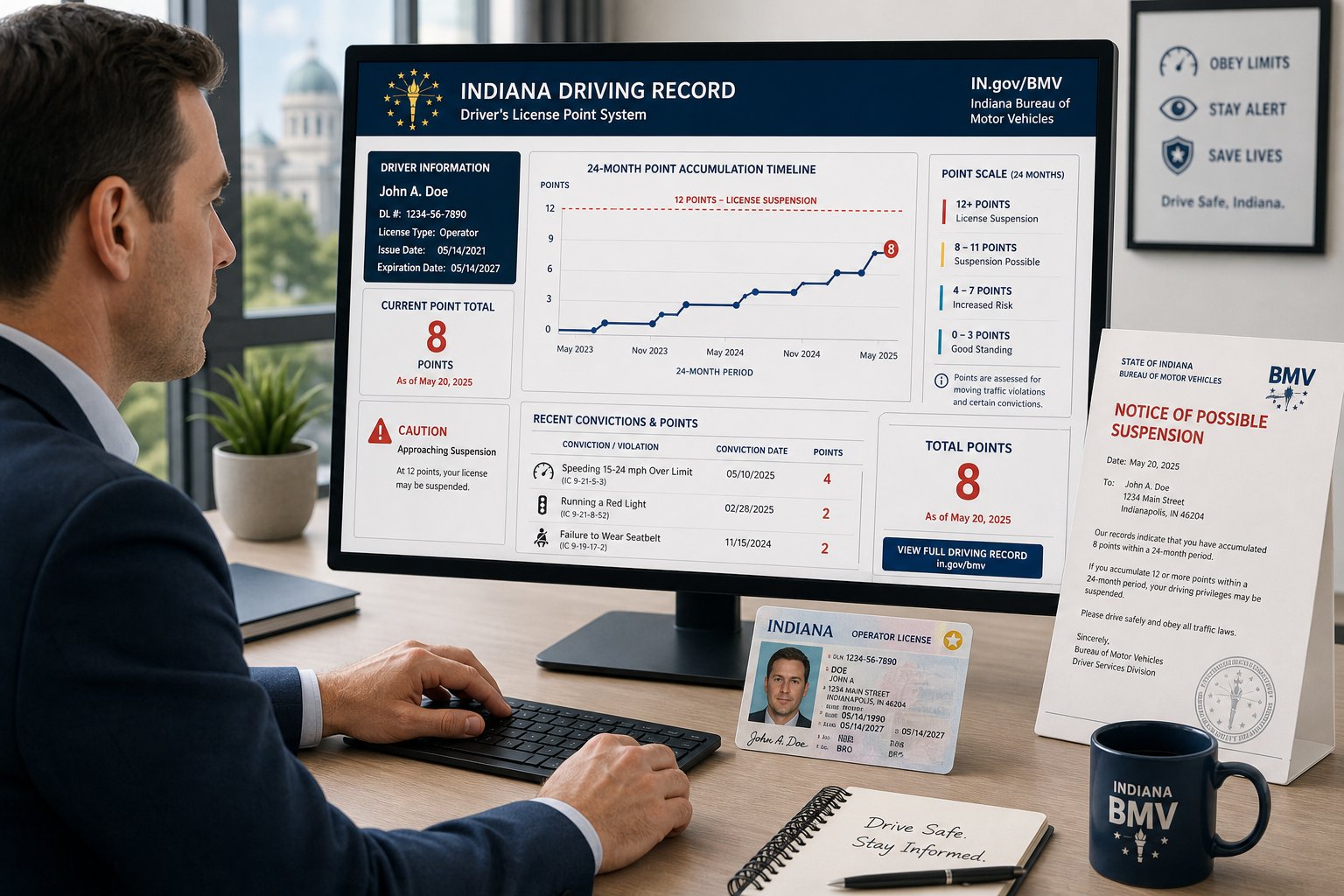
Traffic violations and moving infractions add demerit points to your driving record. Accumulating a specified threshold of points within a rolling timeframe can trigger administrative penalties, including mandatory defensive driving courses, steep surcharges, or complete license suspension. You can often review your current point total and driving history abstract directly through your state BMV portal.
Next Steps for Applicants and Drivers
To ensure a smooth interaction with your local Bureau of Motor Vehicles, visit your state's official government website prior to scheduling an appointment or visiting a service center. Verify current fee schedules, check branch wait times or reservation availability, and double-check your document checklist to ensure compliance with identity and residency guidelines. Taking these proactive steps prevents administrative delays and keeps your driving credentials fully up to date.