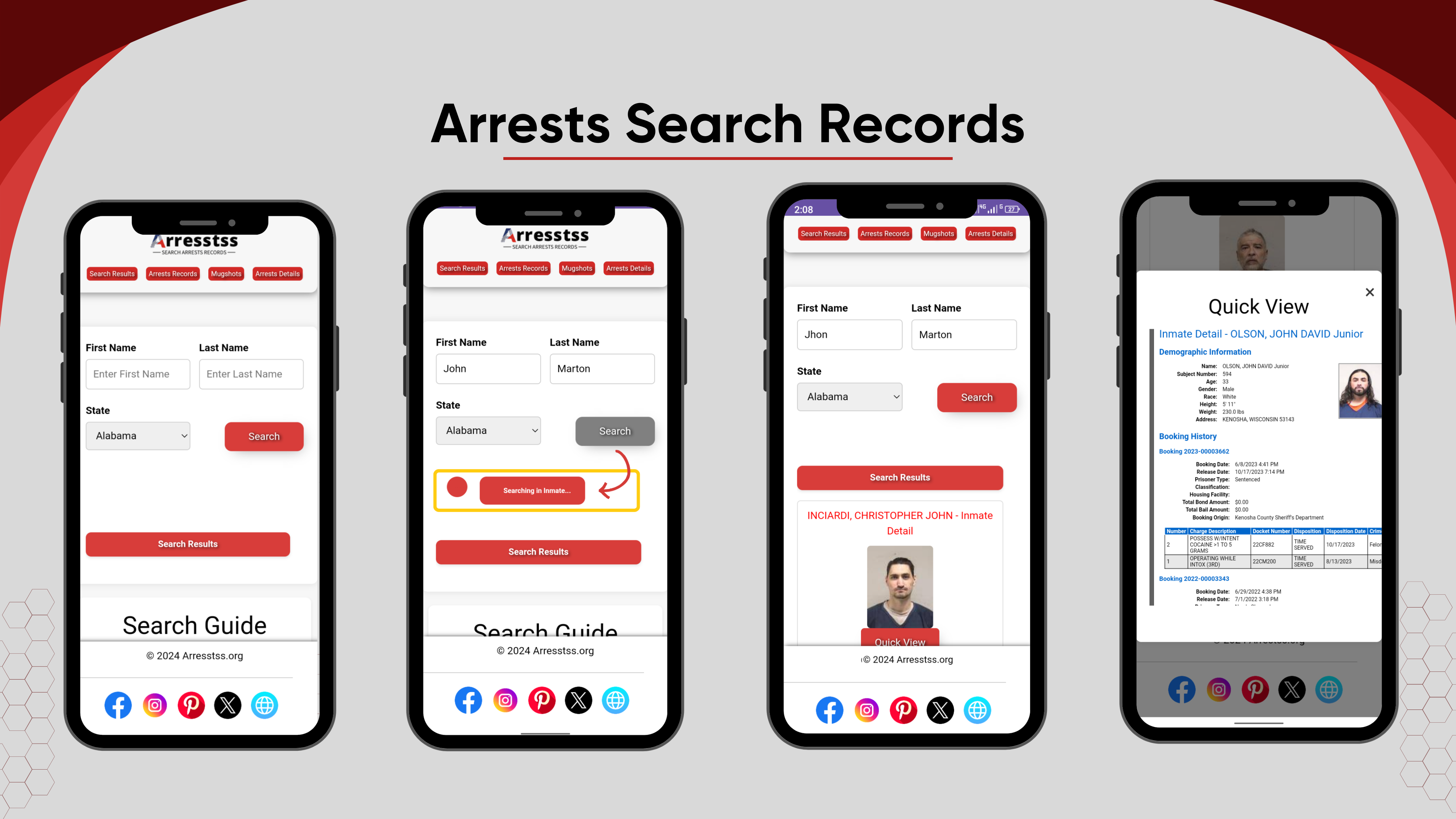
Public records search JBYK refers to specialized digital indexing parameters and automated retrieval gateways used by investigators, legal professionals, and analysts to query consolidated state, county, and municipal public archives. While sometimes confused with direct-to-consumer background check subscription services, JBYK-oriented record protocols specifically target electronic docket repositories, statutory lien filings, vital documentation indices, and property registries.
Conducting thorough, legally sound record searches requires understanding how state open records acts, the federal Freedom of Information Act (FOIA), and local jurisdictional court management databases interact. Accessing public data across disparate government repositories demands structured methodologies to ensure accuracy, identity verification, and strict statutory compliance.
Anatomy of Digital Public Records Infrastructure in 2026
Modern public record architecture relies on distributed database systems maintained by thousands of individual municipal, county, state, and federal agencies. Public access laws establish transparency requirements, but the technical execution of record delivery varies drastically depending on the governing entity.
Consolidated platforms and query structures streamline data acquisition by bridging distinct government electronic filing nodes. When executing automated or manual record searches, databases typically ping four foundational government data silos:
- County Clerk and Recorder Repositories: These offices maintain recorded land instruments, deeds, deeds of trust, powers of attorney, plat maps, assumed business names (DBAs), and vital statistics records where permitted by state privacy statutes.
- State Judicial Case Management Systems: These enterprise court management tools store civil lawsuit dockets, probate files, domestic relations records, felony criminal proceedings, and misdemeanor dockets.
- State Secretarial Registries: The commercial divisions of Secretaries of State manage corporate registrations, limited liability company entity structures, annual reports, foreign qualifications, and Uniform Commercial Code (UCC) financing statements.
- Federal Case Management/Electronic Case Files (CM/ECF): Managed through the Public Access to Court Electronic Records (PACER) system, this framework indexes federal district, appellate, and bankruptcy court records.
Query engines using structured indexing identifiers crawl public-facing Application Programming Interfaces (APIs), standardized docket indices, and bulk data extracts periodically exported by these jurisdictions.
Core Document Categories and Verification Standards
Not all publicly maintained documents share the same public availability threshold. State legislatures continually update statutory disclosure thresholds, balancing government transparency against consumer privacy protections.
1. Civil Court Filings and Monetary Judgments
Civil records document formal disputes between individuals, corporations, or municipal entities. High-priority filings within standard civil records checks include:
- Breach of Contract and Commercial Claims: Detail business operational failures, commercial debts, and formal litigation outcomes.
- Tort and Personal Injury Claims: Include complaints, answers, interrogatory docket entries, settlement notices, or final dismissals.
- Eviction and Unlawful Detainer Actions: Track landlord-tenant judicial interventions, though access is increasingly subject to statutory waiting periods or record-sealing timelines in progressive jurisdictions.
- Judgments and Lis Pendens: Provide formal notice of adverse court orders, outstanding payment mandates, and pending property claims that impair marketable title.
2. Criminal Court Records and Incarceration History
Criminal history record information (CHRI) remains one of the most requested yet legally sensitive record tiers. True public searches reveal formal charging instruments, grand jury indictments, minute orders, docket sheets, and sentencing orders.
Critical differences exist between arrest records and disposition records. Law enforcement arrest blotters indicate only that probable cause was alleged at a specific point in time; they do not substantiate guilt. Legal analysts prioritize certified court dispositions—such as dismissals, acquittals, deferred adjudications, or convictions—over raw booking information.
3. Real Property and Assessment Rolls
County tax assessor and real estate registries provide reliable, non-personally identifiable verification anchors. Deeds, mortgages, parcel maps, and tax valuations establish:
- Legal ownership chains and transactional deed transfers over multi-decade intervals.
- Property boundary classifications, zoning limitations, and structural improvements.
- Ad valorem tax obligations, delinquencies, and municipal tax abatement programs.
- Involuntary encumbrances, including mechanics' liens, federal tax liens, and municipal code violation assessments.
4. Corporate Governance and Commercial Collateral (UCC)
Evaluating business entities requires cross-referencing corporate registry files. State filing offices provide articles of organization, registered agent designations, principal office addresses, officer rosters, and good-standing certifications.
Pairing corporate entity reviews with UCC-1 and UCC-3 financing statement searches reveals secured transactions, indicating whether an entity's equipment, accounts receivable, or inventory has been pledged as collateral to commercial lenders.
Methodological Comparison of Public Record Search Gateways
Determining the appropriate query mechanism depends on whether an investigation prioritizes certified legal accuracy, rapid preliminary indexing, or broad jurisdictional scope.
| Search Channel | Primary Data Sources | Verification Level | Latency to Retrieval | Regulatory Classification |
|---|---|---|---|---|
| Direct Court Clerk Access | County or District electronic dockets; physical microfiche archives | Official / Certified legal admissibility | Real-time to 5 business days | Public domain; jurisdiction-specific rules apply |
| JBYK Aggregation Frameworks | Structured API feeds, state court indexes, bulk assessor files | High informational value; requires manual confirmation | Near instantaneous (seconds to minutes) | Open-access index; FCRA non-compliant for employment |
| Federal PACER / CM/ECF | All U.S. Federal District, Appellate, and Bankruptcy courts | Certified electronic court docket entries | Real-time generation | Title 28 U.S.C. controlled federal archive |
| Commercial Consumer Reporting Agencies | Multi-jurisdictional consumer credit, criminal, and identity data | Formally matched; strict dispute resolution frameworks | 24 to 72 business hours | Fully governed by 15 U.S.C. § 1681 (FCRA) |
| State Vital Records Bureaus | State Departments of Health / Vital Statistics Divisions | Certified vital events (Birth, Death, Marriage) | 1 to 8 weeks depending on state | Restricted access; statutory direct-interest rules apply |
Systematic Workflow for Conducting a Precise Public Records Search
Executing a successful search requires an orderly procedural approach to eliminate false positives and circumvent common identity-matching errors.
Phase 1: Establish Subject Parameter Baseline
Before submitting queries across automated data brokers or government portals, compile foundational identifying anchors:
- Full legal name, including middle name, maternal surnames, maiden names, and recorded aliases.
- Date of birth ranges to differentiate common namesakes.
- Historic residential addresses spanning at least ten years to isolate the correct target counties.
- Known corporate affiliations, business registrations, or professional license credentials.
Phase 2: Query County-Level Geographic Anchors
Because American civil and criminal legal actions originate within local administrative boundaries, the search must begin in counties where the subject has lived, owned property, or conducted business:
- Access the official County Court Clerk public access terminal or web portal.
- Search civil and criminal indexes using exact-match and wild-card spelling variations.
- Review docket activity to identify associated case numbers, filing dates, and judicial assignments.
- Download original pleadings, motion practice entries, and disposition orders rather than relying solely on automated docket summaries.
Phase 3: Execute State and Federal Tier Reviews
Expand the search perimeter to regional and federal jurisdictions:
- Query the relevant Secretary of State business search portal for entity ownership or registered agent obligations.
- Conduct a nationwide search on the federal PACER system across civil, criminal, and bankruptcy indices.
- Consult the appropriate state appellate case management system for judgments appealed from lower district courts.
Phase 4: Reconcile and Verify Results
Never rely on a single database match. Correlate identifiers across secondary instruments:
Data Validation Standard
A digital public record match cannot be considered legally conclusive until the subject's primary personal identifiers—such as date of birth, driver's license number, or partial Social Security Number—are verified against the underlying primary source documentation held by the originating court or municipal agency.
Confirm that case disposition notations match statutory naming conventions in that jurisdiction, ensuring an expunged, dismissed, or diversion-completed matter is not recorded as an active conviction.
Regulatory Realities: FCRA, Privacy Acts, and Lawful Utilization
Operating within public record repositories requires strict adherence to federal and state statutory guardrails. The most significant boundary line in American public records retrieval is established by the Fair Credit Reporting Act (15 U.S.C. § 1681 et seq.).
The Fair Credit Reporting Act Boundary
Online public record tools, direct county dockets, and consolidated search indexes like JBYK-oriented public retrieval pipelines do not operate as Consumer Reporting Agencies (CRAs) as defined by federal statute. Consequently, information obtained through these portals cannot legally be used, in whole or in part, to determine eligibility for:
- Personal or commercial employment, hiring, retention, or reassignment.
- Residential tenancy, housing leases, or property rental approvals.
- Consumer credit, underwriting, financing, or collection evaluations.
- Personal insurance issuance, rating assessments, or policy terms.
Using unaccredited public records databases for FCRA-regulated purposes exposes organizations and individuals to substantial statutory damages, civil enforcement actions, and administrative penalties. When permissible commercial screening is required, organizations must engage a formally credentialed CRA that complies with consumer consent mandates, pre-adverse action disclosure notifications, and mandatory dispute resolution procedures.
Driver's Privacy Protection Act (DPPA) and Redaction Mandates
Under the Driver's Privacy Protection Act (18 U.S.C. § 2721), motor vehicle records, driver's license photographs, medical disclosures, and related state department of transportation data are completely exempt from open records requests unless the requester qualifies under specific statutory exemptions.
Similarly, court clerks routinely apply automated and manual redactions to electronic dockets, masking:
- Full financial account numbers and bank routing sequences.
- Social Security Numbers (typically redacted entirely or truncated to the last four digits).
- Minor children identities (abbreviated strictly to initials).
- Exact residential addresses in cases involving protected domestic violence victims or law enforcement officers.
Avoiding Common Pitfalls in Public Data Extraction
Investigators relying on automated portals frequently encounter obstacles that result in incomplete or misattributed records.
Common Namesakes and False Linkages
Searching for widespread names (such as "Michael Smith" or "David Johnson") across statewide databases without cross-referencing auxiliary dates of birth or physical addresses frequently generates conflated records. A failure to distinguish two unrelated individuals with identical names living in the same county can lead to catastrophic defamation claims or misguided business decisions.
Geographic Misalignment and Independent Municipalities
Jurisdictional fragmentation often trips up search operations. Certain major cities do not house their judicial files within typical county clerk frameworks; they operate independent municipal court jurisdictions handling lower-level criminal charges, code enforcement, and small claims. Missing the distinction between an incorporated municipality's municipal court and the county's district or circuit court can cause significant records to be overlooked entirely.
Sealed, Expunged, and Clean Slate Automations
State legislatures have increasingly enacted automatic record clearance legislation. Clean slate laws mandate the automated sealing of specific low-level, non-violent misdemeanor charges, dismissed actions, and aging non-conviction records after designated qualifying periods.
Third-party database brokers that refresh their indices infrequently often display outdated criminal entries that state judicial systems have formally expunged. Relying on stale database records violates public transparency principles and undermines the reliability of an investigation.
Frequently Asked Questions
What is the primary difference between a public records search and a formal background check?
A public records search extracts raw documents and entries directly from government filings, court dockets, and property records for general informational purposes. A formal background check is conducted by an accredited Consumer Reporting Agency under the strict parameters of the Fair Credit Reporting Act (FCRA), providing mandated consumer protections and requiring signed authorization from the subject.
Understanding this distinction is vital. Raw public records searches cannot be utilized to make decisions regarding employment, housing leases, commercial lending, or personal credit evaluations without violating federal law.
Can civil lawsuit filings found through public records portals be used as evidence of financial insolvency?
No, the mere presence of a civil litigation filing or an active complaint does not prove insolvency, liability, or financial failure. Pleadings merely represent unproven allegations asserted by a plaintiff. Only final, unappealed monetary judgments, writs of execution, or formal federal bankruptcy adjudications confirm legal and financial liability.
When conducting due diligence, an investigator must follow the docket through to its final disposition, checking for dismissals with prejudice, settled stipulations, or satisfied judgments that clear the defendant of ongoing obligation.
Why do some court records fail to appear in automated online record searches?
Court records may be absent from online portals if the jurisdiction relies on older, non-digitized paper archives, if the record has been sealed by judicial order, or if statutory expungement rules have removed the file from public access. Additionally, municipal courts often maintain standalone servers that are not integrated into centralized county or state case management systems.
In these instances, an investigator must submit an in-person request or direct written file request to the physical clerk of the court where the jurisdiction maintains its physical microfiche or docket ledgers.
How often are public records aggregators and docket search engines updated?
Update frequencies vary widely depending on the underlying data feed, ranging from daily API syncs with active state court systems to quarterly bulk imports for real estate assessor filings. Federal PACER dockets refresh in real time, whereas municipal or county-level digital indexes often experience data caching delays spanning several weeks.
Investigators should always examine the recorded date or last scrape timestamp on any aggregated digital record report to ensure recent actions, modifications, or dismissals are accurately captured.
What identifying information is legally required to view public records at a court clerk office?
Generally, members of the public are only required to provide the party name or case docket number to view open court files, without providing proof of legal standing or personal identification. However, viewing sensitive filings, juvenile matters, or certain probate and domestic relations files requires formal party standing, an entry of appearance, or a specific court order.
While viewing public indexes is an open civic right, obtaining certified copies often requires payment of statutory clerk fees and the submission of a formal records retrieval form.
Take Action on Your Public Records Strategy: When constructing due diligence protocols or legal investigations, build your workflows upon verified, primary-source county court clerk and federal docket records. Cross-reference automated digital indices against certified government filings to ensure absolute accuracy, protect consumer rights, and maintain regulatory compliance throughout your research process.