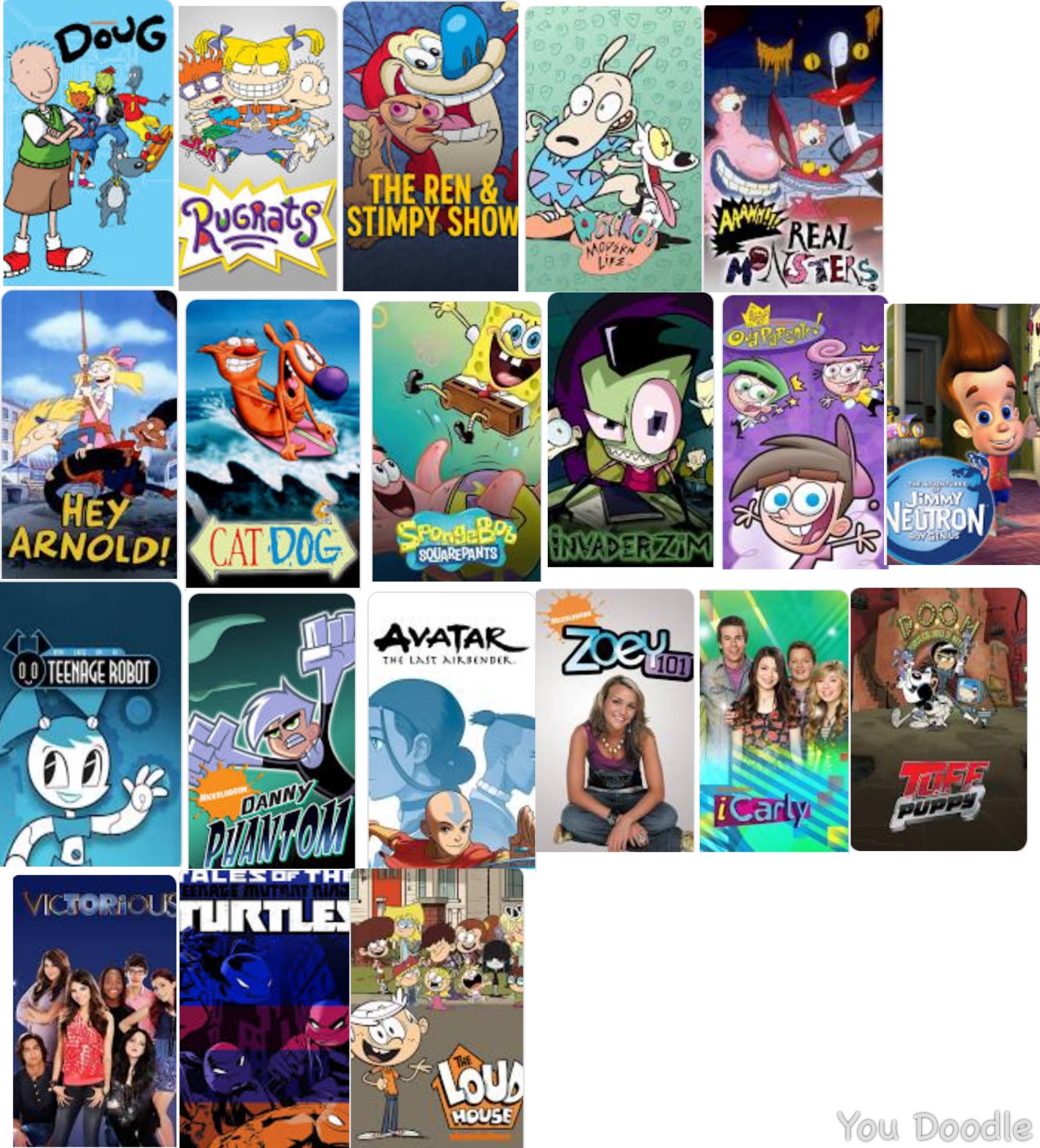
The cultural landscape of children's television underwent a permanent evolution during the final decade of the twentieth century, anchored primarily by the golden era of Nickelodeon. Today in 2026, the fascination with classic 90s Nick TV shows has transcended simple nostalgia, establishing itself as a robust subculture of media preservation, digital streaming revivals, and high-value collectible merchandising. Understanding the architecture of these foundational programs requires looking past the pixelated CRT monitors of the past to examine how this specific programming block re-engineered animation, live-action sketch comedy, and youth-targeted game shows forever.
The Animation Renaissance That Defined a Generation
Before the 1990s, television animation was predominantly dominated by safe, formulaic syndicated cartoon blocks designed largely to sell cereal and toys. That landscape shattered in August 1991 when Nickelodeon launched its proprietary animated brand: Nicktoons. This initiative handed creative autonomy and creator-driven direction directly to visionary animators, resulting in properties that treated kids with intelligence, wit, and a healthy dose of subversive humor.
- Rugrats (1991–2004): Created by Arlene Klasky, Gábor Csupó, and Paul Germain, this series revolutionized perspective by exploring the mundane adult world through the hyper-imaginative viewpoints of toddlers. Its sophisticated handling of familial dynamics, toddler anxiety, and cultural traditions set a new baseline for family animation.
- The Ren & Stimpy Show (1991–1995): John Kricfalusi’s creation introduced grotesque, hyper-detailed close-ups, subversive psychological humor, and an aggressively distinct visual style that heavily influenced subsequent generations of adult and youth animation alike.
- Rocko's Modern Life (1993–1996): Joe Murray helmed this deceptively cheerful surrealist comedy that utilized clever double entendres, existential dread, and biting social satire regarding modern corporate life, resonating deeply with both children and the teenagers watching alongside them.
- Hey Arnold! (1996–2004): Craig Bartlett elevated the urban experience through the eyes of a compassionate, wise-beyond-his-years fourth grader living in a meticulously realized, multicultural boarding house in a fictionalized composite of New York City and Seattle.
Live-Action Innovation and Sketch Comedy Revolution
While the animated block captured the imagination, Nickelodeon's live-action slate completely redefined what youth-oriented television could look, feel, and sound like. Eschewing the polished, multi-camera sitcom formulas of traditional networks, Nick embraced a messy, tactile, and occasionally chaotic aesthetic that prioritized high-energy physical comedy.
- All That (1994–2005): Heralded as Saturday Night Live for kids, this sketch comedy breeding ground launched the careers of Kenan Thompson, Kel Mitchell, Amanda Bynes, and Nick Cannon. The show established recurring sketches like "Repairman" and "Vital Information" that became fixtures of 90s playground vernacular.
- Clarissa Explains It All (1991–1994): Starring Melissa Joan Hart as a fourth-wall-breaking teenager navigating the absurdities of adolescence, the series introduced a distinct visual language of bold graphics, computer-generated overlays, and independent teenage bedroom design.
- The Adventures of Pete & Pete (1993–1996): Boasting an indie-rock soundtrack featuring Polaris, surreal suburban surrealism, and poetic writing, this series operated more like an alternative art-house film than a standard children's show, exploring existential childhood themes with rare emotional gravity.
Game Shows, Slime, and Immersive Interactive Television
Nickelodeon transformed the passive viewing experience into an interactive sport. The network realized that children wanted agency, physical engagement, and above all else, the chance to be covered in bright green slime. Game shows during this era were not simple trivia tests; they were obstacle courses of epic proportions.
The Mechanics of Slime: The iconic green goo—initially concocted as a mixture of oatmeal, baby shampoo, and green food coloring on the set of You Can't Do That on Television—became the ultimate corporate symbol of freedom, chaos, and reward. Being slimed was the highest honor a contestant or celebrity could achieve on shows like Double Dare and Figure It Out.
Iconic 90s Nick Game Show Comparison
| Show Title | Run Dates | Primary Host | Core Mechanical Focus |
|---|---|---|---|
| Double Dare | 1986–1993 | Marc Summers | Physical messy stunts paired with high-stress trivia questions. |
| Finders Keepers | 1987–1988 | Terry Currier / Wesley Eure | Scavenger hunts inside meticulously detailed, life-sized set-piece rooms. |
| Nick Arcade | 1992–1993 | Phil Moore | Live-action video game tournament play mixed with early green-screen tech. |
| Legends of the Hidden Temple | 1993–1995 | Kirk Fogg | Mayan mythology, physical stamina, and navigating the dreaded Temple Run. |
Pros and Cons of Re-Experiencing 90s Nick Culture Today
As fans who grew up during this era navigate adulthood in 2026, revisiting these classic titles through modern streaming platforms and physical media box sets presents a fascinating mix of emotional fulfillment and critical hindsight.
- Pros:
- Unmatched Originality: The creative freedom granted to showrunners resulted in auteur-driven visions rarely seen in today's focus-group-tested children's media.
- Timeless Emotional Truths: Shows like Hey Arnold! and The Adventures of Pete & Pete dealt with grief, social isolation, and growing pains with an honesty that transcends generational lines.
- Superior Craftsmanship: Heavy reliance on traditional cel animation, practical stop-motion, and physical set designs gives these shows a warm, tangible aesthetic distinct from modern digital slickness.
- Cons:
- Pacing Adjustments: Modern viewers accustomed to hyper-fast, algorithmic short-form content may find the deliberate pacing of early 90s narratives unexpectedly slow.
- Outdated Cultural References: Certain pop culture jokes, technological tropes (like landlines and bulky cathode-ray computers), and gender dynamics reflect the specific socio-political realities of the early 1990s.
- Licensing and Streaming Fragmentation: Music rights issues frequently prevent original home video cuts and streaming versions from featuring their authentic soundtracks, most notably altering iconic background cues in shows like Hey Arnold! and Clarissa Explains It All.
Actionable Guide: How to Curate and Preserve Your 90s Nick Collection in 2026
For dedicated enthusiasts, casual streaming on services like Paramount+ is often insufficient due to compression artifacts, edited episodes, and missing music tracks. Building a definitive physical or digital preservation library requires a structured approach.
- Audit Official Physical Releases: Target out-of-print complete series DVD sets released by studios like Shout! Factory, which historically maintained higher bitrates and original aspect ratios compared to compressed streaming counterparts.
- Verify Audio and Master Cuts: Check fan databases and community forums to identify specific episodes historically plagued by syndication cuts or replacement music cues.
- Secure Retro Hardware for Authentic Playback: If collecting original VHS tapes or early DVD editions, ensure your entertainment system features proper upscalers (such as RetroTink units) to display standard-definition 4:3 content cleanly on modern 4K/8K displays without visual distortion.
- Engage with Archival Communities: Participate in preservation forums and media exchange networks dedicated to cataloging broadcast continuity, original commercial bumps, and unedited continuity blocks from the SNICK (Saturday Night Nickelodeon) era.
Frequently Asked Questions
What was the SNICK programming block and when did it launch?
SNICK was Nickelodeon's premier Saturday night prime-time programming block that launched on August 15, 1992, featuring edgier shows aimed at older kids and teenagers. It became a cultural anchor for the decade, showcasing foundational hits like Are You Afraid of the Dark? and Clarissa Explains It All.
Are all 90s Nick shows available to stream completely unedited?
No, due to music licensing expirations, syndication edits from the late 90s, and digital compression standards, several episodes across various titles feature altered background tracks or missing segments compared to their original broadcast versions.
Who created the famous green slime used on Nickelodeon?
The original recipe was derived from the sketch comedy show You Can't Do That on Television and was reportedly invented by the show's crew using a combination of food thickeners, baby shampoo, and green food coloring, though formulas evolved over the decades for safety and consistency.
How did Legends of the Hidden Temple choose its teams?
Contestants were paired into six duos named after historical and mythological teams identified by colored jerseys and animal insignias: the Green Monkeys, Orange Iguanas, Purple Parrots, Red Jaguars, Silver Snakes, and Blue Barracudas.
Where can I find merchandise and collectibles from classic 90s Nick shows?
Specialty toy lines, apparel collaborations, and high-end collectible statues are regularly released through pop-culture specialty retailers, convention exclusives, and authenticated secondary marketplaces.
Conclusion
The enduring power of 90s Nick TV shows lies in their fearless commitment to honoring the authentic experience of childhood, complete with its weirdness, messiness, and emotional complexity. Whether diving back into the deep jungles of the Hidden Temple, riding the subway with Arnold, or laughing at the anarchic sketches of All That, these masterworks of television history remain as vital and vibrant today in 2026 as they were thirty years ago. Embrace the nostalgia, support physical media preservation, and keep the spirit of classic Nickelodeon alive in your entertainment rotation.