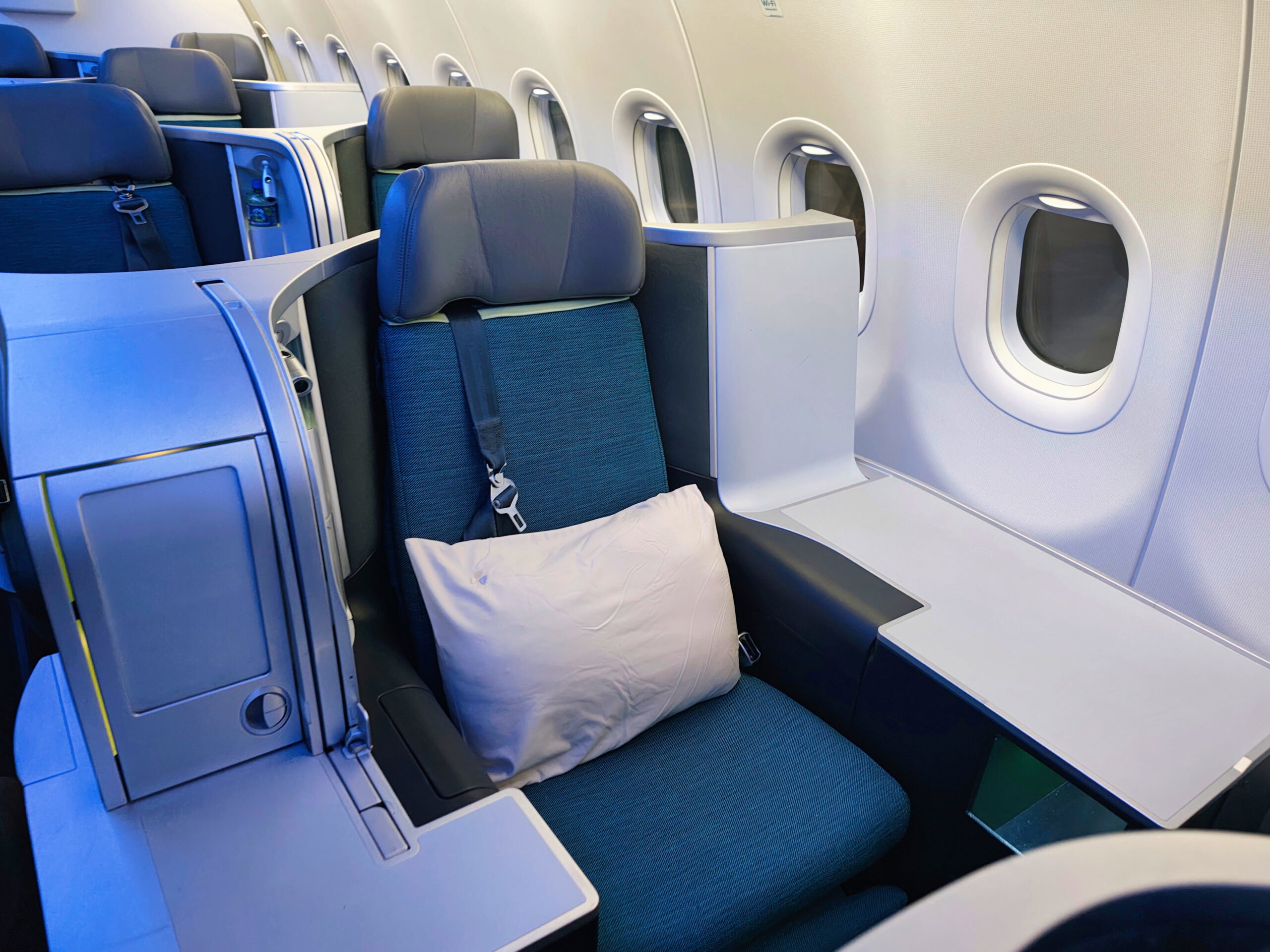
Navigating the cabin layout of the Airbus A321 requires strategic precision, especially as major global carriers update their fleets for 2026 operations. As the backbone of single-aisle domestic and medium-haul international travel, the A321 family—spanning the classic A321ceo, the ultra-efficient A321neo, and the long-range A321LR/XLR variants—presents widely divergent passenger experiences. Selecting the right seat dictates whether your flight features supreme comfort with extra legroom or a restrictive alignment near lavatories and galleys. This comprehensive technical breakdown analyzes pitch, recline, alignment, and fleet-specific quirks to help you secure the absolute best seat on your next A321 flight.
Understanding A321 Cabin Layouts and Fleet Variations
The Airbus A321 is renowned for its high-density capacity, but airlines configure these narrowbody airframes in vastly different ways. While a legacy carrier might install a luxurious premium transcontinental layout with lie-flat business class suites, low-cost carriers maximize seat count with a single-class, high-density configuration.
Understanding the specific aircraft variant is the foundation of smart seat selection. The baseline A321ceo typically features traditional over-wing exit rows, whereas the A321neo often features modified door placements (such as the Airbus Cabin-Flex configuration) which alter emergency exit rows, galley locations, and lavatory distribution.
Key technical metrics defining A321 seat comfort include:
- Seat Pitch: Typically ranging from 30 inches in standard economy up to 38+ inches in premium economy, and up to 78 inches in fully flat business class configurations.
- Seat Width: Usually standardized between 17 and 18 inches, heavily influenced by the interior sidewall contouring of the narrowbody fuselage.
- Recline Mechanics: Standard articulating recline or cradle mechanisms that slide forward to preserve personal space, or shell-based designs in premium cabins.
Evaluating Best and Worst Seat Zones Across the Cabin
Every section of the A321 presents distinct tactical advantages and structural drawbacks. Analyzing these zones prevents unexpected disruptions during your journey.
Forward Economy and Exit Rows: The Sweet Spot
The forward economy cabin—positioned immediately behind First Class, Business Class, or Premium Economy—offers the fastest deplaning capability upon arrival. Passengers seated here enjoy meal service priority on carriers that still provide complimentary or buy-on-board catering.
Exit rows on the A321 represent the gold standard for legroom. However, travelers must note that certain exit rows feature fixed armrests, restricted under-seat storage during taxi, takeoff, and landing, or proximity to flight attendant jumpseats.
Over-Wing and Mid-Cabin Dynamics
Mid-cabin seats positioned over the wings generally experience the smoothest ride during turbulence, as this zone aligns closely with the aircraft's center of lift. However, window seat views can be obstructed by engine cowlings or structural wing elements, and window alignment can occasionally be missing entirely due to structural ribbing.
Aft Cabin Warnings: Why the Back Rows Fail
The rear rows of the A321 are universally considered the least desirable spots on the aircraft. Proximity to high-traffic galleys and multi-stall lavatories results in persistent ambient noise, foot traffic congestion, and light pollution during night flights. Furthermore, aft rows are often the last to deplane, turning arrival logistics into a frustrating exercise in patience.
Detailed Aircraft Configuration and Seat Selection Matrix
To simplify your booking strategy, the following matrix contrasts the passenger experience across different seating tiers and aircraft configurations found in modern commercial fleets.
| Seating Tier | Typical Pitch | Advantageous Features | Potential Drawbacks | Strategic Recommendation |
|---|---|---|---|---|
| Transcon Business | 60 - 78 inches | Direct aisle access, fully flat bed, premium bedding, priority amenities. | Higher fare class, occasional proximity to forward galley noise. | Best Overall: Choose center suites for solo travelers or window pairs for couples. |
| Premium Economy | 35 - 38 inches | Extra legroom, dedicated overhead bin space, enhanced recline, footrests. | Shared armrests, premium pricing over standard economy. | High Value: Ideal for medium-haul flights where business class is unviable. |
| Exit Row Economy | 36 - 42 inches | Maximum legroom, faster entry/exit relative to rear rows. | No floor storage during takeoff/landing, potential cold draft near exits. | Best Economy: Verify alignment and avoid rows immediately in front of non-reclining bulkheads. |
| Standard Economy | 30 - 32 inches | Economical pricing, wide availability across all fare families. | Limited legroom, narrow pitch, high susceptibility to neighbor encroachment. | Use Caution: Select forward-facing window or aisle seats; strictly avoid the last 3 rows. |
Step-by-Step Strategic Booking Workflow
Securing the best seat on an Airbus A321 requires a disciplined, multi-step execution protocol well in advance of departure.
- Identify the Exact Variant: Check your flight confirmation or ticketing portal to identify whether you are flying an A321ceo, A321neo, A321LR, or A321XLR.
- Consult Independent Seat Maps: Cross-reference your flight number on specialized seat-mapping databases like SeatGuru or Aerolopa to view real user reviews, photographic evidence, and structural warnings.
- Execute Early Selection: Book your ticket and immediately select your seat during checkout. If elite status or paid selection is required, weigh the cost against the duration of the flight.
- Monitor Cabin Shifts: Aircraft swaps are common in modern airline scheduling. Re-verify your seat assignment 72 hours and 24 hours prior to departure to ensure you haven't been automatically reassigned due to equipment changes.
- Leverage Airport Check-In: If premium exit rows or bulkhead seats are locked for elite frequent flyers, check the seat map precisely at the 24-hour check-in window when airline-held blocks frequently drop.
Pros and Cons of Airbus A321 Seating Options
Evaluating the trade-offs of narrowbody seating ensures informed decision-making tailored to individual travel preferences.
Advantages:
- The modern A321neo cabin features modernized Airspace interior aesthetics, larger overhead bins capable of accommodating rollaboards on their side, and dynamic mood lighting.
- Premium configurations on specialized sub-fleets offer wide-body comfort on narrowbody economics.
- Aisle choices throughout the cabin offer easy mobility without requiring disruptive acrobatics.
Disadvantages:
- Single-aisle bottlenecks during boarding and deplaning cause significant delays compared to widebody aircraft like the A350 or B777.
- High-density layouts on low-cost carriers feature tight 28 to 30-inch pitches that can induce fatigue on multi-hour sectors.
- Lavatory placement in the middle or rear frequently creates bottlenecks in the aisles.
Frequently Asked Questions About A321 Best Seats
Which rows offer the most legroom on an Airbus A321?
Rows featuring emergency exit doors and bulkhead partitions consistently provide the maximum legroom, often exceeding 38 to 40 inches of pitch. Always verify exact measurements with your specific airline's seat map, as emergency exit configurations vary between network carriers and low-cost operators.
Are window seats missing windows on the A321?
Yes, certain rows—particularly those adjacent to emergency exit structures or over-wing mid-cabin frames—may lack a window entirely or feature misaligned window placements. Checking detailed cabin diagrams before selecting your seat prevents unexpected blank walls.
Is it worth paying extra for exit row seats on short flights?
For flights under two hours, standard economy pitch is usually manageable, making paid exit upgrades less essential. However, for transcontinental or medium-haul flights exceeding three hours, the additional legroom in an exit row dramatically reduces physical fatigue.
Do A321neo aircraft feature better seats than older A321ceo models?
A321neo aircraft typically feature newer interior designs, including slimmer lightweight seats that maximize personal living space despite tight pitches. They also offer modern overhead bins and advanced cabin air filtration systems.
How can I avoid sitting near the lavatory on an A321?
Review the aircraft layout blueprint during booking and explicitly avoid the final three rows of the aircraft as well as seats directly adjacent to mid-cabin galleys. Selecting seats forward of the over-wing exits guarantees minimal exposure to lavatory traffic.