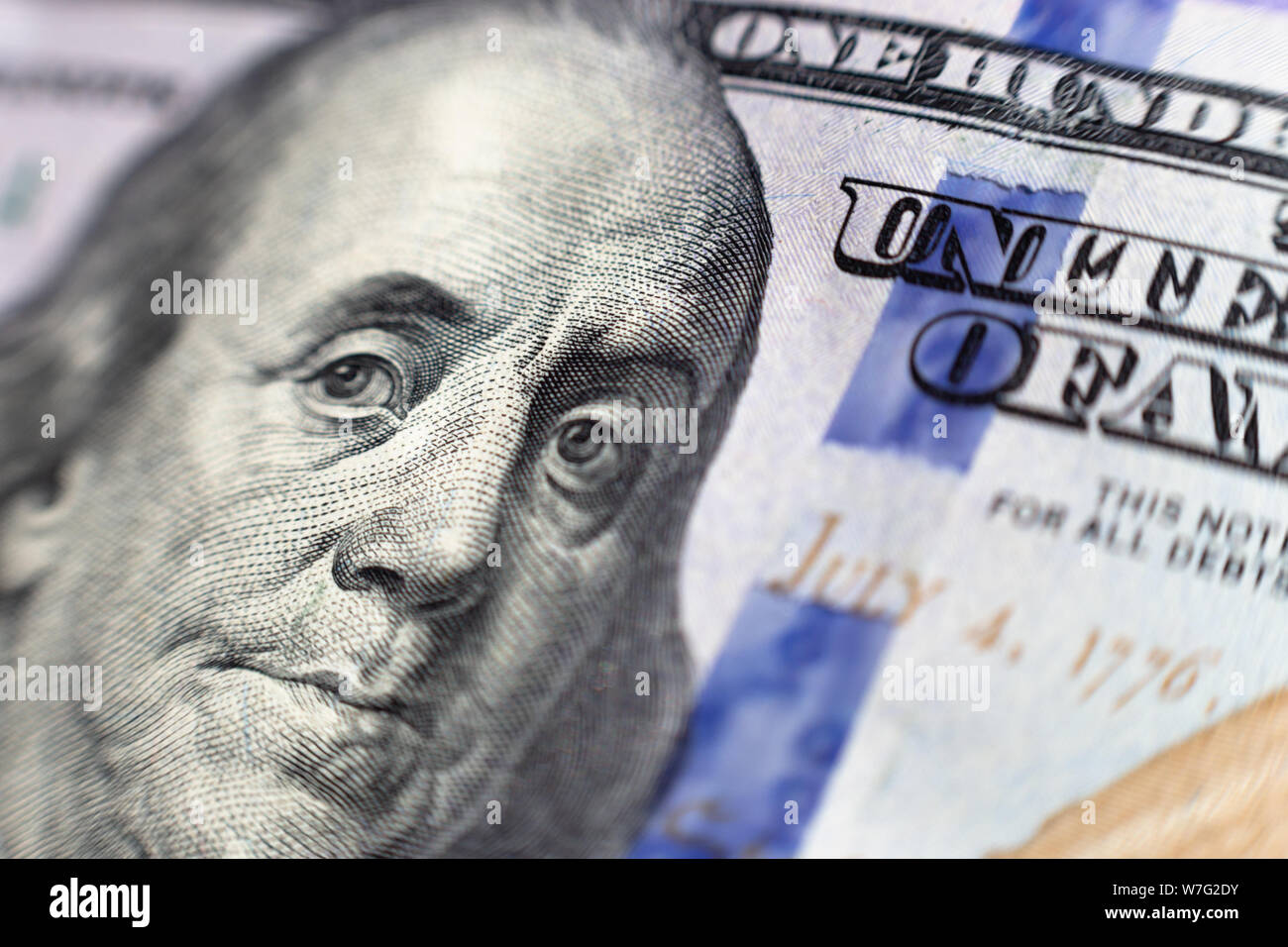
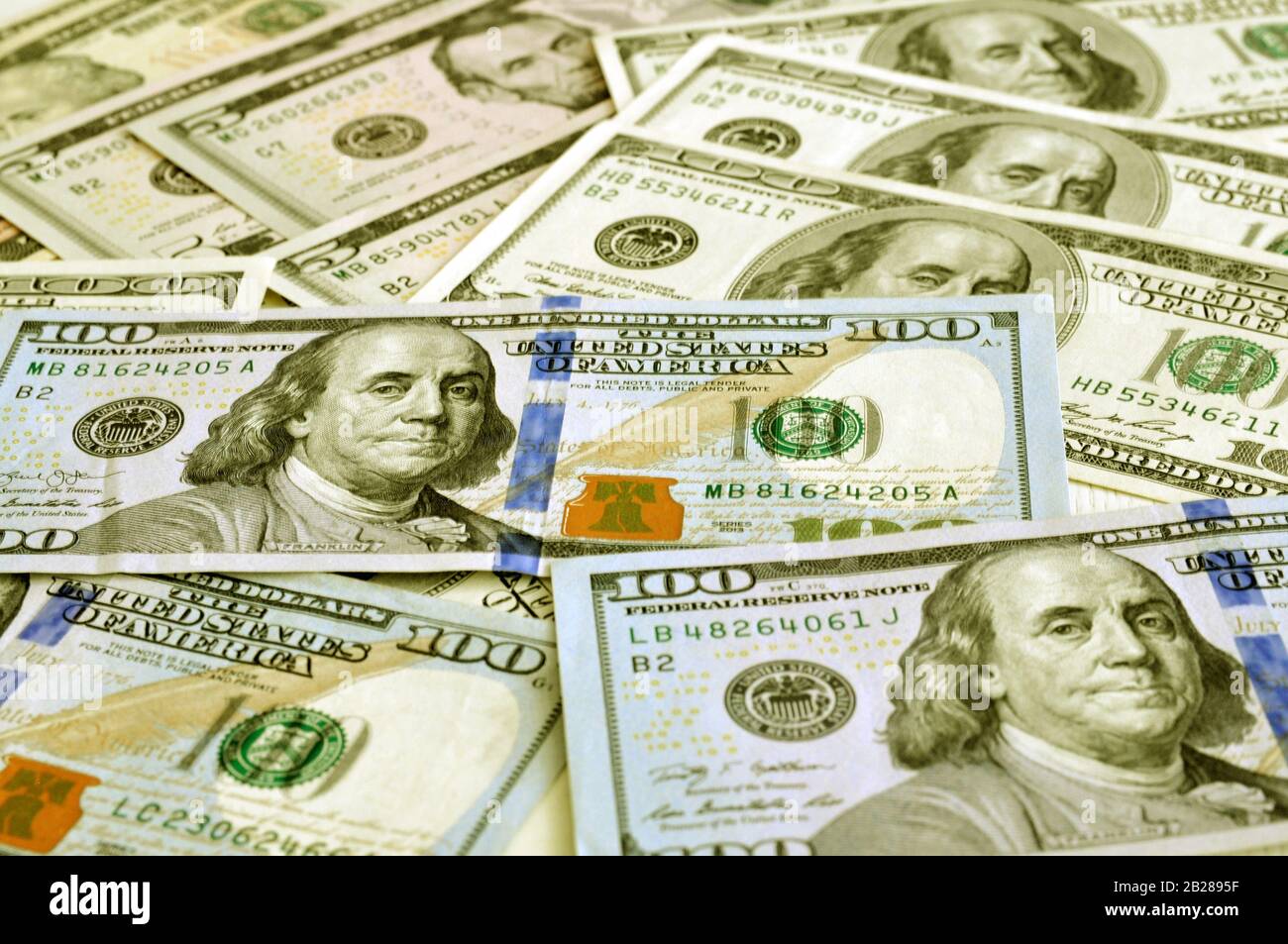
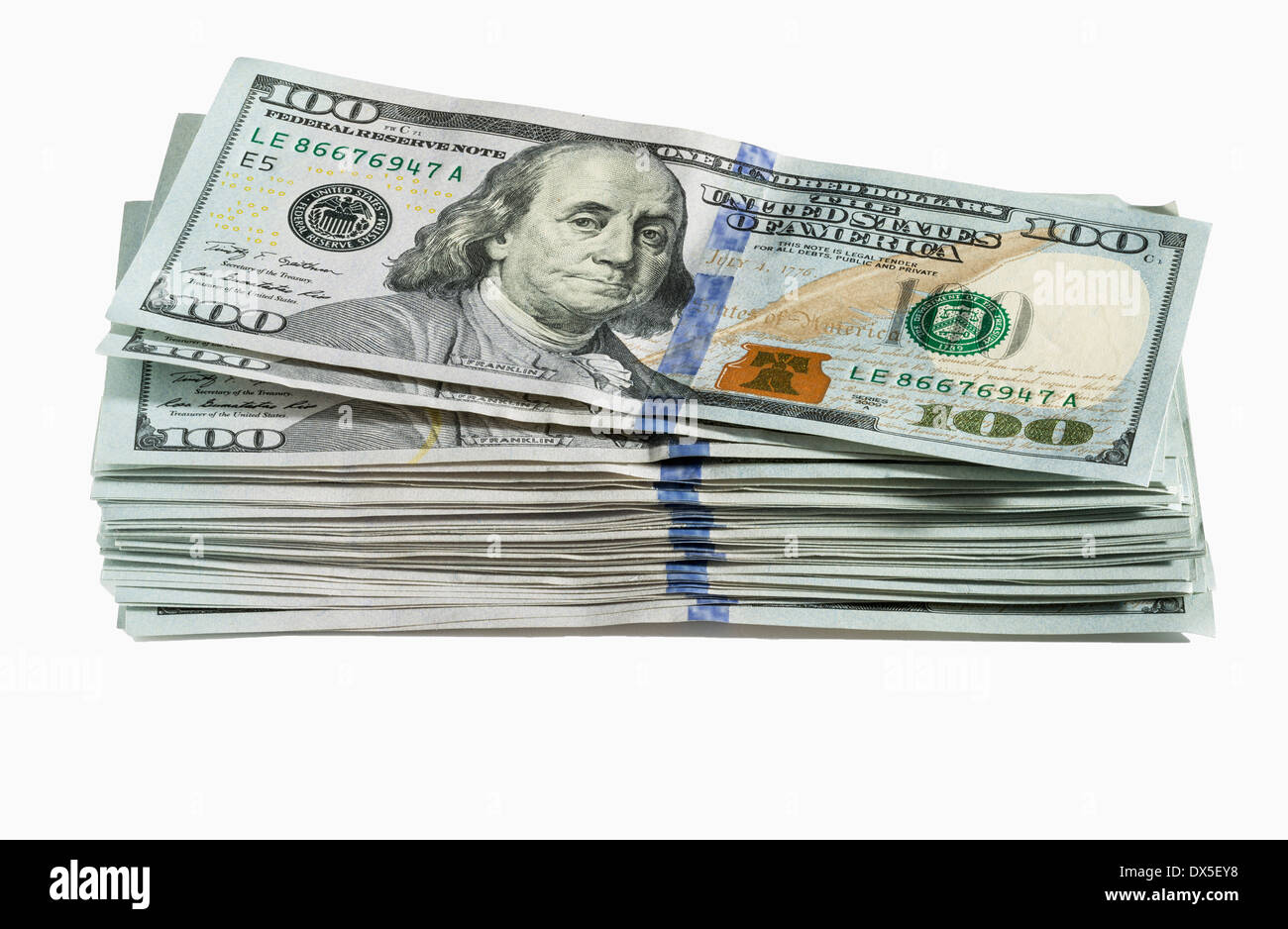
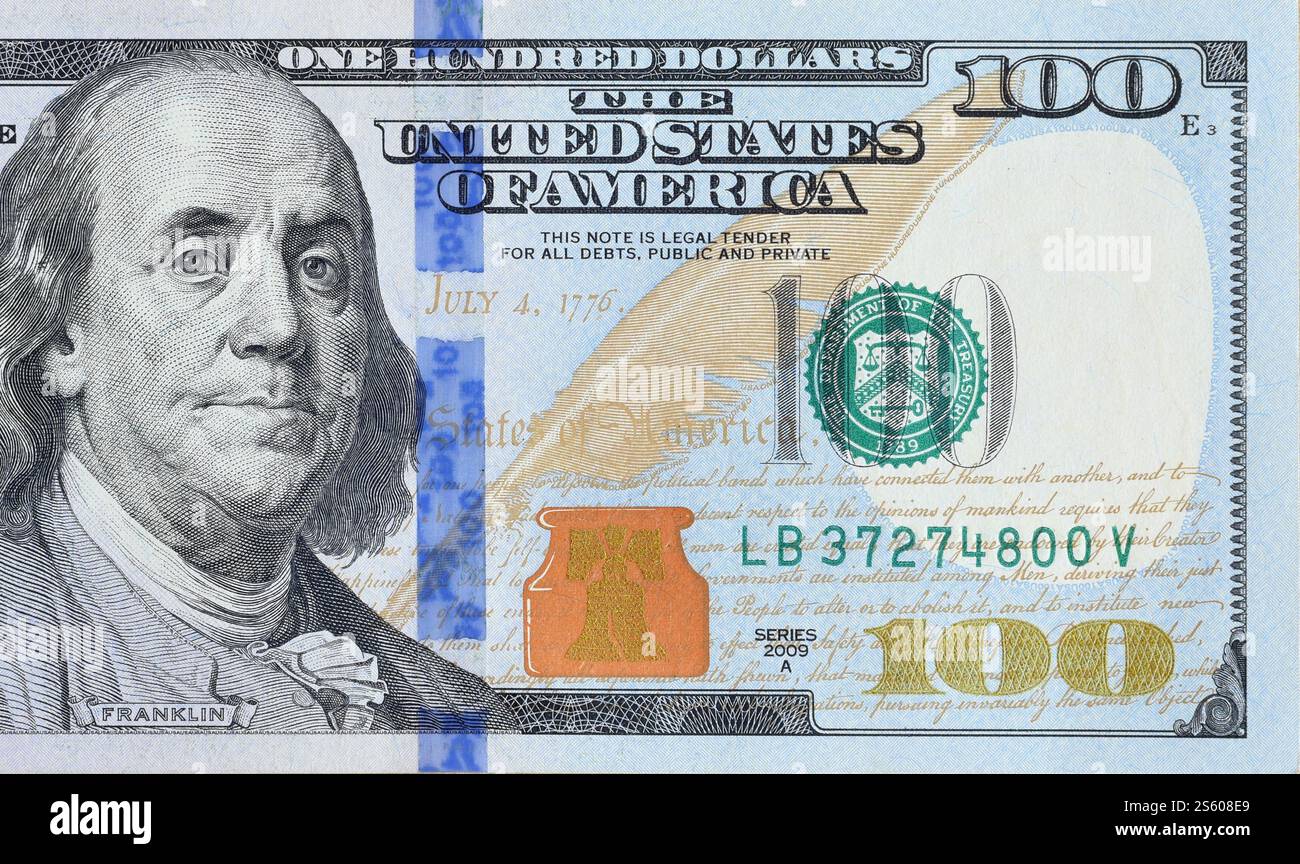
The $100 bill is the highest denomination of United States currency currently in circulation. Managed by the Federal Reserve and produced by the Bureau of Engraving and Printing, the "Benjamin" serves as a primary store of value and medium of exchange for high-value transactions. Recognizing its sophisticated security features is essential for ensuring the authenticity of this legal tender during daily commerce.
The Role and History of the $100 Federal Reserve Note
The $100 bill has undergone several design iterations throughout its history, but its status as the pinnacle of American paper currency remains unchanged. Historically, larger denominations—such as the $500, $1,000, $5,000, and $10,000 notes—were issued by the Treasury; however, these were discontinued in 1969 to curb their use in illicit activities. Today, the $100 bill is the standard for high-value cash transactions within the United States and serves as a significant reserve currency globally.
The current design, commonly referred to as the "NextGen" series, was introduced in 2013. It incorporates advanced optical technologies to combat counterfeiting. Despite being the highest value note, it is also one of the most widely circulated, reflecting its role in international finance and domestic retail. Understanding the physical composition and the security architecture of the note is the most effective way to verify its legitimacy without needing specialized equipment.
Anatomy of the $100 Bill: Key Security Features
Verification of a $100 bill does not require a complex laboratory. The Bureau of Engraving and Printing has designed the current series with "open" security features that are easily observable to the naked eye. Relying on these physical characteristics is the gold standard for authentication.
1. The 3-D Security Ribbon
Located on the obverse (front) of the bill, the blue ribbon is woven into the paper rather than printed on it. If you tilt the note back and forth while focusing on the ribbon, you will see images of bells transform into the number "100" as they move. This is a result of micro-optic technology, which creates a motion effect that is extremely difficult for counterfeiters to replicate.
2. The Color-Changing Bell in the Inkwell
Also on the front, there is an image of a bell inside a copper-colored inkwell. When you tilt the bill, the color of the bell shifts from copper to green. This effect makes the bell appear to emerge from the inkwell and disappear, providing a clear, dynamic visual indicator of authenticity.
3. Watermarks and Security Threads
Hold the note up to a light source to reveal two primary internal features:
- The Portrait Watermark: A faint image of Benjamin Franklin is visible from both sides of the note in the blank space to the right of the portrait.
- The Security Thread: A vertical thread is embedded in the paper to the left of the portrait. When viewed under ultraviolet (UV) light, the thread glows pink. The text "USA 100" is printed along the thread, visible from both sides.
4. Raised Printing and Texture
The U.S. government utilizes a technique called intaglio printing, which gives the notes a distinct tactile quality. You should be able to feel the texture of the ink, particularly on Benjamin Franklin's shoulder. The paper itself is a blend of 75% cotton and 25% linen, giving it a unique feel that differs significantly from standard wood-pulp commercial paper.
Comparative Analysis of Current and Older Series
While the 2013 redesign is the most prevalent, older versions of the $100 bill remain legal tender. The following table highlights the differences in security between the modern note and earlier generations.
| Feature | 2013-Present Series | 1996-2012 Series | 1990-1995 Series |
|---|---|---|---|
| 3-D Ribbon | Yes | No | No |
| Color-shifting Ink | Yes (Copper to Green) | Yes (Green to Black) | No |
| Portrait Watermark | Yes | Yes | No |
| Security Thread | Yes (Pink under UV) | Yes (Red under UV) | Yes (Red under UV) |
| Microprinting | Extensive | Moderate | Minimal |
Understanding these differences is crucial for businesses. While older notes are genuine, they lack the advanced anti-counterfeiting measures of the latest series, making them theoretically easier to forge. When receiving older currency, extra care should be taken to inspect the paper texture and the quality of the engraving.
Prerequisites for Reliable Verification
Effective verification involves a combination of touch, tilt, and light. If you are handling large quantities of cash, professional-grade tools may supplement your manual checks, but they should not replace the fundamental steps of inspection.
- Environment: Ensure you are in a well-lit area. Counterfeiters often rely on dim lighting in bars, late-night retail settings, or outdoor kiosks to pass off fake currency.
- Sensory Baseline: Develop a "feel" for the currency. Genuine notes have a slight roughness caused by the raised intaglio ink. If a bill feels too smooth or waxy, it may be a sign of a laser-printed counterfeit.
- UV Verification: While not mandatory, a portable UV light can instantly reveal the glowing security thread. This is a common and highly effective tool for high-volume cash businesses in 2026.
- The Marker Test: Note that common counterfeit detector pens (which react to the starch in wood-based paper) are often ineffective against "bleached" bills—counterfeiters take a lower-denomination note, wash the ink off, and reprint it as a $100 bill. Always rely on visual security features rather than ink-reactive markers alone.
Handling and Financial Safety
The $100 bill represents a significant amount of purchasing power. If you suspect you have received a counterfeit bill, it is important to handle the situation legally and safely.
- Do Not Return the Bill: If you believe a note is fake, you have no legal obligation to return it to the person who passed it to you, especially if you fear for your safety. However, you should not attempt to pass it off to someone else, as circulating counterfeit currency is a federal crime.
- Documentation: Note the physical description of the person who provided the bill, the time of the transaction, and any available surveillance footage.
- Report to Authorities: Contact your local police department or the nearest United States Secret Service field office. They are the primary agency responsible for investigating counterfeit currency.
- Avoid Physical Confrontation: If you are a business owner, train your staff to prioritize their safety over the retention of the bill. It is rarely worth risking a physical altercation over a single note.
Frequently Asked Questions
Are $100 bills from the 1980s still valid? Yes. All U.S. currency issued since 1861 remains legal tender for all debts, public and private. While older bills lack the modern security features of the current series, they are fully functional and retain their face value.
What should I do if I accidentally receive a counterfeit bill? You should immediately stop using the note and contact your local law enforcement or the Secret Service. You cannot be reimbursed for the value of the counterfeit note by the government, but reporting it helps authorities track counterfeit rings.
Do all $100 bills have the 3-D blue ribbon? No. The 3-D blue ribbon is exclusive to the 2013-series $100 bill. Older bills do not contain this feature. If you see a blue ribbon on a bill with a design that does not match the 2013 series, it is almost certainly a counterfeit.
Can I take a damaged $100 bill to the bank? Yes. If a bill is torn, burnt, or otherwise mutilated but more than 50% of the note remains intact, commercial banks will typically exchange it for a new note. If the bill is severely damaged, it can be sent to the Bureau of Engraving and Printing’s Mutilated Currency Division for redemption.
Is it possible to check a $100 bill without a machine? Absolutely. The most reliable ways to check a $100 bill are the "Touch, Tilt, and Light" methods. Feeling for the raised printing, checking the color-shifting ink and 3-D ribbon by tilting, and holding the note to the light to see the watermark and thread are sufficient for nearly all verification needs.
Final Next Steps for Currency Verification
To maintain financial integrity, establish a consistent verification procedure for every high-value transaction. If you operate a business, ensure that your cashiers are trained on the "Tilt, Touch, and Light" method. By integrating these practices into your daily operations, you mitigate the risk of accepting counterfeit currency and ensure the security of your transactions. If you frequently encounter currency that feels suspicious, consider investing in a high-quality, multi-spectrum counterfeit detector that utilizes UV, infrared, and magnetic sensors to provide a comprehensive analysis of the bill's physical security layers.