Computer Science and Engineering (CSE) courses are comprehensive academic programs that integrate the fields of computer science and electronic engineering to develop, implement, and manage information systems. These courses cover the theoretical foundations of computation, the design of software and hardware, and the practical application of these technologies to solve complex global challenges in industry and research.
Computer Science and Engineering remains one of the most sought-after disciplines in the global educational landscape. As we navigate 2026, the curriculum has evolved significantly from the traditional focus on desktop software to a more holistic approach encompassing artificial intelligence, edge computing, and decentralized systems. Understanding the structure of CSE courses is essential for students, career changers, and professionals looking to stay relevant in an increasingly automated world.
The Core Pillars of a CSE Curriculum
A standard CSE course, whether at the undergraduate or graduate level, is built upon several foundational pillars. These subjects provide the mathematical and logical framework required to understand how computers process information.
Mathematics and Computational Logic
In 2026, the mathematical requirements for CSE have shifted to emphasize probability, statistics, and linear algebra—the building blocks of machine learning. Students begin with discrete mathematics, which covers logic, set theory, and graph theory. These concepts are vital for understanding how algorithms function and how data structures are organized. Calculus remains relevant, particularly for those pursuing specializations in robotics or computer graphics, where modeling physical movements and light requires complex differential equations.
Data Structures and Algorithms (DSA)
DSA is often considered the heart of any CSE course. It teaches students how to store and organize data efficiently and how to write instructions (algorithms) to process that data. In a modern 2026 curriculum, the focus has expanded beyond basic sorting and searching to include distributed algorithms and real-time data processing. Mastery of DSA is critical because it directly impacts the performance and scalability of software applications.
Computer Architecture and Organization
While many software developers never touch a circuit board, a CSE degree distinguishes itself by requiring a deep understanding of hardware. This area of study explores how the Central Processing Unit (CPU) interacts with memory (RAM) and storage. It covers instruction set architectures, micro-architecture design, and the transition toward specialized hardware like Tensor Processing Units (TPUs) used for AI acceleration.
Undergraduate CSE Courses: B.Tech and B.S. Programs
The Bachelor of Technology (B.Tech) or Bachelor of Science (B.S.) in Computer Science and Engineering is typically a four-year program. It is designed to take a student from a novice level to a job-ready professional or a research-capable academic.
First and Second Year: The Foundation
The first two years are generally dedicated to core engineering principles. Students learn high-level programming languages such as Python, Java, and C++. During this phase, the curriculum also includes "Operating Systems," where students learn how software manages hardware resources. Topics include process scheduling, memory management, and file systems. Understanding these concepts is essential for troubleshooting system-level performance issues.
Third and Fourth Year: Specialization and Application
By the third year, students begin to dive into more specialized domains. Standard modules now include "Database Management Systems" (DBMS), which has evolved to include both traditional SQL and modern NoSQL databases used for big data. "Computer Networks" is another critical component, covering the protocols that govern the internet, such as TCP/IP, and newer standards like 6G architecture and software-defined networking (SDN).
The final year is usually dominated by elective subjects and a "Capstone Project." This project requires students to solve a real-world problem, often in collaboration with industry partners, using the full suite of tools they have learned throughout the course.
Postgraduate and Research-Oriented CSE Courses
For those seeking higher expertise, Master’s (M.Tech, M.S.) and Doctoral (Ph.D.) programs offer a narrower but deeper focus.
Master of Science (M.S.) and M.Tech
In 2026, Master’s programs in CSE are highly specialized. A student rarely pursues a "general" Master’s; instead, they choose tracks such as "Autonomous Systems," "Quantum Computing," or "Human-Computer Interaction." These programs are typically two years long and involve a significant research thesis. The goal is to move from applying existing knowledge to creating new methodologies.
Ph.D. in Computer Science and Engineering
A Ph.D. is the terminal degree in the field, focusing entirely on original research. In the current academic climate, Ph.D. candidates are exploring frontiers such as "Neuromorphic Computing" (chips that mimic the human brain) and "Ethical AI Frameworks." A Ph.D. is essential for those aiming for a career in high-level industrial R&D labs or academia.
Modern Specializations in CSE
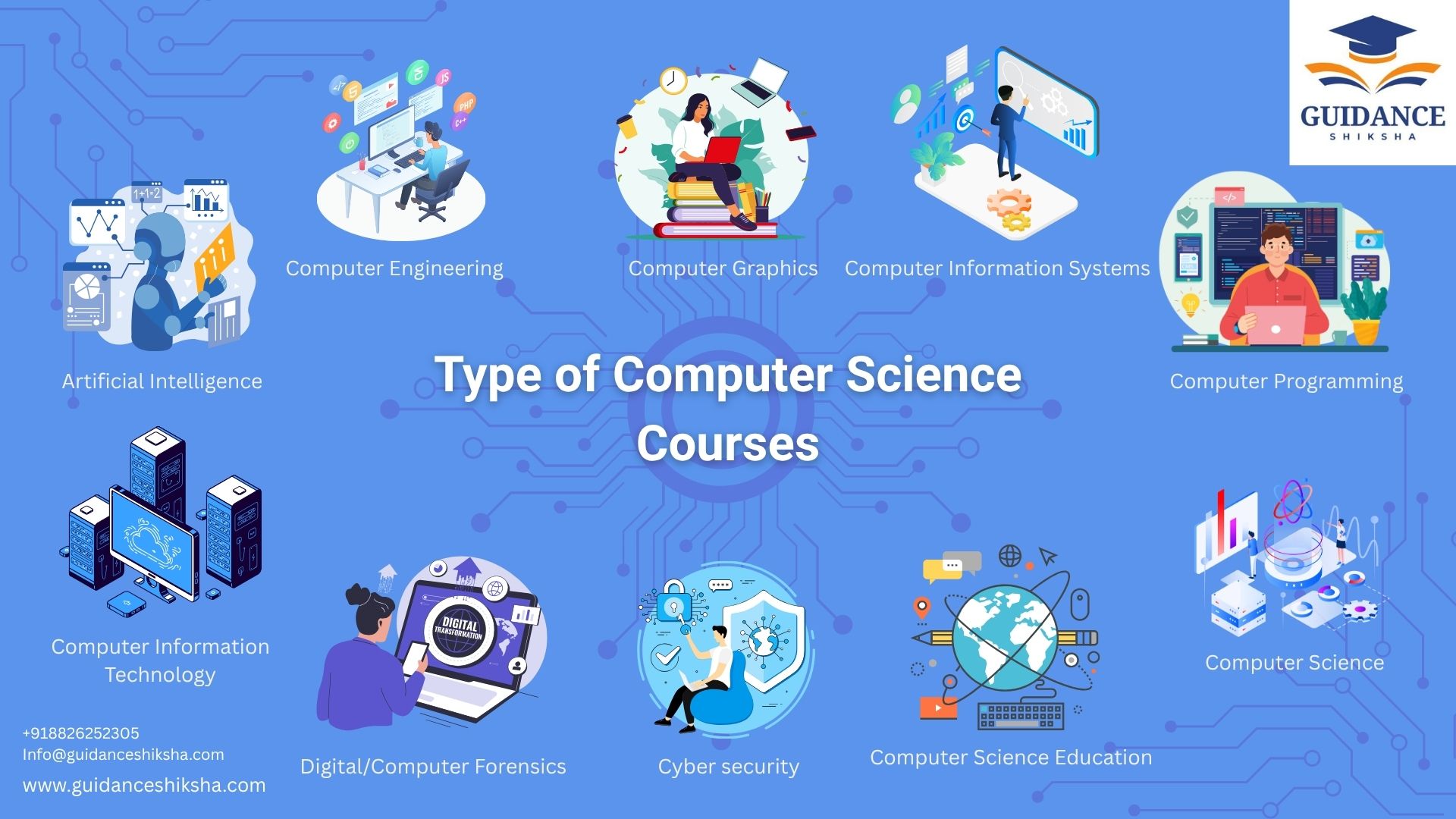
As technology diversifies, CSE courses have branched into specialized streams. Choosing a specialization early can significantly impact a student's career trajectory.
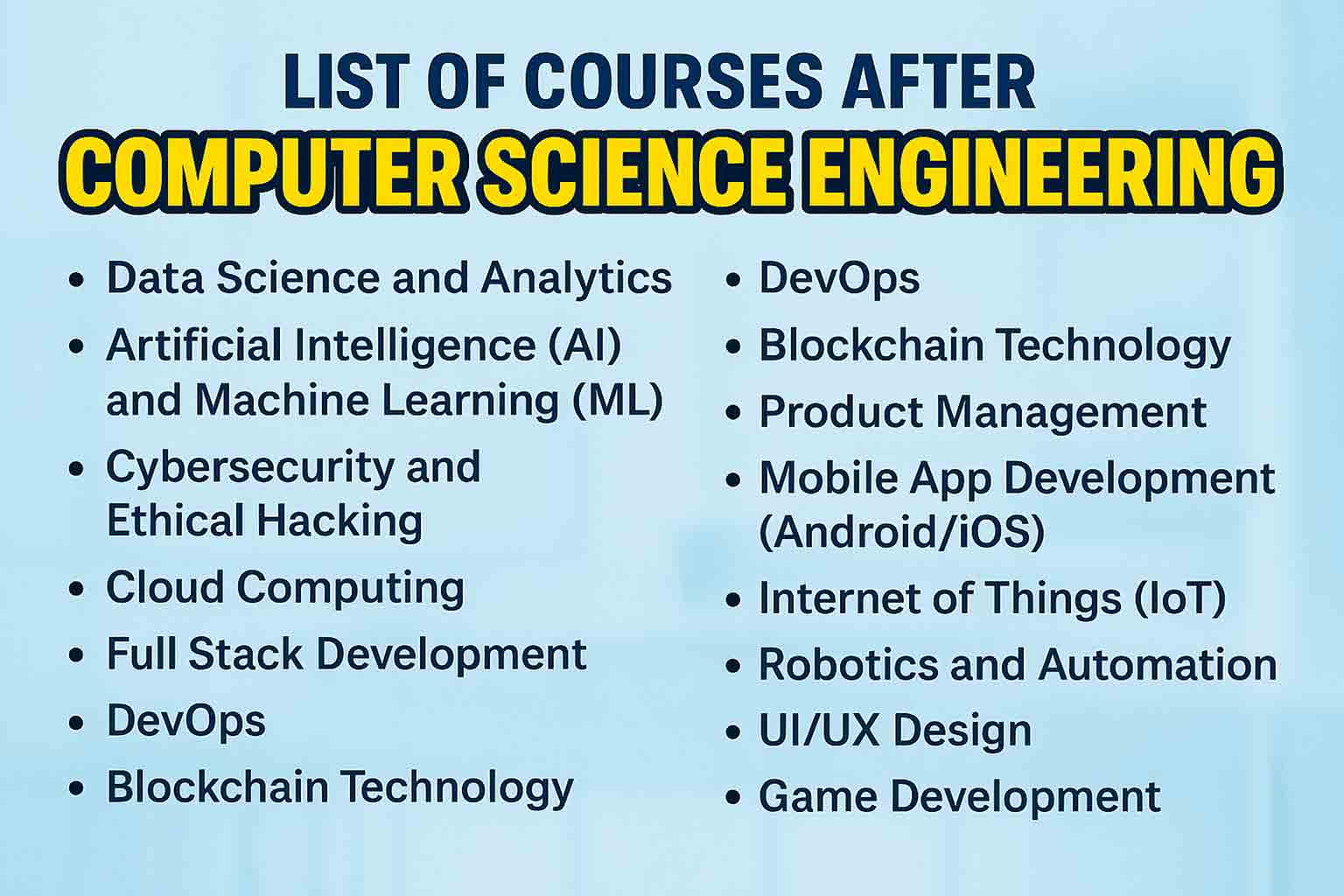
- Artificial Intelligence and Machine Learning (AI/ML): This is the most popular specialization in 2026. It covers neural networks, deep learning, and natural language processing. The focus is on building systems that can learn from data and make autonomous decisions.
- Cybersecurity: With the rise of state-sponsored cyber warfare and sophisticated ransomware, this specialization focuses on cryptography, network security, and ethical hacking. It teaches students how to build "secure by design" systems.
- Data Science and Big Data: This field sits at the intersection of CSE and Statistics. It involves extracting actionable insights from massive datasets. Students learn to use tools like Hadoop, Spark, and advanced data visualization software.
- Cloud Computing and DevOps: This stream focuses on the infrastructure of the modern web. Students learn to manage virtualized environments, containerization (using tools like Docker and Kubernetes), and continuous integration/continuous deployment (CI/CD) pipelines.
- Blockchain Technology: Beyond cryptocurrency, this specialization explores decentralized ledgers for supply chain management, secure voting systems, and smart contracts.
Comparing Academic Degrees vs. Professional Certifications
While a university degree provides a broad and deep foundation, professional certifications are often used to gain specific, current skills.
| Feature | Academic CSE Degree (B.Tech/M.S.) | Professional Certifications (AWS, Google, CompTIA) |
|---|---|---|
| Duration | 2 to 4 Years | 1 to 6 Months |
| Depth | High (Theoretical + Practical) | Moderate (Task-Specific) |
| Cost | High (Tuition + Fees) | Low to Moderate |
| Validity | Permanent (Degree remains valid) | Often requires renewal every 2–3 years |
| Focus | Holistic Engineering | Specific Product or Skill |
| Career Impact | Long-term career growth/Research | Immediate job placement/Promotion |
Admission Requirements and Prerequisites
Entering a top-tier CSE program in 2026 requires a strong background in science and mathematics.
- Academic Prerequisites: Most undergraduate programs require a high school diploma with high marks in Physics, Chemistry, and Mathematics (PCM). For graduate programs, a relevant undergraduate degree with a minimum GPA (often 3.0 or higher) is mandatory.
- Entrance Examinations: In many regions, standardized tests are the gatekeepers. In the United States, the GRE is often required for graduate school, while in India, the JEE and GATE remain the standard for undergraduate and postgraduate admissions respectively.
- Technical Skills: While not always a formal requirement, familiarity with at least one programming language (like Python) and a basic understanding of logic are highly beneficial for admission interviews and portfolio reviews.
- Language Proficiency: For international students, English proficiency tests like TOEFL or IELTS are standard requirements.
Cost and Return on Investment (ROI)
The cost of a CSE course varies wildly based on geography and the institution's prestige. In the United States, a four-year degree at a private university can exceed $200,000, while public universities may charge between $40,000 and $100,000 for residents. In Europe and Asia, costs can be significantly lower, especially at government-funded institutions.
However, the ROI for CSE courses remains among the highest of any academic discipline. In 2026, the starting salary for a CSE graduate in a developed economy typically ranges from $80,000 to $120,000 per year. Specialized roles in AI or Cybersecurity often command even higher premiums. The investment in a CSE degree usually pays for itself within 3 to 5 years of employment.
Career Opportunities After CSE
A CSE degree is a versatile "passport" that allows graduates to work in almost any industry, from finance to healthcare.
- Software Developer/Engineer: Creating applications and systems for businesses or consumers.
- Data Scientist: Analyzing complex data to help companies make strategic decisions.
- Systems Architect: Designing the high-level structure of complex IT systems.
- Full-Stack Developer: Handling both the front-end (user interface) and back-end (server/database) of web applications.
- Security Analyst: Protecting an organization's digital assets from threats.
- Machine Learning Engineer: Designing and deploying AI models in production environments.
Online vs. On-Campus CSE Courses
The 2026 educational landscape offers two distinct modes of learning. On-campus programs offer the "full experience," including access to physical laboratories, in-person networking, and campus recruitment drives. They are ideal for younger students seeking a traditional college environment.
Online CSE courses, provided by platforms like Coursera, edX, or university-specific portals, have gained immense credibility. Many "Online Master’s in Computer Science" (OMSCS) programs now carry the same weight as their on-campus counterparts. These are ideal for working professionals who need flexibility. However, online learning requires a high degree of self-discipline, as the lack of a physical cohort can lead to higher attrition rates.
Choosing the Right CSE Course
Selecting the right program involves evaluating several critical factors:
- Accreditation: Ensure the program is accredited by recognized bodies such as ABET. This ensures the curriculum meets global industry standards.
- Faculty Research: If you are interested in a specific field like Robotics, look for universities where the faculty is actively publishing research in that area.
- Industry Ties: Check if the college has partnerships with tech giants like Google, Microsoft, or NVIDIA. These ties often lead to better internship and placement opportunities.
- Infrastructure: For CSE, "infrastructure" means access to high-performance computing (HPC) clusters, modern software licenses, and specialized hardware labs.
Frequently Asked Questions
Can I take a CSE course if I didn't study computer science in high school?
Yes. Most undergraduate CSE courses are designed assuming students have no prior formal computer science training. However, you must have a strong foundation in mathematics, particularly algebra and logic, as these are the tools you will use to learn programming.
What is the difference between Computer Science (CS) and Computer Science and Engineering (CSE)?
While the terms are often used interchangeably, "Computer Science" typically focuses more on the theoretical and software aspects of computing. "Computer Science and Engineering" includes a more significant hardware component, bridging the gap between electrical engineering and software development.
Are online CSE degrees respected by employers in 2026?
Yes, as of 2026, most major technology employers focus on "skills-based hiring." Provided the online degree is from an accredited and reputable university, it is viewed as equivalent to an on-campus degree. What matters most is your portfolio, your performance in technical interviews, and your ability to demonstrate the skills learned.
How long does it take to complete a CSE course?
A standard Bachelor's degree takes four years. A Master's degree typically takes two years. Short-term diploma or certification courses can take anywhere from six months to a year. For those pursuing a Ph.D., the timeframe is usually four to six years depending on the research progress.
Is coding the only thing taught in CSE courses?
No. Coding is merely a tool used in CSE. The courses cover a wide array of topics including hardware design, networking, database management, project management, ethics in technology, and complex mathematical modeling. Many CSE graduates move into management or architecture roles where they write very little code.
Next Steps for Aspiring Students
If you are considering a CSE course, the first step is to strengthen your mathematical foundation. Begin by exploring free introductory programming courses online to ensure you enjoy the logic of problem-solving. Once you have confirmed your interest, research university rankings and accreditation status to find a program that aligns with your budget and career goals. Prepare for the necessary entrance exams at least 12 months in advance, and focus on building a small portfolio of projects to demonstrate your practical interest in the field.