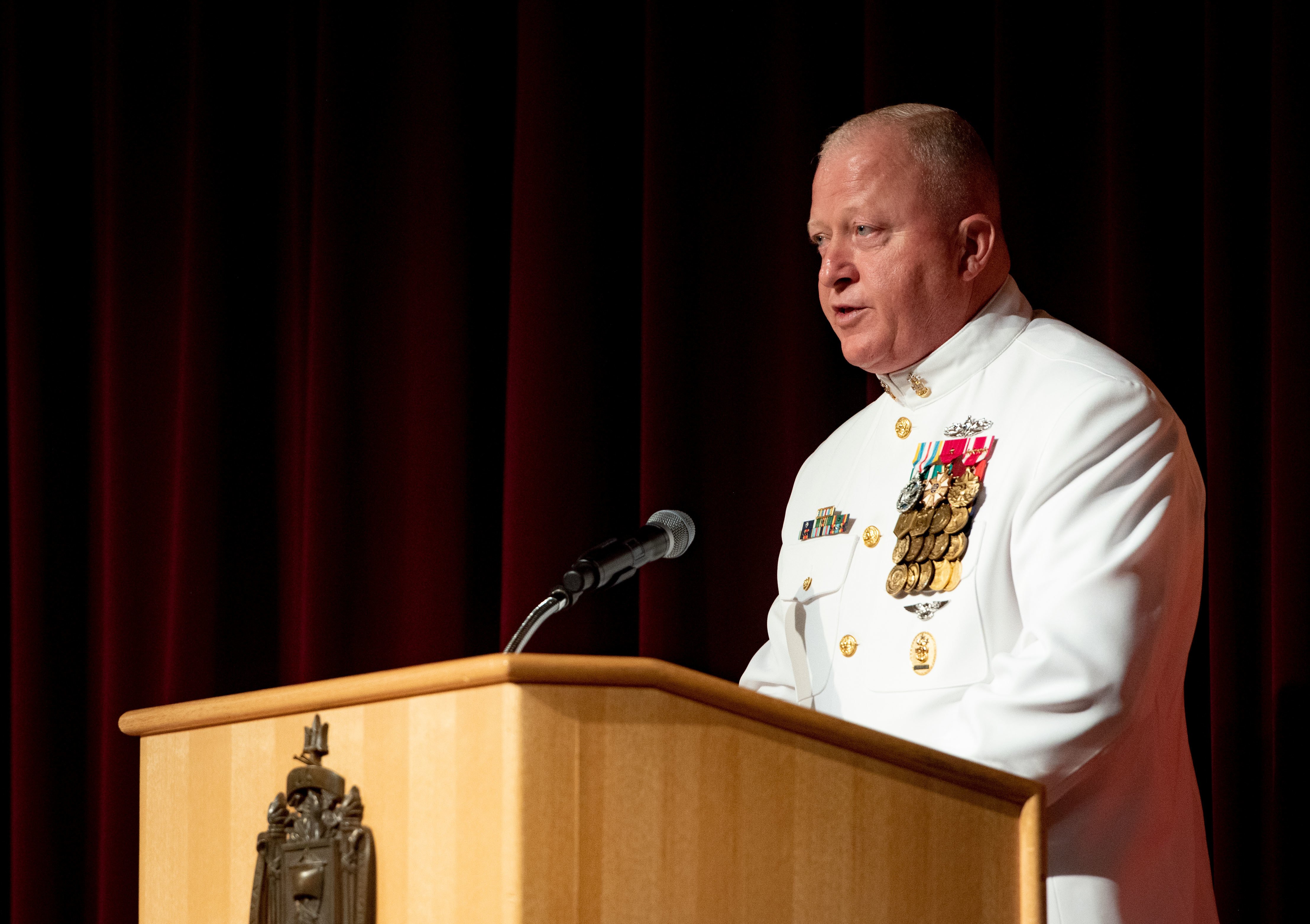
The Master Chief Petty Officer of the Navy (MCPON) is the single highest-ranking enlisted member in the United States Navy, serving as the senior enlisted advisor to the Chief of Naval Operations. The complete navy MCPON list spans from the establishment of the position in 1967 to the present day, chronicling the visionary leaders who have shaped enlisted policies, standards, and welfare across the fleet.
Understanding the Role of the Master Chief Petty Officer of the Navy
The position of Master Chief Petty Officer of the Navy was established on January 13, 1967, under the directive of Chief of Naval Operations Admiral David L. McDonald. The primary objective was to create a direct channel of communication between the enlisted force and Navy leadership, ensuring that the perspectives, concerns, and welfare needs of sailors were represented at the highest levels of the Department of the Navy.
The MCPON acts as an advisor to the Chief of Naval Operations (CNO) and the Secretary of the Navy (SECNAV) regarding all matters concerning enlisted personnel and their families. This includes evaluating policies related to professional development, retention, quality of life, pay and allowances, uniforms, and housing. The officeholder also frequently travels across global naval installations, aircraft carriers, submarines, and expeditionary units to engage directly with sailors, assess morale, and evaluate the operational effectiveness of personnel programs.
Appointed by the CNO, the MCPON serves a standard tour that typically aligns with the tenure of the CNO, though exact lengths vary based on strategic requirements and leadership changes. The individual holding this office wears a unique collar and sleeve insignia featuring four silver stars enclosed within a gold eagle and wreath, distinguishing them from all other master chief petty officers in the naval service.
Chronological Navy MCPON List
Since its inception, the MCPON billet has been held by a select group of visionary leaders chosen from various naval ratings. Reviewing the complete chronological sequence provides profound insight into how the enlisted force has evolved through the Vietnam War, the Cold War, the post-Cold War era, and into modern 21st-century strategic competition.
| Order | Name | Rating / Specialty | Term of Office | Notable Contributions and Focus Areas |
|---|---|---|---|---|
| 1 | Delbert D. Black | Gunner's Mate (GM) | 1967–1971 | First MCPON; established the foundation of the office; focused on unifying the enlisted force and improving leadership visibility. |
| 2 | John W. Whittet | Master Chief Hospital Corpsman (HM) | 1971–1975 | Emphasized career progression, health care access, and enhanced training standards for enlisted specialists. |
| 3 | Robert J. Walker | Master Chief Sonar Technician (ST) | 1975–1979 | Championed fair evaluation systems and modernized enlisted retention programs during a post-Vietnam transition. |
| 4 | Thomas S. Crow | Master Chief Aviation Machinist's Mate (AD) | 1979–1982 | Advocated for pay raises, improved family housing, and enhanced technical training pipelines. |
| 5 | Billy C. Sanders | Master Chief Avionics Technician (AV) | 1982–1985 | Focused on tightening uniform regulations, establishing high professional standards, and mentoring junior leadership. |
| 6 | William H. Plackett | Master Chief Operations Specialist (OS) | 1985–1988 | Promoted modernization of the enlisted rating structure and streamlined advancement exam procedures. |
| 7 | Duane D. Bushey | Master Chief Master-at-Arms (MA) | 1988–1992 | Championed equal opportunity programs, gender integration policies, and enhanced family support networks. |
| 8 | John Hagan | Master Chief Data Processing Technician (DP) | 1992–1998 | Longest-serving MCPON; introduced the "Revolution in Training," professional reading lists, and leadership academies. |
| 9 | James L. Herdt | Master Chief Machinist's Mate (MM) | 1998–2002 | Spearheaded the "Sailor's Creed," redesigned the service dress white uniform, and overhauled advancement incentives. |
| 10 | Terry D. Scott | Master Chief Aviation Ordnanceman (AO) | 2002–2006 | Guided the Navy through post-9/11 operational shifts, reinforcing force resilience and combat readiness. |
| 11 | Joe R. Campa Jr. | Master Chief Command Master Chief (CMDCM) | 2006–2009 | Refined enlisted professional military education (PME) and revamped the physical readiness program. |
| 12 | Rick D. West | Master Chief Fleet Support Master Chief (FLTCM) | 2009–2013 | Focused on Sailor 2025 initiatives, mental health awareness, and supporting wounded warriors. |
| 13 | Mike Stevens | Master Chief Fleet Support Master Chief (FLTCM) | 2013–2016 | Created the CNO-Navy Heritage weeks, established legacy learning paths, and emphasized core values. |
| 14 | Steven S. Giordano | Master Chief Cryptologic Technician (Collections) (CTI) | 2016–2018 | Addressed rating modernization, performance evaluation redesign, and leadership accountability. |
| 15 | Russell L. Smith | Master Chief Aviation Ordnanceman (AO) | 2018–2022 | Navigated fleet challenges through the COVID-19 pandemic, focusing on mental health, suicide prevention, and barracks quality. |
| 16 | James Honea | Master Chief Command Master Chief (CMDCM) | 2022–Present | Prioritizes foundational warfighting competence, quality of service, barracks habitability, and addressing toxic leadership. |
Detailed Profiles of Notable MCPONs
While every leader on the navy MCPON list has left an indelible mark on naval history, certain individuals instituted systemic changes that fundamentally transformed how sailors live, work, and advance.
Delbert D. Black (MCPON 1)
As the inaugural Master Chief Petty Officer of the Navy, Delbert Black faced the monumental task of defining a role that had no historical precedent. Serving during the height of the Vietnam War, Black traveled extensively to listen to enlisted grievances regarding pay disparities, unfair treatment, and poor living conditions. His advocacy directly influenced leadership to take enlisted concerns seriously, cementing the legitimacy of the office for generations to follow. In his honor, the Navy established the Delbert D. Black Leadership Award, presented annually to outstanding command master chiefs.
John Hagan (MCPON 8)
Serving for six years under turbulent post-Cold War downsizing, John Hagan initiated sweeping cultural reforms. He recognized that the Navy was transitioning into an information-heavy, technological force requiring higher cognitive capabilities from its sailors. Hagan introduced the Navy Leadership Academy, standardized the Chief Petty Officer initiation process, and instituted the foundational Professional Reading Program. His tenure permanently linked professional education to advancement eligibility.
James L. Herdt (MCPON 9)
James Herdt is widely recognized for institutionalizing cultural touchstones that unify the modern fleet. Under his leadership, the Sailor's Creed—a statement of commitment to the nation, the Navy, and core values—was formally adopted and integrated into basic training. Herdt also focused heavily on modernizing the enlisted evaluation system, addressing chronic retention issues, and advocating for improved base housing and childcare facilities for military families.
Selection Criteria and Prerequisites for the Position
Ascending to the position of Master Chief Petty Officer of the Navy requires a career characterized by exceptional leadership, sustained superior performance, and broad operational experience across multiple commands.
- Rank and Rate: Candidates must hold the substantive paygrade of E-9 (Master Chief Petty Officer). While historical appointees have represented various ratings—ranging from gunners mates to cryptologists—the ability to understand enterprise-level human resources is paramount.
- Command Experience: Prospective candidates typically have served successfully as a Command Master Chief (CMC), Fleet Master Chief (FLTCM), or Force Master Chief (FORCM), demonstrating the ability to advise flag officers and senior civilian executives.
- Screening and Vetting: Candidates undergo rigorous administrative, medical, and security vetting. The selection panel evaluates their disciplinary record, operational background, strategic vision, and communication skills before presenting finalists to the Chief of Naval Operations for final appointment.
Evolution of Enlisted Leadership and Uniforms
The office of the MCPON has also served as a focal point for modernizing enlisted uniforms and insignia. When Delbert Black assumed office in 1967, he initially wore a modified master chief petty officer uniform with unique gold rating badges, which eventually became standard for all E-9s with twelve years of good conduct. Subsequent MCPONs oversaw the transition of the Service Dress White uniform, the implementation of the Navy Working Uniform (NWU) variants, and the standardization of headgear across paygrades.
Furthermore, the MCPON has continually driven the evolution of Enlisted Professional Military Education (EPME). From the creation of the Senior Enlisted Academy (SEA) in Newport, Rhode Island, to modern mobile training teams, the leaders on the navy MCPON list have ensured that sailors receive continuous leadership training at critical career milestones, transforming technical experts into strategic tactical leaders.
Frequently Asked Questions About the Navy MCPON List
How long does a Master Chief Petty Officer of the Navy serve in office?
There is no fixed term limit for the MCPON. The tenure is determined by the Chief of Naval Operations. Most MCPONs serve between three and six years, stepping down when a new CNO takes office or when they reach statutory retirement limits for active-duty service.
Are all MCPONs required to hold a specific rating?
No. The navy MCPON list features master chiefs from diverse operational backgrounds, including aviation, submarines, surface warfare, medical corps, and information warfare. The selection focuses on leadership capability, strategic vision, and command experience rather than specific job specialties.
What is the exact difference between a Fleet Master Chief and the MCPON?
While Fleet and Force Master Chiefs (FLTCM/FORCM) advise major fleet commanders (such as U.S. Fleet Forces Command or Pacific Fleet) or type commanders (such as Naval Air Forces), the MCPON is the sole advisor to the Chief of Naval Operations for the entire global naval force, representing all active, reserve, and retired enlisted personnel.
Where can I find official historical records of past MCPONs?
Official biographies, historical portraits, and archival documents for every individual on the navy MCPON list are maintained by the Naval History and Heritage Command (NHHC) and published on official U.S. Navy web portals.
Who was the longest-serving MCPON in naval history?
John Hagan holds the record as the longest-serving MCPON, holding the office from March 1, 1992, to March 27, 1998, serving under multiple Chiefs of Naval Operations and navigating significant post-Cold War force reductions.
Practical Recommendations for Researching Naval Leadership
For historians, researchers, and sailors studying naval heritage, examining the navy MCPON list offers valuable context regarding how personnel policies adapt to geopolitical shifts. When conducting further research into specific MCPON tenures, consult primary sources such as official Navy instruction archives, oral history collections housed at the U.S. Naval Institute, and archived editions of All Hands magazine. Understanding the policy battles, welfare improvements, and cultural shifts initiated by these sixteen leaders provides a comprehensive blueprint of modern enlisted naval leadership.