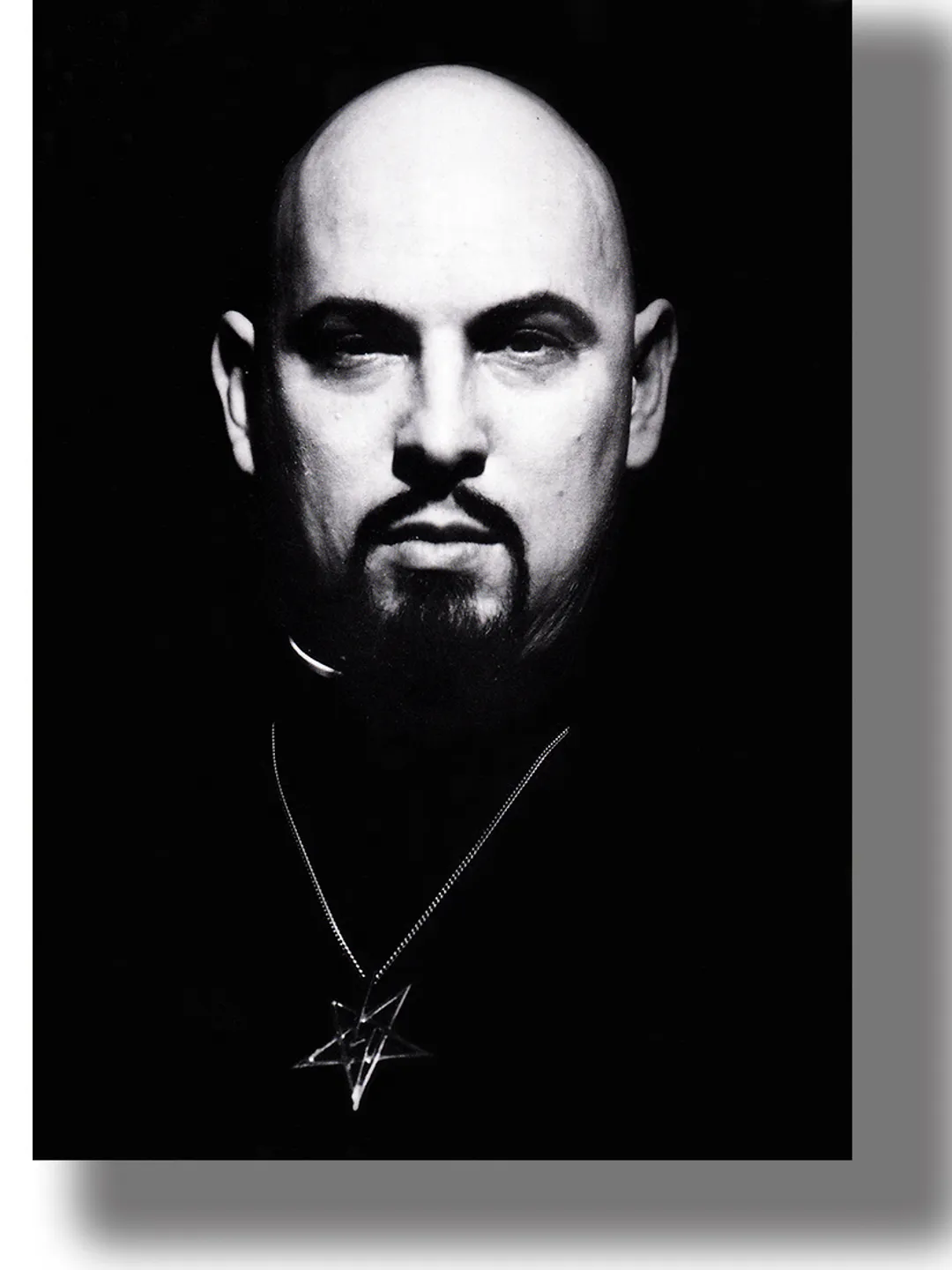
Anton LaVey (often searched as "Anton Levay") was the founder of the Church of Satan and the author of The Satanic Bible. He established a modern, atheistic philosophy centered on individualism, epicureanism, and self-deification. His work redefined Satanism as a secular, carnal religion rather than literal devil worship.
Anton Szandor LaVey remains one of the most polarizing and misunderstood figures of the 20th-century counter-culture movement. Born Howard Stanton Levey, he rose to international notoriety in the 1960s by challenging the foundational morality of Western civilization. By branding his philosophy with the name of the ultimate adversary—Satan—LaVey created a provocative framework that prioritized human instinct, rational self-interest, and the rejection of spiritual "hypocrisy." As of 2026, his influence persists across modern occultism, secular humanism, and the aesthetics of heavy metal and gothic subcultures.
Early Life and the Creation of the LaVeyan Persona
The origins of Anton LaVey are a blend of verifiable history and carefully constructed mythos. Born on April 11, 1930, in Chicago, Illinois, LaVey eventually moved to California, where he spent much of his formative years. According to his own accounts, his background was a tapestry of diverse experiences: a carnival lion tamer, an organist for burlesque shows, and even a photographer for the San Francisco Police Department.
While critics and biographers have debated the extent of his involvement in some of these roles—particularly the police photography—the influence of these environments on his later philosophy is undeniable. The carnival, in particular, served as a laboratory for LaVey to observe human behavior. He noted the irony of seeing the same men at the burlesque shows on Saturday night and in the front pews of the church on Sunday morning. This observation of human duplicity became a cornerstone of his critique of traditional religion, which he viewed as a tool for suppressing natural human desires.
By the early 1960s, LaVey began hosting "Magic Circle" meetings at his famous "Black House" on California Street in San Francisco. These gatherings attracted artists, eccentrics, and intellectuals. It was from this inner circle that the Church of Satan was officially birthed in 1966—the year LaVey declared "Anno Satana" or "Year One."
The Founding of the Church of Satan
The formal establishment of the Church of Satan on Walpurgisnacht (April 30), 1966, was a watershed moment in the history of the occult. LaVey shaved his head—giving him the iconic, Mephistophelean look that would dominate media coverage—and declared himself the High Priest.
The Church of Satan was the first organized religion in modern history to use the figure of Satan as a symbol of pride, liberty, and individualism. For LaVey, Satan was not a literal deity or a red-skinned demon living in a subterranean hell. Instead, Satan was a metaphor for the "dark force in nature" and a representation of the carnal nature of man. The Church focused on "the here and now," rejecting the promise of an afterlife in favor of maximizing life on Earth.
Early rituals at the Black House were theatrical and designed as "psychodrama." LaVey understood that human beings have a psychological need for ritual and symbolism, even if they do not believe in the supernatural. These rituals served to release pent-up emotions and reinforce the practitioner's sense of personal power.
The Satanic Bible and Core Philosophy
In 1969, LaVey published The Satanic Bible, a collection of essays, observations, and rituals that remains the definitive text of the religion. The book is divided into four sections: The Book of Satan, The Book of Lucifer, The Book of Belial, and The Book of Leviathan.
The philosophy of LaVeyan Satanism is built upon several key pillars:
- Atheism and Self-Deification: LaVeyan Satanists do not believe in any gods, including the Christian devil. Instead, the "Satanist" is their own god. Every individual is responsible for their own destiny, successes, and failures.
- Indulgence instead of Abstinence: LaVey argued that as long as an activity is legal and consensual, there is no reason to deny oneself the pleasures of the flesh.
- Lex Talionis (Law of Retaliation): Moving away from "turning the other cheek," LaVey advocated for "doing unto others as they do unto you." This Social Darwinist approach emphasized self-preservation and justice over unconditional forgiveness.
- Vital Existence: A rejection of spiritualism in favor of material reality.
The Nine Satanic Statements
LaVey codified the religion’s ethics into the Nine Satanic Statements, which appeared at the beginning of The Satanic Bible. These include:
- Satan represents indulgence instead of abstinence.
- Satan represents vital existence instead of spiritual pipe dreams.
- Satan represents undefiled wisdom instead of hypocritical self-deceit.
- Satan represents kindness to those who deserve it instead of love wasted on ingrates.
- Satan represents vengeance instead of turning the other cheek.
These statements were designed to be jarring and counter-intuitive to the prevailing Christian morality of the time. They emphasized a "man as animal" perspective, stripped of what LaVey viewed as the delusions of religious dogma.
Lesser and Greater Magic
A critical but often misunderstood aspect of LaVey’s work is his distinction between "Lesser Magic" and "Greater Magic."
Lesser Magic is essentially applied psychology. It involves the use of glamour, body language, scent, and tone to manipulate one’s environment and the people within it to achieve a specific goal. LaVey wrote extensively about the "Synthesizer" and the use of archetypes to influence others, which he called "applied Satanic aesthetics."
Greater Magic, on the other hand, refers to formal rituals conducted within a ritual chamber. LaVey described this as "psychodrama." The purpose of Greater Magic is not to cast a "spell" in the fantasy sense, but to create an emotional release (catharsis) that allows the practitioner to move forward in their daily life with clarity and focus. By externalizing their desires or frustrations through ritual, the Satanist can objectively manage their internal state.
Comparison: LaVeyan Satanism vs. Common Misconceptions
Because the term "Satanism" is loaded with centuries of folklore and horror tropes, LaVeyan Satanism is frequently confused with other practices. The following table provides a comparison between LaVey’s philosophy and the myths that often surround it.
| Feature | LaVeyan Satanism (Church of Satan) | Theistic Satanism / Devil Worship | Pop Culture / Urban Legend |
|---|---|---|---|
| View of Satan | A metaphor/archetype for individualism. | A literal supernatural entity or deity. | An evil being that demands souls. |
| Deity | Atheistic; the self is the "god." | Theistic; Satan is the supreme ruler. | Dualistic; Satan opposes God. |
| Animal Sacrifice | Strictly forbidden (Rule #9 of Satanic Rules). | Sometimes practiced by fringe groups. | Common trope in movies/satanic panic. |
| View of Law | Supports law and order for social stability. | Varies by individual group. | Often portrayed as anarchist/criminal. |
| Afterlife | No belief in an afterlife; focus on life now. | Varies; some believe in a literal Hell. | Eternal damnation or servitude. |
| Recruitment | Does not proselytize; members find them. | Varies by sect. | Often portrayed as "luring" the youth. |
Media Persona and the "Black Pope"
Throughout the late 1960s and 1970s, LaVey became a media sensation. He was dubbed the "Black Pope" and appeared in numerous talk shows, documentaries, and even films (he had a cameo in The Devil’s Rain). His home, the Black House, was painted entirely black and reportedly housed a pet lion named Togare.
His charisma and wit made him a formidable interviewee. He often used humor and intellectual provocation to dismantle his critics. He maintained friendships with several high-profile figures, including Sammy Davis Jr., who became a member of the Church for a time, and actress Jayne Mansfield. These associations helped cement the Church of Satan’s status as a staple of Hollywood’s "darker" side.
However, this notoriety had a price. During the "Satanic Panic" of the 1980s, LaVey and his church were often scapegoated by fundamentalist groups for various societal ills. Despite the fact that LaVey explicitly condemned criminal activity and child abuse, the Church of Satan became a frequent target of sensationalist media reports that conflated his atheistic philosophy with violent criminal cults—claims that were later debunked by the FBI in the 1992 Lanning Report.
Conflict and Schism
Like many religious movements, the Church of Satan experienced internal friction. In 1975, a high-ranking member named Michael Aquino split from the Church to form the Temple of Set. Aquino argued that Satan was a literal entity (which he called Set) and felt that LaVey was focusing too much on the theatrical and material aspects rather than the metaphysical.
This schism marked the beginning of a more fragmented Satanic landscape. In later years, particularly after LaVey’s death, other organizations like The Satanic Temple (TST) emerged. It is important to note that as of 2026, the Church of Satan remains distinct from The Satanic Temple. While TST focuses heavily on political activism and social justice, the Church of Satan remains focused on LaVey’s original vision of personal meritocracy and private individual development.
The Church of Satan in the 21st Century
Anton LaVey passed away on October 29, 1997, due to pulmonary edema. Following his death, the leadership of the Church eventually passed to Peter H. Gilmore, who was appointed High Priest in 2001. Under High Priest Gilmore and High Priestess Peggy Nadramia, the Church moved its administrative headquarters from San Francisco to Poughkeepsie and later New York City.
In 2026, the Church of Satan continues to operate as a global organization. It does not have physical "churches" in the traditional sense, as LaVey believed that congregational worship was a "herd" activity. Instead, it operates as a network of individuals who apply LaVeyan principles to their personal and professional lives. Membership remains a private matter, and the Church does not release census data, maintaining the air of exclusivity that LaVey originally established.
Legacy and Cultural Impact
The impact of Anton LaVey extends far beyond the small number of card-carrying members of his church. He was a pioneer in the "religion of the self," which has become a dominant theme in modern Western culture. His emphasis on "rational self-interest" mirrors elements of Ayn Rand’s Objectivism, while his aesthetic influence is visible in almost every facet of modern dark alternative culture.
Musically, the imagery and philosophy of The Satanic Bible provided the blueprint for Black Metal and various sub-genres of Heavy Metal. Bands from King Diamond to Marilyn Manson have cited LaVey as a significant influence on their art and worldview.
Beyond the aesthetics, LaVey’s work contributed to the broader secularization of society. By treating "religion" as a psychological tool rather than a divine revelation, he paved the way for modern discussions on the nature of belief and the role of ritual in an increasingly scientific world.
Frequently Asked Questions
Did Anton LaVey actually believe in the Devil?
No. Anton LaVey was an atheist. He viewed "Satan" as a symbol of man's carnal nature, individualism, and rebellion against social and religious norms. He did not believe in a literal, supernatural being named Satan or any other deity.
What is the difference between the Church of Satan and The Satanic Temple?
While both are atheistic, they have different focuses. The Church of Satan, founded by LaVey, focuses on personal development, meritocracy, and individual achievement, often staying out of the political sphere. The Satanic Temple (TST) is more focused on political activism, secularism, and social justice, using Satanic imagery to challenge the presence of Christian symbols in public spaces.
Is The Satanic Bible dangerous to read?
The Satanic Bible contains no "curses" or instructions for illegal acts. It is a work of philosophy and social commentary. It promotes law and order, and explicitly forbids harming animals or children. Most readers find it to be a mix of Nietzschean philosophy and cynical humor.
Who is in charge of the Church of Satan now?
As of 2026, the Church of Satan is led by High Priest Peter H. Gilmore and High Priestess Peggy Nadramia. They have maintained the leadership since shortly after LaVey's death in 1997.
How can someone join the Church of Satan?
Membership is acquired by paying a one-time fee for a lifetime membership. However, the Church emphasizes that "you are born a Satanist, you aren't made one." They suggest that if you read LaVey’s work and find it resonates with your existing worldview, you are already a Satanist.
Practical Recommendation for Further Research
For those interested in understanding the nuances of Anton LaVey’s philosophy without the sensationalism of 20th-century media, the best starting point remains the source material. Reading The Satanic Bible (1969) followed by The Satanic Rituals (1972) provides the foundational context. For a modern perspective on how these ideas are applied in the 21st century, High Priest Peter H. Gilmore’s The Satanic Scriptures (2007) is the essential companion text. Always cross-reference biographical claims with independent sources like the works of historian of religion J. Gordon Melton or the Church of Satan’s official website for the most accurate organizational history.