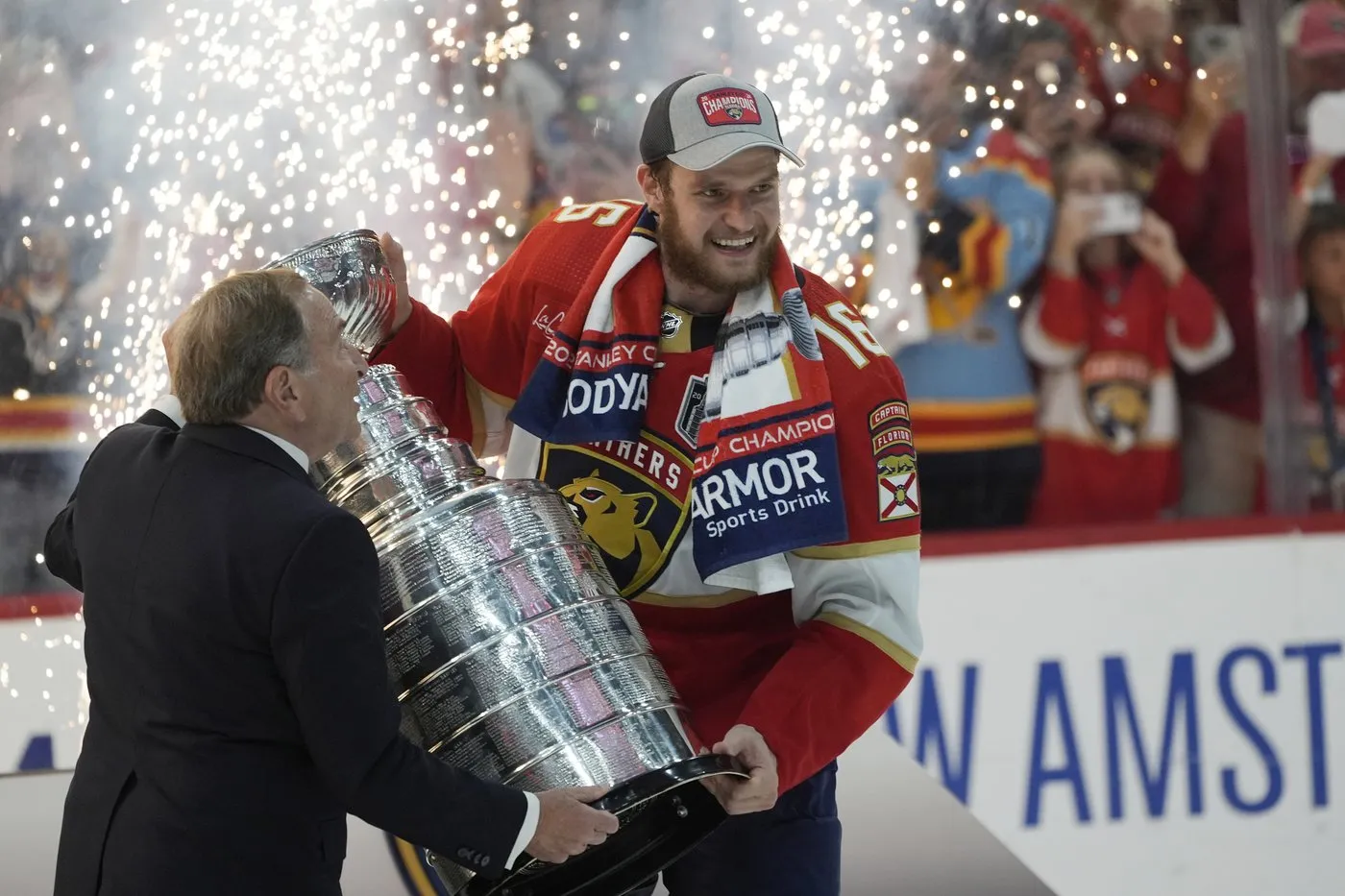
Aleksander Barkov stands as the undisputed foundational pillar of the Florida Panthers franchise. As the team's captain and elite two-way center, his contract represents one of the most critical financial commitments in the National Hockey League. Analyzing the Aleksander Barkov contract requires a deep dive into salary cap mechanics, long-term roster construction, and the tangible value a premier franchise player brings to a small-market hockey club. Navigating the modern NHL salary cap landscape demands precise fiscal management, making Barkov's deal a fascinating case study for sports economists and hockey operations executives alike.
The Financial Architecture of the Barkov Extension
The current iteration of the Aleksander Barkov contract is an eight-year, $80 million contract extension signed prior to the 2021-2022 season, which kicked off fully in the 2022-2023 campaign and stretches through the conclusion of the 2030-2031 season. This massive deal carries an Average Annual Value (AAV) or cap hit of $10 million.
Understanding how this cap hit interacts with the NHL's ever-evolving Upper Limit is vital. When Barkov signed the extension, a $10 million cap hit represented a significant percentage of the league's maximum threshold. As the NHL salary cap rises substantially through 2026 and beyond, Barkov's $10 million annual figure transitions from a top-tier marquee number into an exceptional value contract relative to his elite production on the ice.
Key Financial Parameters of the Agreement
- Total Contract Value: $80,000,000 USD
- Average Annual Value (AAV): $10,000,000 USD
- Contract Duration: 8 Seasons
- Signing Bonus Structure: Heavy signing bonus allocation in the early years transitioning to base salary structure.
- No-Movement Clause (NMC): Full protection status spanning the duration of the contract, granting Barkov complete control over any potential roster movement.
Salary Cap Percentage and Roster Building Context
Managing a competitive NHL roster under a hard salary cap requires balancing elite talent acquisition with cost-effective depth. With the NHL salary cap experiencing accelerated growth by 2026, the Florida Panthers front office enjoys immense financial flexibility despite having Barkov's $10 million cap hit on the books.
When evaluating elite centers across the league, modern general managers look at cap percentage rather than raw dollar amounts. Barkov's current cap hit commands roughly 11% to 12% of the total team payroll, a remarkably efficient figure for a perennial Selke Trophy contender who routinely logs top-tier minutes in all situations. This efficiency allows the front office to surround their captain with elite complementary wingers, a formidable defensive corps, and reliable goaltending depth.
Comparative Value Analysis Among Elite NHL Centers
Evaluating the Aleksander Barkov contract requires contextualizing it against other premier centermen across the National Hockey League. The following comparison table outlines how Barkov's financial commitment matches up against contemporaries operating under similar long-term deals.
| Player Name | Franchise | Contract Length | Total Value | Average Annual Value (AAV) | Notable Clause Type |
|---|---|---|---|---|---|
| Aleksander Barkov | Florida Panthers | 8 Years | $80,000,000 | $10,000,000 | Full No-Movement Clause |
| Nathan MacKinnon | Colorado Avalanche | 8 Years | $100,800,000 | $12,600,000 | Full No-Movement Clause |
| Connor McDavid | Edmonton Oilers | 8 Years | $100,000,000 | $12,500,000 | Full No-Movement Clause |
| Auston Matthews | Toronto Maple Leafs | 4 Years | $53,000,000 | $13,250,000 | Full No-Movement Clause |
| Leon Draisaitl | Edmonton Oilers | 8 Years | $112,000,000 | $14,000,000 | Full No-Movement Clause |
This comparative breakdown illustrates that Barkov accepted a hometown discount of sorts when signing his extension, prioritizing team competitiveness and long-term championship contention over maximizing every available dollar on the open market.
The Strategic Importance of the No-Movement Clause
Player protection clauses are standard tools in modern NHL contract negotiations, but a full No-Movement Clause (NMC) carries immense weight for both player and organization. For Barkov, the NMC ensures absolute job security and stability in South Florida, where he has spent his entire professional career since being drafted second overall in 2013.
For the Florida Panthers, the NMC eliminates any uncertainty regarding their franchise cornerstone. It provides psychological stability to the locker room and guarantees that the leadership structure remains completely intact. Front office personnel can build multi-year drafting, trading, and development pipelines with absolute confidence that their first-line center and cultural leader is anchored in place.
Assessing Return on Investment: On-Ice and Leadership Metrics
Financial investments in professional sports are ultimately judged by productivity and championship success. Barkov's contract has yielded extraordinary dividends for the Florida Panthers organization.
- Defensive Excellence: Barkov is a multiple-time Frank J. Selke Trophy winner, recognized annually as the best defensive forward in the National Hockey League. His ability to suppress high-danger scoring chances while generating elite offensive output justifies every dollar of his $10 million AAV.
- Championship Pedigree: Elite contracts are ultimately evaluated by playoff success. Barkov's leadership, physical maturity, and clutch performances on the grandest stages have directly elevated the Florida Panthers into perennial Stanley Cup contenders.
- Culture and Mentorship: Beyond statistics, Barkov sets the professional standard for the organization. Young prospects and newly acquired veterans assimilate into the Panthers' system seamlessly by following the meticulous preparation and work ethic demonstrated daily by their captain.
Operational Strategy Note: Evaluating a franchise player contract requires looking beyond basic points-per-game metrics. Front offices heavily weigh defensive zone starts, faceoff win percentages against elite competition, and special teams efficacy when determining whether a marquee extension delivers true value to the organization's salary cap structure.
Frequently Asked Questions About the Aleksander Barkov Contract
What is the exact term and AAV of the Aleksander Barkov contract?
Aleksander Barkov is signed to an eight-year contract extension carrying an Average Annual Value (AAV) of $10,000,000. This agreement runs through the conclusion of the 2030-2031 NHL season.
When does Aleksander Barkov become an unrestricted free agent?
Barkov will become an Unrestricted Free Agent (UFA) at the conclusion of his current contract in the summer of 2031, at which point he will be 35 years old.
Does Aleksander Barkov have trade protection in his deal?
Yes, Barkov's contract features a full No-Movement Clause (NMC) for its entirety, meaning he cannot be traded, waived, or assigned to the minor leagues without his explicit written consent.
Did Barkov take a discount to stay with the Florida Panthers?
Compared to subsequent market valuations for elite franchise centermen, Barkov's $10 million AAV is widely viewed around the NHL as a team-friendly discount that preserved salary cap space to build a championship-caliber supporting cast.
How does Barkov's contract impact the Florida Panthers' long-term salary cap?
With the NHL salary cap continuing its upward trajectory, Barkov's $10 million cap hit occupies a shrinking percentage of the total payroll, giving the front office enhanced financial flexibility to retain key supporting players and pursue depth acquisitions.
Maximizing Roster Value Under Long-Term Franchise Commitments
Navigating the financial realities of the National Hockey League requires meticulous planning, precise analytics, and rare organizational alignment. The Aleksander Barkov contract stands out as a masterclass in locking down an elite franchise cornerstone while preserving the necessary fiscal space to construct a championship roster. As the Florida Panthers continue to compete at the highest level of professional hockey, their captain's contract remains the bedrock upon which all future success is built. Teams aiming to replicate this success must prioritize finding generational two-way talents who value team infrastructure and culture just as much as maximum financial compensation.