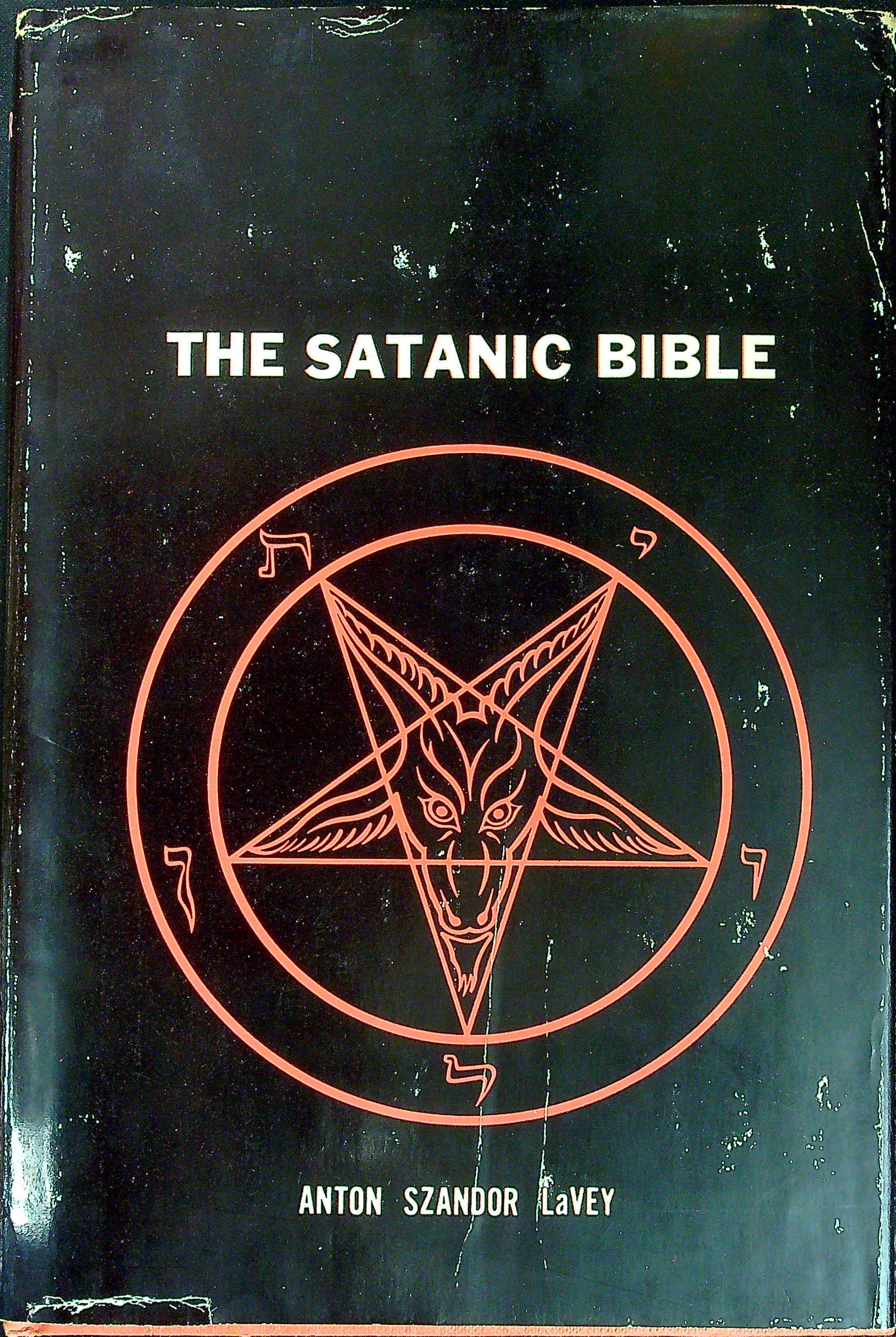
Anton LaVey was the founder of the Church of Satan and the author of The Satanic Bible, establishing a modern, atheistic philosophy centered on individualism and carnal indulgence. Born Howard Stanton Levey, he transformed himself into a countercultural icon known as the "Black Pope," influencing Western occultism and popular culture throughout the late 20th century.
The Early Life and Myth-Making of Howard Stanton Levey
The man the world would eventually know as Anton Szandor LaVey was born on April 11, 1930, in Chicago, Illinois. However, much of the biographical detail surrounding his early years is a blend of documented fact and the elaborate persona LaVey constructed to bolster his mystique. According to his official biographies, LaVey was a high school dropout who joined the Clyde Beatty Circus at 15, where he worked as a cage boy and later as a calliope player.
LaVey often claimed that his time in the circus and carnivals provided him with a cynical view of humanity. He frequently spoke about seeing the same men attending "bawdy" tent shows on Saturday nights and then appearing in the front pews of revivalist tents on Sunday mornings, begging for forgiveness. This observation of perceived religious hypocrisy became a cornerstone of his later philosophy. While some biographers and critics, such as Lawrence Wright, have contested the extent of his circus involvement, the influence of the "carnival aesthetic" is undeniable in the ritualistic and theatrical elements of the Church of Satan.
Musically gifted, LaVey worked as an organist in various nightclubs and theaters during the 1950s. This period was also marked by his growing interest in the occult, the macabre, and the psychological underpinnings of human behavior. He began hosting "Magic Circle" meetings at his home in San Francisco—a distinctive black-painted Victorian house—where he lectured on ghosts, vampires, and the "black arts" to a growing group of intellectuals and socialites.
1966: The Founding of the Church of Satan
On the night of April 30, 1966—Walpurgisnacht—LaVey ritually shaved his head and declared the founding of the Church of Satan. He proclaimed 1966 as "Year One" (Anno Satanas) of the Satanic Era. This was not an act of devil worship in the traditional Christian sense, but rather the birth of a religion that used Satan as a symbol of "the adversary"—a representation of carnal nature, pride, and enlightenment.
The mid-1960s provided a fertile cultural landscape for LaVey’s message. The era was defined by the questioning of traditional authority, the rise of the "Death of God" movement in theology, and the burgeoning sexual revolution. LaVey’s Church offered a structured, albeit controversial, framework for these burgeoning sentiments.
The "Black House" at 6114 California Street became the headquarters of the organization. It was here that LaVey performed high-profile rituals, including the first Satanic baptism (for his daughter Zeena) and Satanic wedding ceremonies, which were heavily covered by the media. These events served two purposes: they challenged the religious status quo and cemented LaVey’s role as a public provocateur.
The Core Philosophy: The Satanic Bible
In 1969, LaVey published The Satanic Bible, which remains the primary text for his followers. The book is divided into four sections: the Book of Satan, the Book of Lucifer, the Book of Belial, and the Book of Leviathan. Rather than a theological treatise on a literal deity, the text outlines a philosophy of "codified indulgence."
The philosophy is built upon several key pillars:
- Atheism and Egoism: LaVeyan Satanism does not believe in a literal Satan or a literal God. Instead, the "Satanist" is their own God. The focus is on the self, personal achievement, and the satisfaction of one's own desires.
- Lex Talionis: LaVey rejected the Christian "Golden Rule" in favor of "Lex Talionis"—the law of retaliation. He argued for "kindness to those who deserve it instead of love wasted on ingrates."
- Indulgence vs. Abstinence: Unlike many religions that preach self-denial, LaVeyan Satanism encourages the fulfillment of all "natural" desires, provided they do not harm those who do not wish to be involved.
- Vital Existence: The focus is entirely on the present life. LaVey famously stated that "Life is the great indulgence—death, the great abstinence."
The Nine Satanic Statements
To summarize the core tenets, LaVey formulated the Nine Satanic Statements, which include:
- Satan represents indulgence instead of abstinence!
- Satan represents vital existence instead of spiritual pipe dreams!
- Satan represents undefiled wisdom instead of hypocritical self-deceit!
- Satan represents kindness to those who deserve it instead of love wasted on ingrates!
- Satan represents vengeance instead of turning the other cheek!
Magic and Ritual: Greater and Lesser Magic
A common misconception is that LaVeyan Satanism is purely philosophical. In reality, LaVey placed significant emphasis on "magic," though he defined it in psychological and aesthetic terms rather than supernatural ones. He divided his practice into "Greater Magic" and "Lesser Magic."
Greater Magic (Ritual): This refers to psychodrama. Rituals were conducted in a "chamber of decompression" to allow the individual to release pent-up emotions—anger, lust, or grief. By acting out these desires in a controlled, theatrical environment, the practitioner could clear their mind and focus on their daily life. The use of traditional "satanic" imagery (the Baphomet, black robes, candles) was intended to shock the subconscious and tap into archetypal power.
Lesser Magic (Applied Psychology): This involves the manipulation of one's environment and other people through the use of "glamour" and psychological insight. LaVey taught that by understanding human weaknesses and tendencies, one could achieve their goals in the real world through charm, wit, and strategic presentation.
Comparison of LaVeyan Satanism vs. Traditional Theism
| Feature | LaVeyan Satanism | Traditional Christianity |
|---|---|---|
| Concept of God | The self; man is "just another animal." | A literal, external supreme being. |
| Concept of Satan | A symbol of carnal nature and rebellion. | A literal fallen angel/embodiment of evil. |
| View of Human Nature | Inherently selfish and driven by instinct. | Fallen but capable of redemption through faith. |
| Primary Goal | Personal satisfaction and vital existence. | Spiritual salvation and eternal life. |
| Ethics | Merit-based; retaliation for wrongs. | Forgiveness and "turning the other cheek." |
| Ritual Purpose | Psychological release (Psychodrama). | Worship and communion with the divine. |
The "Black Pope" in the Public Eye
Throughout the 1970s, Anton LaVey was a fixture in American media. He was a master of the "soundbite" long before the term became common. Dressed in his trademark black cape and sporting a goatee and shaved head, he appeared on talk shows, in documentaries, and even in minor film roles (most notably as an uncredited technical advisor and actor in films like The Devil's Rain).
His celebrity status attracted various Hollywood figures. Most famously, he was associated with actress Jayne Mansfield, whose tragic death in a car accident sparked decades of rumors regarding a "Satanic curse." While the extent of her involvement with the Church of Satan is debated, photos of LaVey and Mansfield together remain iconic symbols of the era's counterculture. Other figures, such as singer Sammy Davis Jr., were also briefly affiliated with the Church, though many distanced themselves as the "Satanic Panic" of the 1980s began to loom.
Internal Schisms and the Temple of Set
No movement is without its internal friction. In 1975, the Church of Satan experienced a major schism. Michael Aquino, a high-ranking member and US Army intelligence officer, disagreed with LaVey over the direction of the organization. Aquino felt that LaVey was becoming too focused on the financial aspects and was neglecting the spiritual or metaphysical possibilities of Satanism.
Aquino claimed to have received a revelation from the "Prince of Darkness" (whom he identified as the ancient Egyptian deity Set) and founded the Temple of Set. This group was more esoteric and believed in a literal, non-human intelligence, whereas LaVey remained steadfast in his atheistic, materialistic worldview. This split was a pivotal moment, as it led LaVey to de-emphasize the "Grotto" system (local chapters) of the Church, moving toward a more centralized, individualistic membership structure.
The Satanic Panic and Later Years
The 1980s brought the "Satanic Panic," a period characterized by widespread moral hysteria regarding alleged Satanic ritual abuse (SRA). While the Church of Satan was never legally implicated in the sensationalized crimes reported in the media, LaVey found himself defending his philosophy against a backdrop of public fear. He often pointed out that the "Satanism" being described by talk show hosts and self-proclaimed survivors bore no resemblance to the law-abiding, egoistic philosophy he had codified.
During his later years, LaVey became more reclusive, spending much of his time in the Black House. He continued to write, producing works such as The Satanic Witch (originally The Compleat Witch) and The Devil’s Notebook. These writings focused more on aesthetics, social commentary, and his disdain for what he saw as the "herding" behavior of modern society.
Anton LaVey died on October 29, 1997, at St. Mary's Medical Center in San Francisco. The cause of death was pulmonary edema. In a final act of theatricality, his death certificate reportedly listed the date of death as Halloween (October 31), though this was later corrected.
The Legacy of LaVey in 2026
As of 2026, the influence of Anton LaVey remains significant in both the occult world and the broader cultural landscape. The Church of Satan continues to operate under the leadership of High Priest Peter H. Gilmore, who has maintained LaVey’s atheistic and individualistic standards.
However, the landscape of modern Satanism has shifted. The rise of The Satanic Temple (TST) in the 21st century has created a clear distinction in the public mind. While LaVey’s philosophy is deeply individualistic and often socially conservative (emphasizing hierarchy and merit), The Satanic Temple focuses on political activism, social justice, and the separation of church and state. LaVeyan Satanists frequently criticize TST for being "political activists in devil suits," while TST proponents often view LaVey’s philosophy as dated and overly focused on the ego.
Despite these divisions, LaVey’s impact is undeniable in several areas:
- Pop Culture Aesthetics: From heavy metal music to horror films, the visual language LaVey popularized (the Sigil of Baphomet, the black ritual chamber) is the standard for "Satanic" imagery.
- Modern Occultism: LaVey paved the way for "Left-Hand Path" philosophies that prioritize the self over a deity.
- Secular Religion: He was one of the first to successfully frame an atheistic worldview within the structure and trappings of a religion, a concept that has since been explored by various secular humanist groups.
Frequently Asked Questions
Did Anton LaVey worship the Devil?
No. Anton LaVey did not believe in a literal, sentient Being known as the Devil or Satan. He viewed Satan as a metaphor for human nature, rebellion, and wisdom. His philosophy was atheistic; he believed that "God" and "Satan" are simply projections of the human ego.
What is the Sigil of Baphomet?
The Sigil of Baphomet is the official insignia of the Church of Satan. It consists of a goat's head (representing the Goat of Mendes) inside an inverted pentagram, surrounded by Hebrew letters at each point that spell out "Leviathan." LaVey popularized this symbol, and it has since become the most recognized icon of Satanism worldwide.
Is the Church of Satan involved in illegal activities?
The Church of Satan has a strict policy of following the law. In The Satanic Bible, LaVey emphasizes that a Satanist should be a law-abiding citizen and that any form of illegal activity—especially harm to children or animals—is strictly forbidden and considered "Satanic Sins." The organization maintains that true Satanists do not break the law for ritual purposes.
What is the difference between LaVey and The Satanic Temple?
The Church of Satan (LaVeyan) is an individualistic, atheistic philosophy that avoids political involvement and focuses on personal achievement and "Greater Magic" (ritual). The Satanic Temple is a non-theistic religious and political organization that uses Satanic imagery to advocate for social justice, secularism, and reproductive rights.
How do you join the Church of Satan?
Membership in the Church of Satan is attained through a one-time registration fee. Unlike many traditional religions, it does not require active participation in a congregation or "church-going" behavior. LaVey designed it as an organization for "outsiders" who prefer to operate independently.
Practical Next Actions for Researchers
For those looking to understand Anton LaVey beyond the sensationalized media reports, the following steps are recommended:
- Read Primary Texts: Start with The Satanic Bible and The Devil's Notebook to understand the philosophy in LaVey’s own words rather than through secondary interpretations.
- Compare Official and Unofficial Biographies: Read The Secret Life of a Satanist by Blanche Barton (official) alongside The Church of Satan by Michael Aquino or investigative pieces by Lawrence Wright to get a balanced view of his life history.
- Distinguish Between Branches: When researching modern Satanism, clearly distinguish between "LaVeyan/Rationalist" Satanism and "Theistic/Esoteric" Satanism to avoid confusing two very different worldviews.