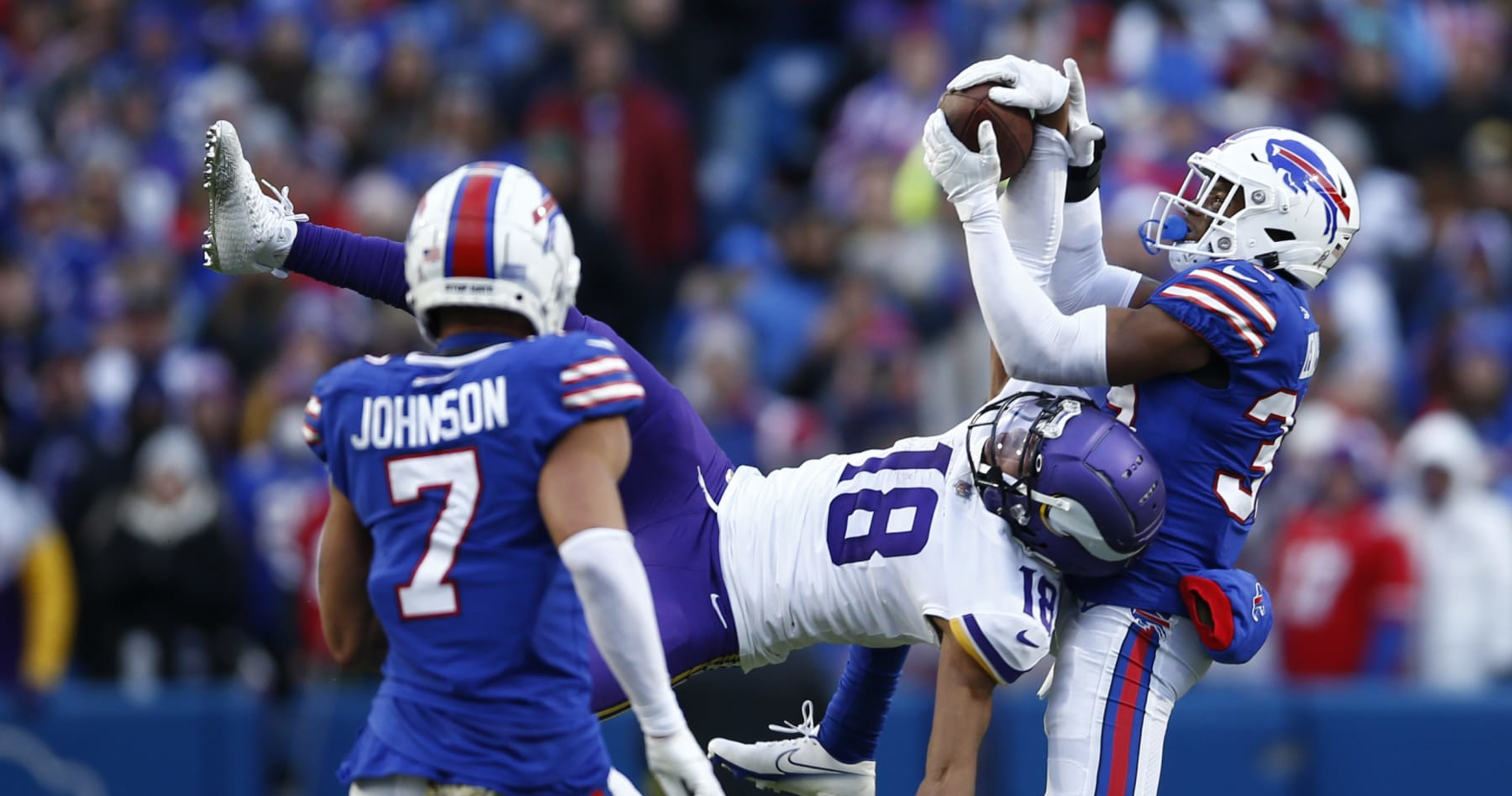
Justin Hobbs, the former standout wide receiver for the University of Tulsa, was born with a congenital hand condition known as symbrachydactyly, which resulted in an underdeveloped left hand with shortened fingers. Despite this physical challenge, Hobbs became one of the most productive receivers in Tulsa’s history, famously recording a viral one-handed catch against Navy in 2017 and proving that elite athletic performance is possible regardless of limb differences.
Understanding Symbrachydactyly: The Medical Context of Hobbs’ Condition
To understand the magnitude of Justin Hobbs’ achievements, one must first understand the technical nature of his condition. Symbrachydactyly is a rare congenital abnormality characterized by abnormally short fingers that are sometimes webbed or missing altogether. Unlike many other hand conditions, symbrachydactyly is usually unilateral, meaning it affects only one side of the body—in Hobbs’ case, his left hand.
From a clinical perspective, the condition occurs during embryonic development, typically around the sixth week of pregnancy. It is not caused by anything the mother did or did not do during pregnancy; rather, it is thought to be the result of a temporary interruption in blood flow to the developing limb bud. For an aspiring wide receiver, a position that necessitates the "soft hands" required to dampen the velocity of a spiraling pigskin, symbrachydactyly presents a significant mechanical hurdle.
The anatomy of a standard football catch relies on the "diamond" shape formed by the index fingers and thumbs of both hands. This shape creates a funnel that traps the ball. For Hobbs, this traditional technique was physically impossible. His left hand lacked the reach and surface area provided by full-length digits, meaning his catch radius and grip mechanics had to be entirely reimagined from a young age.
The Early Adaptation and Athletic Development
Growing up in Mesquite, Texas, Justin Hobbs did not view his hand as a disability but rather as a unique physiological trait. This mindset is common among elite athletes with limb differences, such as NFL linebacker Shaquem Griffin or former Major League Baseball pitcher Jim Abbott. For Hobbs, the adaptation process began long before he stepped onto a Division I college field.
In his youth, Hobbs developed specialized motor patterns to compensate for the reduced surface area of his left hand. He focused intensely on hand-eye coordination and the strength of his right arm. More importantly, he learned how to use his chest and the "palm" of his left hand as a backstop. By the time he reached West Mesquite High School, he was already a multi-sport athlete, excelling in basketball and football.
Recruiters initially looked at his hand with skepticism, wondering if he could handle the increased velocity of a collegiate quarterback’s pass. However, his performance at the high school level—earning All-District honors—demonstrated that his catching percentage was equal to, if not higher than, his peers with two full hands.
The Tulsa Golden Hurricane Era: Performance and Statistics
Justin Hobbs arrived at the University of Tulsa and quickly dispelled any notions that he was a "novelty" player. Standing 6-foot-4 and weighing over 200 pounds, he possessed the prototypical frame of a "Z" or "X" receiver. His height allowed him to high-point the ball, a technique where he could use his reach to keep the ball away from defenders, minimizing the need for a two-handed "clamp" catch.
During his tenure at Tulsa (predominantly 2014–2018), Hobbs became a cornerstone of the Golden Hurricane offense. In the 2016 season, he emerged as a primary target, recording 50 receptions for 685 yards and four touchdowns. His 2017 season was even more impactful, where he solidified his reputation as a reliable deep threat and a red-zone target.
| Season | Receptions | Receiving Yards | Average Per Catch | Touchdowns |
|---|---|---|---|---|
| 2015 | 32 | 551 | 17.2 | 2 |
| 2016 | 50 | 685 | 13.7 | 4 |
| 2017 | 50 | 839 | 16.8 | 3 |
| 2018 | 45 | 521 | 11.6 | 2 |
| Total | 177 | 2,596 | 14.7 | 11 |
His career totals placed him among the top tier of Tulsa receivers. The statistical consistency shown in the table above proves that his "hand" was not a limiting factor in his production. His 14.7 yards per catch average indicates that he wasn't just catching short "safety" passes; he was a vertical threat capable of making difficult catches downfield.
The Viral Moment: The 2017 Catch Against Navy
While Hobbs’ entire career was a testament to perseverance, one specific play brought his story to the national spotlight. On September 30, 2017, during a game against the Navy Midshipmen, Hobbs executed a catch that would be replayed on sports networks for months.
As the ball was thrown toward the sideline, Hobbs was forced to adjust his body. Because of the placement of the ball and the position of the defender, he could not bring his left hand across to secure the catch. Instead, he reached out with his right hand, pinned the ball against his body, and maintained control as he fell out of bounds. The catch was technically difficult for any receiver, but for Hobbs, it highlighted his mastery of body control.
This moment was significant because it forced the national media to address his condition. Rather than being seen as a receiver with a "deformed" hand, he was recognized as a receiver with elite spatial awareness. The "justin hobbs hand" search query surged as viewers realized that his highlight-reel catches were being made by an athlete who essentially played the game "one-and-a-half handed."
Technical Challenges: Equipment and Training
Playing wide receiver at the Division I level requires specialized gear. For most players, this means standard-issue sticky gloves (often from brands like Nike, Adidas, or Under Armour) designed to increase friction between the hand and the ball. For Justin Hobbs, equipment was a more complex issue.
- Custom Glove Modification: Hobbs frequently had to modify his left glove. Because the glove was designed for five full-length digits, the excess material on the left hand could become a hindrance, potentially snagging on the ball or a defender's jersey.
- Grip Strength Focus: To compensate for the lack of leverage in his left hand, Hobbs focused on immense grip strength in his right hand. This allowed him to "snatch" the ball out of the air, a technique that requires significant forearm and finger strength.
- Ball Security: Carrying the football after the catch presents another challenge. Standard protocol dictates that a runner switches the ball to the "outside" arm to keep it away from defenders. Hobbs had to be strategic about which side of the field he ran on or how he tucked the ball, often preferring his right arm for primary security while using his left arm for balance and stiff-arms.
Comparing Hobbs to Other Notable Athletes with Limb Differences
Justin Hobbs is part of a small but prestigious group of athletes who have reached the highest levels of American sports despite congenital hand or limb differences. Analyzing these comparisons helps contextualize the difficulty of what Hobbs achieved at Tulsa.
- Shaquem Griffin (Football): Griffin, who had his left hand amputated at age four due to amniotic band syndrome, is perhaps the most famous contemporary comparison. Like Hobbs, Griffin played in the American Athletic Conference (AAC) at UCF. Griffin’s success as a linebacker involved different mechanics (tackling and shedding blocks) compared to Hobbs’ requirement to catch a high-velocity ball.
- Jim Abbott (Baseball): Abbott pitched in the Major Leagues for ten seasons despite being born without a right hand. His "switch" technique—moving his glove from his stump to his left hand after a pitch—is considered one of the greatest mechanical adaptations in sports history.
- Hansel Emmanuel (Basketball): A more recent example, Emmanuel has achieved viral fame and collegiate success playing basketball with one arm.
What separates Hobbs from these figures is the specific demand of the wide receiver position. Baseball pitching is a closed-loop skill (the athlete starts the action), whereas receiving is an open-loop skill (the athlete must react to an external force). Hobbs had to react to a ball traveling at 50+ mph, often while being physically impeded by a cornerback, making his 177 career receptions statistically remarkable.
The Psychological Impact and Advocacy
Beyond the field, the story of Justin Hobbs' hand has served as a source of inspiration for children born with symbrachydactyly. In many interviews throughout his career at Tulsa, Hobbs emphasized that he rarely thought about his hand during the game. This psychological "normalization" is a key component of his legacy.
He often spoke about the importance of not seeking excuses. In a sport like football, where "measurables" (hand size, wing span, height) are often used to determine a player's value, Hobbs proved that functional performance outweighs anatomical "perfection." His presence in the Tulsa locker room was often cited by coaches as a "no-excuse" motivator for the rest of the team.
Professional Prospects and Life After Tulsa
Following his graduation, Hobbs pursued opportunities in professional football. While his hand condition was a talking point for NFL scouts, his primary challenges were the same as any other prospect: 40-yard dash times, route-running precision, and the transition to the speed of the professional game.
Although he did not become a household name in the NFL, his impact on the University of Tulsa program remains. He left the school ranked in the top ten in several receiving categories, a feat that ensures his name will remain in the record books for decades. As of 2026, he is frequently cited in sports medicine and athletic training curriculum as a primary case study in neuromuscular adaptation and the successful management of congenital limb differences in high-impact sports.
Common Misconceptions About Hobbs' Condition
Because "justin hobbs hand" is a frequent search term, several misconceptions have surfaced over the years. It is important to clarify these for historical and medical accuracy:
- It was not an injury: Some fans mistakenly believe Hobbs lost part of his hand in an accident. It was a congenital condition (born with it).
- It did not require surgery to play: While some individuals with symbrachydactyly undergo reconstructive surgery or toe-to-hand transfers, Hobbs played with his natural anatomy.
- It was not his primary "catching" hand: Hobbs is right-handed, which certainly aided his ability to make the sensational one-handed grabs for which he is known.
Summary of Technical Specifications: Justin Hobbs (WR)
| Attribute | Detail |
|---|---|
| Position | Wide Receiver (Tulsa Golden Hurricane) |
| Height/Weight | 6'4" / 230 lbs |
| Condition | Symbrachydactyly (Left Hand) |
| NCAA Career Receptions | 177 |
| Career Receiving Yards | 2,596 |
| Primary Strength | Vertical threat, high-pointing the ball, body control |
| Notable Achievement | 2nd-team All-AAC (2017) |
Frequently Asked Questions
What exactly happened to Justin Hobbs' hand?
Justin Hobbs was born with symbrachydactyly, a congenital condition where the fingers on his left hand did not fully develop. This resulted in several shortened digits. It was not the result of an injury or accident; he has lived with the condition since birth and adapted his athletic style to accommodate it.
How did Justin Hobbs catch a football with one hand?
Hobbs utilized a combination of exceptional hand-eye coordination, increased grip strength in his dominant right hand, and the use of his body (chest and shoulder) to secure the ball. He often "high-pointed" the ball, reaching his peak height to catch it before defenders could, which minimized the need for a traditional two-handed "funnel" catch.
Did Justin Hobbs play in the NFL?
Justin Hobbs participated in NFL workouts and rookie minicamps (including time with the Kansas City Chiefs) following his college career. While he did not secure a long-term roster spot in the NFL, his college career at Tulsa remains one of the most successful examples of an athlete with a limb difference playing at the Division I FBS level.
Is symbrachydactyly common among athletes?
It is very rare at the elite level. While many people are born with limb differences, the physical demands of professional and collegiate sports often act as a barrier. Hobbs, along with players like Shaquem Griffin, represents a very small percentage of athletes who have successfully reached the top tier of American football with this specific condition.
What was Justin Hobbs' most famous catch?
His most famous catch occurred in 2017 against Navy. He made a spectacular one-handed grab along the sideline that showcased his ability to track the ball and maintain control despite his physical limitation. The play went viral and is still used today as a highlight of his collegiate career.
How does Justin Hobbs' hand condition affect his daily life today?
As of 2026, Hobbs has moved on from his playing days but continues to be an advocate for those with limb differences. Like most individuals with symbrachydactyly, he has adapted to daily tasks through specialized motor patterns. In an athletic context, his condition never stopped him from weightlifting, catching, or competing at the highest level.
Practical Recommendation: If you or someone you know is an aspiring athlete with a limb difference, the story of Justin Hobbs serves as a technical blueprint. Focus on compensatory strength training (strengthening the dominant limb and core) and spatial awareness drills. Hobbs’ success demonstrates that while the traditional "textbook" technique may be impossible, a modified technique can be equally—or even more—effective when executed with precision.