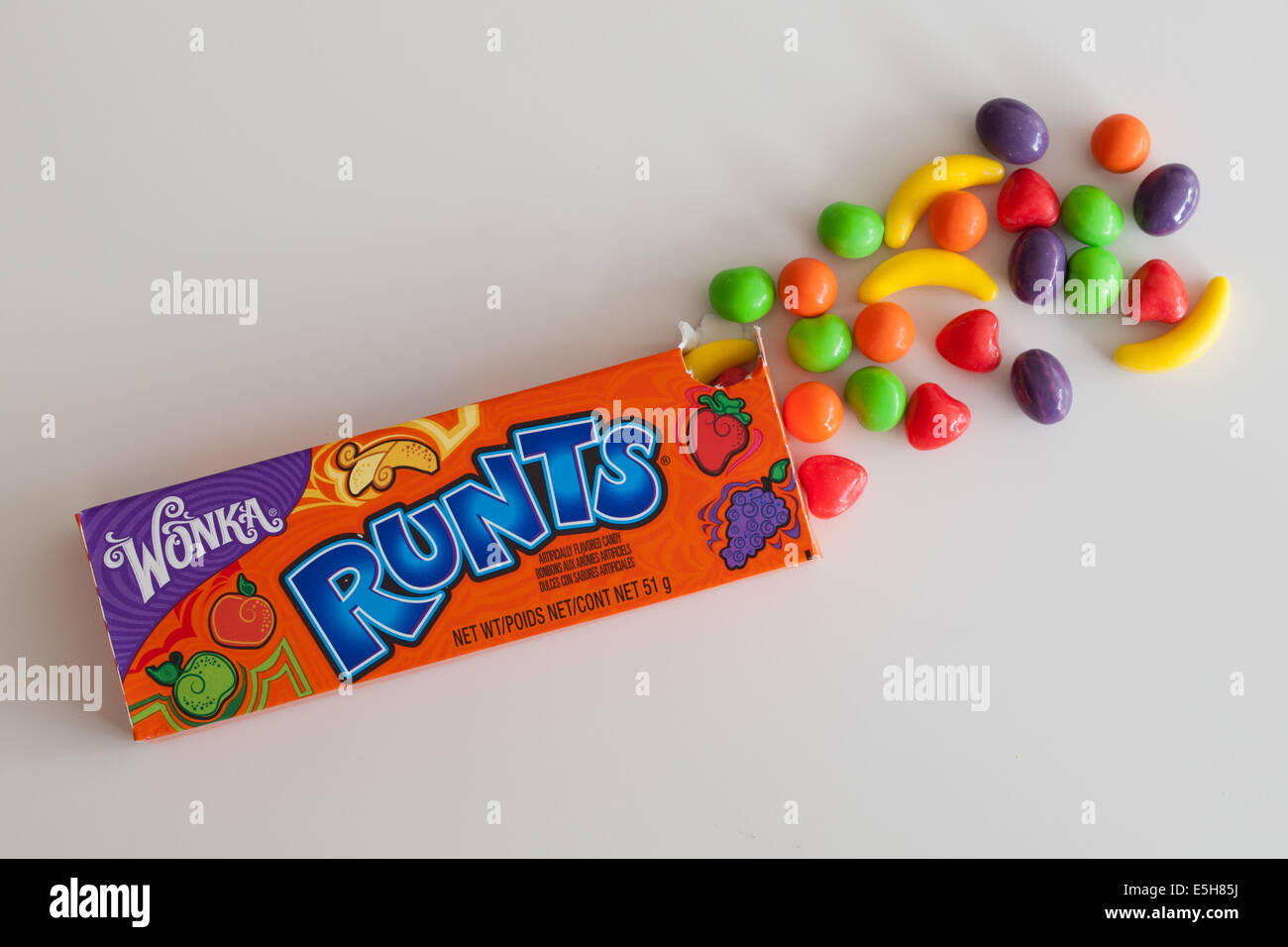
Runts are a classic fruit-shaped, crunchable candy consisting of a hard candy shell and a compressed dextrose center. Originally launched in 1982 by the Willy Wonka Candy Company, they are currently produced by the Ferrara Candy Company. Known for their distinct fruit shapes and intense flavors, they remain a staple in bulk vending machines and theater boxes.
The Origins and Heritage of Runts Candy
To understand the appeal of Runts, one must look back to the early 1980s. When they were first introduced in 1982, they were part of the Willy Wonka Candy Company lineup, a brand name used by Nestlé to market whimsical, colorful confectionery inspired by Roald Dahl’s famous book. The concept was simple yet revolutionary: create a candy that looked like the fruit it was flavored after.
In the early years, the assortment included banana, orange, cherry, strawberry, and lime. The banana shape, in particular, became the breakout star of the brand. While other fruit candies were often round or generic tablets, Runts offered a tactile, visual experience that mimicked a miniature fruit basket. This novelty helped them secure a permanent spot in the "wonky" world of 1980s and 90s snacks.
In the decades that followed, the brand underwent several corporate transitions. In 2018, Nestlé sold its U.S. confectionery business to Ferrero, the Italian chocolatier. Today, in 2026, Runts are managed under the Ferrara Candy Company umbrella, which also oversees other iconic brands like Nerds and SweeTarts. Despite these changes in ownership, the core identity of the candy—its crunchy texture and fruit-inspired shapes—has remained remarkably consistent.
The Science of the Crunch: How Runts Are Manufactured
The manufacturing process of Runts is a specialized form of confectionery production known as "panning." This process is what gives the candy its characteristic hard outer shell and crumbly, powdery interior.
The Dextrose Core
The heart of a Runt is made of compressed dextrose. Dextrose, a form of glucose, is pulverized into a fine powder and mixed with binders, flavorings, and acids (like malic or citric acid) to provide a tangy kick. This mixture is then put through a high-pressure press that molds the powder into the specific shapes we recognize: the curved banana, the round orange, and the heart-like strawberry.
The Panning Process
Once the cores are formed, they are placed into large, rotating drums called pans. As the drums spin, workers gradually add liquid sugar, colors, and glazing agents. Centrifugal force ensures that the liquid coats every piece evenly. Over several hours, or even days, layer upon layer of sugar crystallizes around the core, building up the "crunch" that defines the Runt experience.
Finishing and Polishing
The final step involves the application of carnauba wax or a similar confectioner’s glaze. This gives the candy its high-gloss finish and prevents the pieces from sticking together in the packaging. This protective layer also acts as a moisture barrier, ensuring that the dextrose core remains dry and brittle rather than becoming soft or chewy.
The Flavor Evolution: A Timeline of Changes
The flavor profile of Runts has not been static. Over the last forty years, the mix has changed multiple times to reflect shifting consumer preferences and production costs.
- The Original Five (1982): Banana (Yellow), Orange (Orange), Cherry (Red), Strawberry (Pink), and Lime (Green).
- The Great Lime Swap: In the early 2000s, lime was replaced by watermelon. This was a controversial move for traditionalists but aligned with a broader industry trend where watermelon flavor began to outperform lime in market research.
- The Blue Runt Experiment: At various points, specifically in "Rock'n Runts" and other limited editions, blue raspberry and pineapple shapes were introduced. Rock'n Runts featured shapes like guitars and microphones, though these were eventually discontinued.
- The 2026 Standard Mix: As of 2026, the standard assortment found in most retail boxes includes:
- Banana: The most iconic shape; a bright yellow, slightly curved crescent.
- Orange: A round, dimpled sphere representing a citrus fruit.
- Strawberry: A red, heart-shaped piece with small indentations mimicking seeds.
- Grape: A purple, clustered shape representing a bunch of grapes.
- Green Apple: A round, green piece with a small "stem" indentation, which replaced the previous lime and watermelon iterations.
The banana flavor remains the most discussed among fans. Unlike "real" bananas, which are mostly the Cavendish variety, the banana flavoring used in Runts (Isoamyl acetate) is often said to resemble the Gros Michel banana, a variety that was the global standard until the 1950s.
Nutritional Profile and Dietary Considerations
Runts are primarily a sugar-based candy, and their nutritional profile reflects this. For consumers with specific dietary needs, it is important to understand what goes into these crunchy treats.
Ingredients Breakdown
The primary ingredients are dextrose, maltodextrin, and less than 2% of corn syrup. These are all carbohydrate sources. Malic acid is added for tartness, and calcium stearate is used as an anti-caking agent to keep the dextrose powder stable during the compression phase.
Dietary Restrictions
- Vegan Status: Runts are generally considered vegan-friendly as they do not contain gelatin or dairy. However, some strict vegans avoid them because they contain refined sugar (which may be processed with bone char) and artificial colors (Red 40, Yellow 5, Blue 1).
- Gluten-Free: Runts do not contain wheat, barley, or rye ingredients. While they are usually considered gluten-free, they are often processed in facilities that handle other products, so those with Celiac disease should check for "may contain" warnings on specific batches.
- Caloric Content: A standard serving (about 15 grams or 1 tablespoon) typically contains around 60 calories and 13 to 14 grams of sugar. There is no fat, protein, or significant fiber.
| Feature | Specification |
|---|---|
| Primary Sweetener | Dextrose |
| Texture | Hard shell, chalky/crunchy interior |
| Common Shapes | Banana, Orange, Strawberry, Grape, Green Apple |
| Manufacturer | Ferrara Candy Company |
| Calories per 15g | ~60 kcal |
| Gluten-Free | Yes (check packaging for cross-contamination) |
| Vegan | Generally yes (contains artificial dyes) |
| Key Ingredient | Malic Acid (for tartness) |
Variations and Special Editions
Throughout their history, Runts have branched out into various textures and themes. While many of these are no longer in permanent production, they appear occasionally in seasonal mixes or specialty candy shops.
Chewy Runts
Introduced to compete with softer candies like Skittles or Starburst, Chewy Runts kept the iconic shapes but replaced the compressed dextrose core with a jelly-like center. These are less common in 2026 but are still sought after by fans of the brand’s flavor profile who prefer a less "tooth-rattling" experience.
Tropical Runts
This variant focused on exotic flavors. The mix typically included pineapple, mango, and passionfruit. The shapes were altered to match the tropical theme, often including a yellow pineapple shape that rivaled the classic banana in popularity.
Rock'n Runts
Launched in the 1990s, this version was perhaps the most radical departure. Instead of fruit, the candies were shaped like musical instruments and equipment. Flavors included "Melon Moon" and "Orange Star." While they were a hit during the neon-soaked marketing era of the 90s, they were eventually phased out in favor of the original fruit theme.
Packaging and Market Availability
In 2026, Runts are sold in three primary formats, each catering to a different consumer behavior.
Theater Boxes
The 5 oz (approx. 141g) theater box is the most common retail format. These are designed for sharing and are typically found in cinema concessions, convenience stores, and the "candy aisle" of major grocery chains. The cardboard box is iconic for its "clacking" sound when shaken.
Bulk Vending
Runts are arguably the king of the bulk vending machine. Because of their hard shells, they do not melt in the heat and have an incredibly long shelf life, making them ideal for the glass globes found in mall corridors or restaurant entryways. In this format, the ratio of flavors is often randomized, leading to the "luck of the draw" experience many children associate with the brand.
Bulk Bags
For candy buffets, weddings, or office snacks, 2lb or 5lb bulk bags are available through online wholesalers and specialty retailers. These are often used by "flavor pickers"—consumers who buy in bulk specifically to sort out and eat only the bananas or only the strawberries.
Comparative Analysis: Runts vs. Other Dextrose Candies
Runts occupy a specific niche in the "Wonka-style" candy family, often compared to SweeTarts, Nerds, and Gobstoppers.
- Vs. SweeTarts: SweeTarts are much more acidic and come in flat discs or chewy ropes. While both use dextrose, SweeTarts prioritize a "tangy" experience, whereas Runts prioritize the "crunch" and the fruity shape.
- Vs. Nerds: Nerds are essentially tiny fragments of sugar crystals. They offer a much higher surface-area-to-volume ratio, leading to a quick flavor burst. Runts are more substantial and require more effort to chew.
- Vs. Gobstoppers: Everlasting Gobstoppers are also panned candies, but they are designed to be sucked on for a long time, changing colors through multiple layers. Runts are meant to be bitten and crushed relatively quickly.
FAQs About Runts Candy
Why are there so many bananas in a box of Runts?
The distribution of flavors in a box of Runts is determined by the automated filling machines at the factory. While it may seem like there are more bananas, this is often a result of "perceptual bias" because the banana is the most distinct shape. However, in bulk vending mixes, the banana is frequently the most produced shape due to its high popularity in consumer surveys.
Are Runts discontinued?
No, Runts are currently in production. While they may be harder to find in some local grocery stores compared to chocolate bars, they remain widely available in theater boxes, bulk candy stores, and online through major retailers like Amazon and specialized candy distributors.
Do Runts contain any real fruit juice?
No, Runts do not contain real fruit juice. The flavors are created using artificial and natural flavorings designed to mimic the taste of fruit. The colors are also derived from artificial dyes.
What is the shelf life of Runts?
Because they are primarily made of sugar and have very low moisture content, Runts have an exceptionally long shelf life. When stored in a cool, dry place, they can remain at peak quality for 12 to 18 months. Beyond that, they may become excessively hard or lose some flavor intensity, but they rarely "spoil" in a traditional sense.
Are Runts safe for people with nut allergies?
According to the Ferrara Candy Company labeling standards, most dextrose candies like Runts are produced in facilities that may process other allergens. It is essential to check the specific "Allergy Information" box on the back of each package, as manufacturing lines can change.
Expert Recommendation for Consumers
If you are a fan of Runts, the best way to enjoy them in 2026 is to purchase the theater box format. This packaging generally ensures the freshest product with the least amount of "candy dust" (the powder that accumulates when the shells rub together in bags). For those who have a strong preference for a single flavor, such as the banana, look for specialty "bulk color" retailers online, which occasionally sell single-flavor bags, allowing you to bypass the flavors you enjoy less.