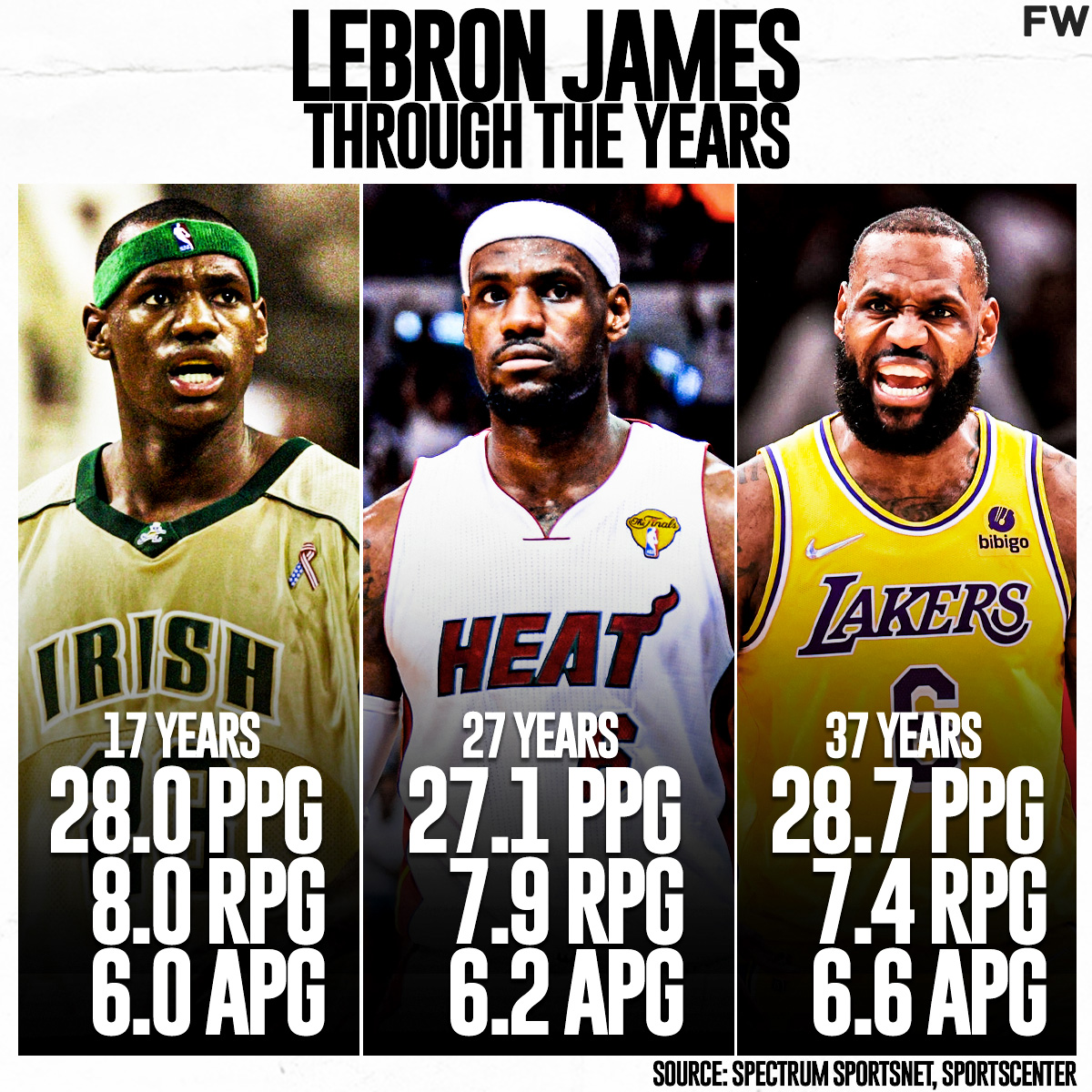
Evaluating the career statistics of LeBron James requires looking at an unprecedented longevity model in professional basketball history. Entering the 2025-2026 NBA season, James continues to redefine the boundaries of athletic endurance, high-level efficiency, and statistical accumulation. This breakdown examines his all-time scoring records, advanced efficiency metrics, seasonal tracking data, and historical context as an active player in 2026.
All-Time Scoring Records and Historical Milestones
The primary driver of searches regarding LeBron James statistics remains his historic ascent to the top of the NBA all-time scoring list. Having surpassed Kareem Abdul-Jabbar in February 2023, James has continued to extend his scoring record well past the 40,000-point threshold, a milestone previously considered unreachable in modern basketball.
Beyond total points, his statistical profile encompasses elite rankings across multiple historical categories:
- All-Time Regular Season Points: Over 41,000 points (continuously updated during the 2025-2026 campaign).
- All-Time Playoff Scoring Leader: Over 8,000 postseason points, holding a massive lead over second place.
- Combined Regular Season and Playoff Points: Unmatched in basketball history, exceeding 50,000 total points.
- Triple-Double Index: Second all-time in regular-season triple-doubles, consistently trailing only Russell Westbrook while dominating postseason triple-double records.
- Consecutive Double-Digit Scoring Games: Extending an active streak of over 1,200 consecutive regular-season games scoring 10 or more points, a record that began in January 2007.
Historical Context on Longevity: Maintaining an elite scoring average across more than two decades requires a rare combination of physical maintenance, skill adaptation, and tactical evolution. James transitioned from a high-flying athletic slasher in his first Cleveland tenure to an elite floor general, post-up maestro, and consistent perimeter shooter in his later years.
Career Statistical Breakdown by Franchise and Era
To fully understand LeBron James statistics, analysts segment his career into distinct phases across the Cleveland Cavaliers, Miami Heat, and Los Angeles Lakers. Each era highlights a different phase of his athletic peak and tactical maturity.
| Franchise / Era | Regular Season PPG | Regular Season RPG | Regular Season APG | Field Goal Percentage (%) | Player Efficiency Rating (PER) |
|---|---|---|---|---|---|
| Cleveland Cavaliers (First Stint: 2003–2010) | 27.8 | 7.0 | 7.0 | 47.5% | 27.5 |
| Miami Heat (2010–2014) | 26.9 | 7.6 | 6.7 | 54.3% | 29.8 |
| Cleveland Cavaliers (Second Stint: 2014–2018) | 26.1 | 7.7 | 8.0 | 52.3% | 26.5 |
| Los Angeles Lakers (2018–Present / 2026) | 27.0 | 7.9 | 7.8 | 50.8% | 25.4 |
Analyzing Efficiency Shifts Across Eras
During his Miami Heat tenure, James recorded his highest career field goal percentages and peak Player Efficiency Rating (PER). By utilizing an efficient small-ball center role and cutting down unnecessary perimeter volume, his offensive efficiency reached historic peaks. In his Los Angeles Lakers tenure, despite managing chronic workloads and adapting to modern pace-and-space systems, his assist numbers surged as he embraced primary point-forward responsibilities.
Advanced Analytics and Impact Metrics
Raw box score numbers only tell part of the story. Advanced metrics quantify LeBron James's impact on floor spacing, defensive versatility, and team net rating over 23 seasons.
- True Shooting Percentage (TS%): Consistently maintaining a TS% well above the league average, currently hovering around 58% to 60% for his career, proving elite scoring efficiency despite high shot volume.
- Usage Rate (USG%): Historically ranging between 30% and 32%, reflecting his role as a primary offensive engine for every franchise he has represented.
- Win Shares (WS): Ranking near the top of NBA history in both offensive and defensive win shares, trailing only a select few historical greats.
- Value Over Replacement Player (VORP): Holding the highest VORP in NBA history by a wide margin, illustrating the immense gap in cumulative value provided compared to a replacement-level player over a 23-year career.
Postseason Dominance and Playoff Records
LeBron James's postseason statistics provide the clearest picture of his competitive dominance. He has played more playoff games than entire NBA franchises over certain stretches, reaching the NBA Finals 10 times and capturing 4 championships.
- Playoff Games Played: Over 280 postseason appearances, translating to nearly three and a half extra seasons of high-intensity basketball.
- Playoff Averages: Maintaining career playoff averages of roughly 28.5 points, 9.0 rebounds, and 7.0 assists per game.
- Elimination Game Statistics: Exhibiting some of his greatest statistical outputs in playoff elimination games, averaging over 33 points per game in must-win scenarios across his career.
Pros and Cons of Evaluating Modern Longevity Statistics
Assessing active players who cross historical thresholds requires weighing cumulative counting stats against era-adjusted rate statistics.
Advantages of Cumulative Tracking
- Durability Indicator: Accumulating over 40,000 points proves elite durability, professional discipline, and year-round physical conditioning.
- Sample Size: Spanning over two decades eliminates statistical anomalies, providing a massive sample size across different rule eras, officiating styles, and competitive landscapes.
Analytical Limitations and Challenges
- Pace and Space Inflation: Modern NBA games feature higher possessions per game and significantly more three-point attempts than the 1990s and early 2000s, slightly inflating raw offensive stats across the league.
- Load Management Dynamics: Modern player tracking and resting protocols mean players handle minutes differently than iron-man predecessors, though James's total minutes played (regular season and playoffs combined) remain the highest in NBA history.
Frequently Asked Questions About LeBron James Statistics
What is LeBron James's current career total points record?
LeBron James has scored over 41,000 points in the regular season, holding the undisputed #1 spot on the NBA all-time scoring list. This total continues to grow with every game played during the 2025-2026 NBA season.
How many triple-doubles does LeBron James have in his career?
LeBron James ranks second all-time in regular-season triple-doubles, with well over 110 career regular-season triple-doubles. He also holds the record for the most playoff triple-doubles in NBA history.
What are LeBron James's career averages for points, rebounds, and assists?
LeBron James maintains career averages of approximately 27.1 points, 7.5 rebounds, and 7.4 assists per game across more than two decades of play. These numbers reflect remarkable statistical consistency from his rookie season through the 2026 campaign.
How many seasons has LeBron James played in the NBA?
Entering the 2025-2026 season, LeBron James is playing his 23rd professional NBA season. This ties him for the record of most seasons played in NBA history alongside Vince Carter.
What is LeBron James's career field goal percentage?
LeBron James boasts a career field goal percentage hovering around 50.6%. This high percentage is remarkable for a player who takes a high volume of perimeter shots and acts as a primary playmaker.
Optimizing Your Analysis of Historical Basketball Data
When tracking player statistics across changing eras, analysts must balance raw totals with advanced efficiency indicators like PER, True Shooting Percentage, and VORP. LeBron James's statistical profile stands out not just for its monumental volume, but for the sustained efficiency with which those numbers have been generated over 23 years. To explore live game trackers, advanced shot charts, and updated historical leaderboards, consult official league data platforms and verified sports analytics resources.