(Note: This article focuses specifically on the UnitedHealthcare provider network ecosystem, credentialing, claims management, and portal access protocols for medical and clinical professionals.)
Navigating the UnitedHealthcare (UHC) provider ecosystem requires a rigorous understanding of credentialing standards, digital portal interfaces, and claims adjudication rules. As the healthcare landscape shifts throughout 2026, medical groups, independent practitioners, and facility administrators face stringent compliance metrics, evolving reimbursement schedules, and heightened CMS Star Rating expectations. Mastering the operational framework of the UHC provider network ensures minimal administrative friction, optimized cash flow, and seamless patient care delivery across commercial, Medicare Advantage, and Medicaid lines of business.
Understanding the UHC Provider Network Architecture
The UnitedHealthcare provider network operates on a tiered structure designed to balance patient choice with managed care cost controls. Practitioners must understand whether their practice holds participating status as an in-network provider, out-of-network provider, or facility-affiliated contractor. In-network providers agree to contracted fee schedules, accepting UHC's allowable amount as payment in full, minus applicable member cost-sharing responsibilities such as copayments, coinsurance, and deductibles.
To maintain active status within the 2026 network framework, providers must comply with rigorous quality metrics and data reporting standards. UHC utilizes value-based care models, including Accountable Care Organizations (ACOs) and Patient-Centered Medical Homes (PCMHs), which tie reimbursement adjustments directly to patient outcomes, preventative screening rates, and readmission reductions.
Key Classifications of UHC Provider Participation
- Participating Network Providers: Clinicians and facilities with a direct, active contract with UnitedHealthcare, agreeing to accept direct network reimbursement rates and managed care authorization rules.
- Affiliated Medical Groups: Large practice networks that negotiate group-level agreements, imposing internal credentialing mandates and specific Primary Care Physician (PCP) referral workflows.
- Behavioral Health Network Partners: Specialized mental and behavioral health clinicians credentialed through Optum, UHC's specialized behavioral health administrative branch.
- ** Ancillary Service Providers:** Imaging centers, laboratories, durable medical equipment (DME) suppliers, and physical therapy clinics that must verify specific prior authorization criteria before rendering services.
The 2026 UHC Provider Credentialing and Recredentialing Lifecycle
Credentialing is the foundational gatekeeper for any medical practice seeking reimbursement from UnitedHealthcare. In 2026, the credentialing process relies heavily on automated data verification through the Council for Affordable Quality Healthcare (CAQH) ProView database and centralized clearinghouses. Practitioners must ensure their CAQH profiles are attested and updated every 120 days to avoid administrative suspension from the network.
The credentialing lifecycle involves primary source verification of state medical licenses, DEA registrations, board certifications, malpractice history, and education backgrounds. Failure to maintain continuous licensure or liability coverage triggers automated network exclusion, leading to retroactive claim denials and severe billing compliance liabilities.
Step-by-Step UHC Provider Enrollment Workflow
- CAQH Profile Maintenance: Complete and attest your profile within the CAQH system, granting UnitedHealthcare direct viewing permissions.
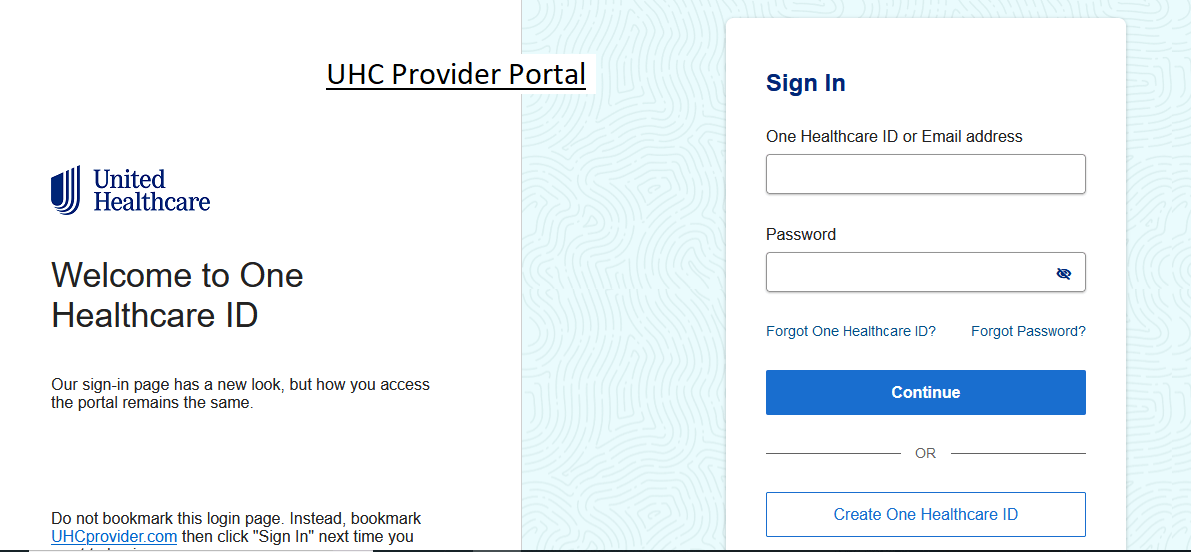
- Online Application via One Healthcare ID: Submit your formal participation request through the UHC Provider Portal using your authenticated One Healthcare ID.
- Committee Review: The UHC Credentialing Committee evaluates the application against National Committee for Quality Assurance (NCQA) standards and network capacity needs.
- Network Activation: Upon approval, receive the official welcome packet detailing your effective date, assigned network tiers, and fee schedule references.
- Directory Validation: Verify your active listing on the official UHC Provider Directory to ensure patients can locate your practice accurately.
Administrative Compliance Note: Keeping your practice address, telephone numbers, and accepting-patient status updated in real-time is a mandatory contractual obligation. Inaccurate directory listings can result in compliance penalties and friction during patient member verification.
Optimizing the UHC Provider Portal and Digital Tools
Manual administrative tasks drain practice revenue. UnitedHealthcare mandates the use of its digital infrastructure—primarily the UHC Provider Portal powered by Optum—to streamline day-to-day operations. Transitioning administrative workflows from phone calls and faxes to digital portals significantly reduces turnaround times for eligibility checks, claim status inquiries, and authorization requests.
Core Digital Modules Available to UHC Providers
- Eligibility and Benefits Verification: Instantaneous real-time checks confirming active policy status, copay amounts, deductible accumulations, and out-of-pocket maximums.
- Prior Authorization Tool: Electronic submission platforms that evaluate medical necessity against current 2026 clinical guidelines, often providing instant approvals for routine procedures.
- Claim Submission and Adjustment: Direct electronic data interchange (EDI) clearinghouse routing for primary and secondary claims submission.
- Electronic Remittance Advice (ERA) and Electronic Funds Transfer (EFT): Automated financial posting tools providing secure, paperless payments directly to practice bank accounts.
Managing Prior Authorizations and Utilization Management
Utilization management remains one of the most critical operational hurdles for providers interacting with UHC insurance plans. In 2026, prior authorization rules are strictly enforced for specialized diagnostics, advanced imaging (MRI, CT, PET scans), elective surgeries, and specific high-cost specialty medications.
Providers must consult the Advance Notification and Prior Authorization interactive tools before scheduling services. Submitting incomplete clinical documentation or failing to secure authorization prior to service delivery invariably results in denied claims, for which providers are legally prohibited from balance-billing the patient in most in-network scenarios.
| Service Category | UHC Prior Authorization Requirement (2026) | Typical Processing Turnaround |
|---|---|---|
| Outpatient Advanced Imaging | Required for most MRI, CT, and PET scans | 24 to 72 hours (Instant via portal if clinicals match guidelines) |
| Elective Inpatient Surgeries | Mandatory advance notification and medical review | 3 to 5 business days for standard review |
| Specialty Injectable Medications | Required under medical benefit plans | 2 to 5 business days; specific drugs require site-of-care review |
| Routine Preventive Care | Generally exempt from prior authorization | Immediate verification via eligibility portal |
| Durable Medical Equipment (DME) | Required for items exceeding standard cost thresholds | 5 to 7 business days with detailed physician orders |
Claims Management, Billing Best Practices, and Dispute Resolution
Submitting clean claims to UnitedHealthcare ensures optimal revenue cycle performance. Clean claims contain accurate ICD-10 diagnosis codes, CPT/HCPCS procedure codes, appropriate modifiers, and valid National Provider Identifier (NPI) numbers.
When claims are denied or underpaid, providers must utilize the structured dispute resolution process. Understanding the distinction between a claim reconsideration (administrative correction), a formal appeal (clinical dispute), and state-specific external review processes is vital for recovering earned revenue.
Strategic Billing Protocols for UHC Claims
- Verify Member ID Formats: UHC member ID cards frequently change prefixes and formats. Always verify the active card at every visit to prevent routing claims to legacy or inactive plan pools.
- Utilize Correct Coding Modifiers: Apply appropriate modifiers (e.g., 25, 59, XE, XP, XS, XU) with clear documentation to support distinct procedural services rendered during the same encounter.
- Monitor Timely Filing Limits: Adhere strictly to the contractual timely filing window, which varies by state regulations and specific line of business (commercial vs. Medicare Advantage).
- Leverage Electronic Appeal Submissions: Submit medical records and clinical notes directly through the portal's dispute module rather than mail or fax to accelerate adjudication.
Frequently Asked Questions for UHC Providers
How do I check if a patient's UnitedHealthcare plan requires a referral?
You can instantly verify referral requirements by logging into the UHC Provider Portal and running an eligibility and benefits check. For HMO and select point-of-service plans, a designated Primary Care Physician (PCP) must submit an electronic referral prior to the patient seeing a specialist.
What should I do if a UHC claim is denied for lack of prior authorization?
If services were rendered without authorization due to extenuating clinical emergencies, you may submit a formal appeal accompanied by acute medical records proving immediate necessity. For non-emergent oversights, review your contract terms, as unauthorized services are typically written off without patient billing recourse.
How are UHC credentialing updates handled if I join a new medical group?
You must submit a practice location addition or group affiliation update through the CAQH ProView system and the UHC Provider Portal. Do not begin billing under the new group NPI/TIN combination until formal written confirmation of network linkage is received.
What are the 2026 standards for UHC electronic data interchange (EDI) clearinghouses?
UHC mandates compliance with HIPAA version 5010 standards for all electronic transactions, including 837 claims, 835 remittances, and 270/271 eligibility inquiries. Practices must ensure their practice management software integrates seamlessly with Optum clearinghouse specifications.
How can providers appeal a denied medical necessity claim?
Clinical appeals must be submitted in writing along with supporting chart notes, peer-reviewed literature if applicable, and a completed provider appeal form within the contractual timeframe specified on your Remittance Advice.
Conclusion and Strategic Next Steps
Optimizing your relationship with the UnitedHealthcare provider network demands continuous administrative vigilance, technical proficiency with digital portals, and strict adherence to credentialing and utilization guidelines. By leveraging automated tools, maintaining pristine clinical documentation, and enforcing rigorous billing workflows, healthcare practices can mitigate claim denials and secure predictable revenue streams throughout 2026. Review your practice's active credentialing status, audit your clearinghouse connections, and train administrative staff on the latest UHC portal modules to ensure sustained operational excellence.