Renting a U-Haul truck typically costs anywhere from $19.99 to over $100 per day for local moves, while long-distance, one-way rentals usually range from several hundred to over $2,000. Because U-Haul structures its pricing based on whether a move is local or one-way, the final bill depends heavily on mileage fees, daily rates, fuel consumption, and optional insurance coverage.
Planning a household move, a commercial relocation, or a large equipment transport requires a clear understanding of truck rental expenses. Navigating the moving industry means looking beyond base advertised rates to account for variable costs that can significantly alter your moving budget. This guide breaks down everything you need to know about U-Haul pricing structures, equipment sizes, additional fees, and strategies to minimize your total expenses.
Understanding U-Haul Pricing Models: Local Versus One-Way Moves
U-Haul divides its moving truck rentals into two distinct categories: local moves and one-way moves. Each category utilizes a fundamentally different pricing formula, which directly influences how you calculate your expected costs.
Local Truck Rentals
Local moves are generally defined by U-Haul as rentals where you pick up and return the truck to the same location, or within a designated local zone.
- Base Rate: You pay a flat daily base rate (e.g., $19.99 for a cargo van or small box truck, scaling up to $39.99 or $49.99 for larger 20-foot and 26-foot trucks).
- Mileage Fee: Local rentals do not include free miles. You must pay an additional charge for every mile driven, which typically ranges from $0.99 to $1.39 per mile depending on the region and the size of the truck.
- Fuel Policy: You must return the vehicle with the exact same level of fuel it had when you picked it up. If you return it with less fuel, U-Haul charges a refueling fee per gallon that is significantly higher than local gas station prices.
One-Way Truck Rentals
One-way moves involve picking up a truck in one city and dropping it off at another location.
- Flat Rate: One-way rentals are priced based on a predetermined rate that covers a specific distance and a set number of allowed days.
- Included Miles and Days: The quoted price includes a specific mileage allowance and a set number of days to complete the trip. If you exceed the allowed miles or keep the truck past the permitted timeframe, you will incur extra per-mile and per-day penalty fees.
- Fuel Policy: Similar to local rentals, you must return the vehicle with the same amount of fuel it had at departure, or pay refueling service charges.
U-Haul Truck Sizes and Base Rates
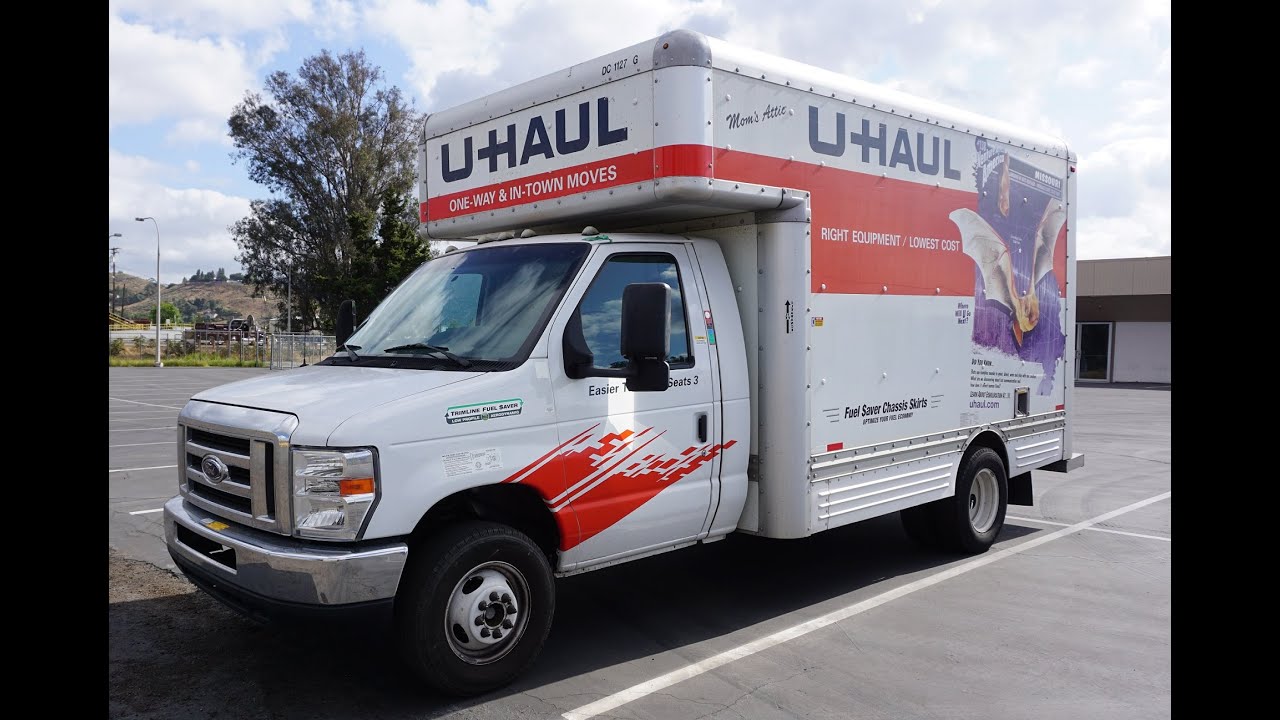
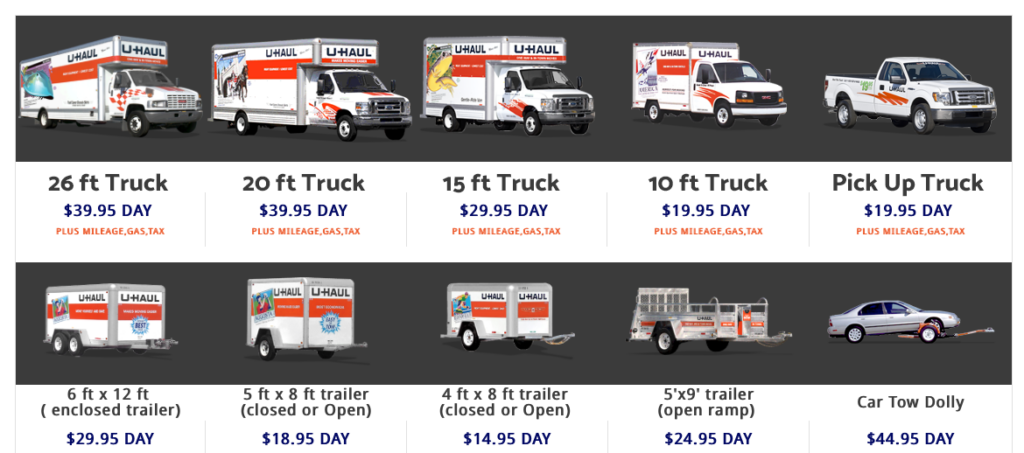
Choosing the right truck size is critical to avoiding multiple trips or paying for unnecessary capacity. U-Haul offers several vehicle tiers, ranging from small cargo vans to massive 26-foot moving trucks.
| Truck Size | Vehicle Type | Best Suited For | Estimated Local Base Rate | Estimated Mileage Fee (Local) |
|---|---|---|---|---|
| Cargo Van | 9 ft. Cargo Van | Small studio apartments, moving boxes, local deliveries | $19.99 / day | $0.99 - $1.19 / mile |
| Pickup Truck | 8 ft. Pickup Truck | Transporting furniture, hardware store runs, small items | $19.99 / day | $0.99 - $1.19 / mile |
| 10 ft. Box Truck | 10 ft. Moving Truck | Studio or small 1-bedroom apartment (up to 400 sq. ft.) | $19.99 / day | $0.99 - $1.19 / mile |
| 15 ft. Box Truck | 15 ft. Moving Truck | 1 to 2-bedroom apartment or small home (up to 800 sq. ft.) | $29.99 / day | $1.09 - $1.29 / mile |
| 20 ft. Box Truck | 20 ft. Moving Truck | 2 to 3-bedroom home or large apartment (up to 1,500 sq. ft.) | $39.99 / day | $1.29 - $1.39 / mile |
| 26 ft. Box Truck | 26 ft. Moving Truck | 3 to 4+ bedroom home or large family residence (2,000+ sq. ft.) | $49.99 / day | $1.39 - $1.59 / mile |
Note: Base rates and mileage fees vary widely based on geographic location, local demand, seasonal peak periods (such as summer months and the end of the month), and equipment availability.
Hidden and Additional Costs to Anticipate
When budgeting for a truck rental, looking only at the base rate and estimated mileage can result in budget shortfalls. Several mandatory and optional fees frequently appear on final moving receipts.
1. Environmental and Regulatory Fees
U-Haul frequently tacks on a small, non-negotiable environmental fee or sustainability charge (often a few dollars per rental) to offset compliance with local and federal environmental standards.
2. Moving Insurance and Damage Protection
Standard auto insurance policies and credit card collision damage waivers rarely cover commercial truck rentals. U-Haul offers optional protection plans:
- Safemove®: Covers damage to the truck box, personal accident coverage, and cargo protection against fire, windstorm, or collision. Costs typically range from $15 to $30+ per day.
- Safemove Plus®: Provides higher liability coverage limits in addition to the standard cargo and truck protection.
- Safetrip®: Provides 24/7 roadside assistance coverage, protecting against towing fees, flat tires, and lockouts if you opt out of broader insurance packages.
3. Fuel Costs
Moving trucks are heavy, aerodynamic nightmares that consume fuel at rapid rates. While smaller 10-foot and 15-foot trucks may achieve modest fuel economy, large 20-foot and 26-foot trucks often average between 6 and 10 miles per gallon (mpg). Factoring in current local fuel prices along your route is essential for an accurate moving budget.
4. Moving Equipment and Accessories
Renting the truck is rarely the only expense. Additional equipment rentals include:
- Utility Dollies and Appliance Dollies: $7 to $15 per rental.
- Furniture Pads and Moving Blankets: Usually rented in packs of a dozen for around $10 to $15.
- Towing Equipment: If you need to tow a personal car behind the truck, a U-Haul tow dolly or auto transport trailer will add $150 to $200+ to your one-way or local rental.
Factors That Influence Final U-Haul Pricing
Market dynamics play a massive role in determining how much you will pay for a U-Haul truck rental. Recognizing these variables allows you to time your move strategically.
Seasonality and Timing
The moving industry operates on strict seasonal cycles. Summer (May through August) is peak moving season, driven by college graduations, lease expirations, and favorable weather. During these months, demand spikes, inventory shrinks, and rental rates increase. Additionally, weekends (Friday through Sunday) and the final days of any calendar month command premium pricing compared to mid-week, mid-month rentals.
Geographic Supply and Demand
One-way rental pricing is heavily influenced by equipment balancing. If thousands of people are moving out of a specific state (such as outbound migration trends from certain metropolitan areas), U-Haul locations in those areas may have an excess of trucks and offer lower rates to get equipment back to high-demand destination cities. Conversely, if you are moving into a high-demand city where trucks are scarce, one-way rates will surge.
How to Save Money on Your U-Haul Rental
Minimizing moving expenses requires careful planning, flexibility, and a willingness to leverage available discounts.
- Book Mid-Week and Mid-Month: Scheduling your pickup for a Tuesday or Wednesday between the 5th and 20th of the month can drastically lower your base rate.
- Choose the Right Size Truck: Renting a truck that is too small means making multiple trips, which racks up extra mileage fees and burns unnecessary fuel. Renting a truck that is too large means paying a higher base rate and increased fuel consumption. Assess your belongings accurately using online moving calculators.
- Opt for Local Pickup Alternatives: If local rates are high, check surrounding suburban U-Haul neighborhood dealers rather than high-volume downtown locations, as independent affiliate dealers sometimes offer more competitive regional pricing.
- Bring Your Own Supplies: Purchase moving boxes, packing tape, and bubble wrap from discount retailers rather than buying them directly at the U-Haul counter, where retail markups are common.
Frequently Asked Questions About U-Haul Rentals
What is the minimum age to rent a U-Haul truck?
You must be at least 18 years old to rent a U-Haul truck in the United States and Canada. You must also possess a valid, government-issued driver’s license. Unlike some traditional car rental companies, U-Haul does not charge an underage driver fee for drivers aged 18 to 24.
Are gas and mileage included in U-Haul one-way rentals?
Gas is never included in any U-Haul rental; you are responsible for paying for all fuel consumed during your trip. For one-way rentals, a specific mileage allowance is included in your upfront price based on the designated route. If you stay within that mileage limit, you will not pay extra for miles, but exceeding the allowance incurs per-mile penalty fees.
What happens if I return the U-Haul truck late?
Returning a truck past your agreed-upon drop-off time without prior authorization from U-Haul will result in late fees. These typically include an additional daily rental rate plus a penalty fee for unauthorized extension of the equipment contract. If your plans change, contact the pickup location or customer service immediately to extend your reservation.
Do I need a special driver’s license to drive a U-Haul?
No special commercial driver's license (CDL) is required to drive any U-Haul truck, including their largest 26-foot vehicle. A standard, valid driver's license is sufficient. However, drivers should exercise extreme caution due to the increased height, weight, and blind spots inherent in large box trucks.
Can I reserve a U-Haul truck and cancel later if my plans change?
Yes, U-Haul offers free reservations with no cancellation fees. If your moving dates shift or your plans are canceled, you can modify or cancel your reservation online or over the phone without financial penalty. However, making reservations well in advance during peak summer months is strongly encouraged to guarantee equipment availability.
Next Steps for Your Move
To lock in the best possible rate, visit the official U-Haul website to input your specific pickup and drop-off locations, dates, and required truck sizes. Compare local versus one-way quotes, review insurance add-ons carefully, and secure your reservation early to ensure a smooth, cost-effective relocation process.