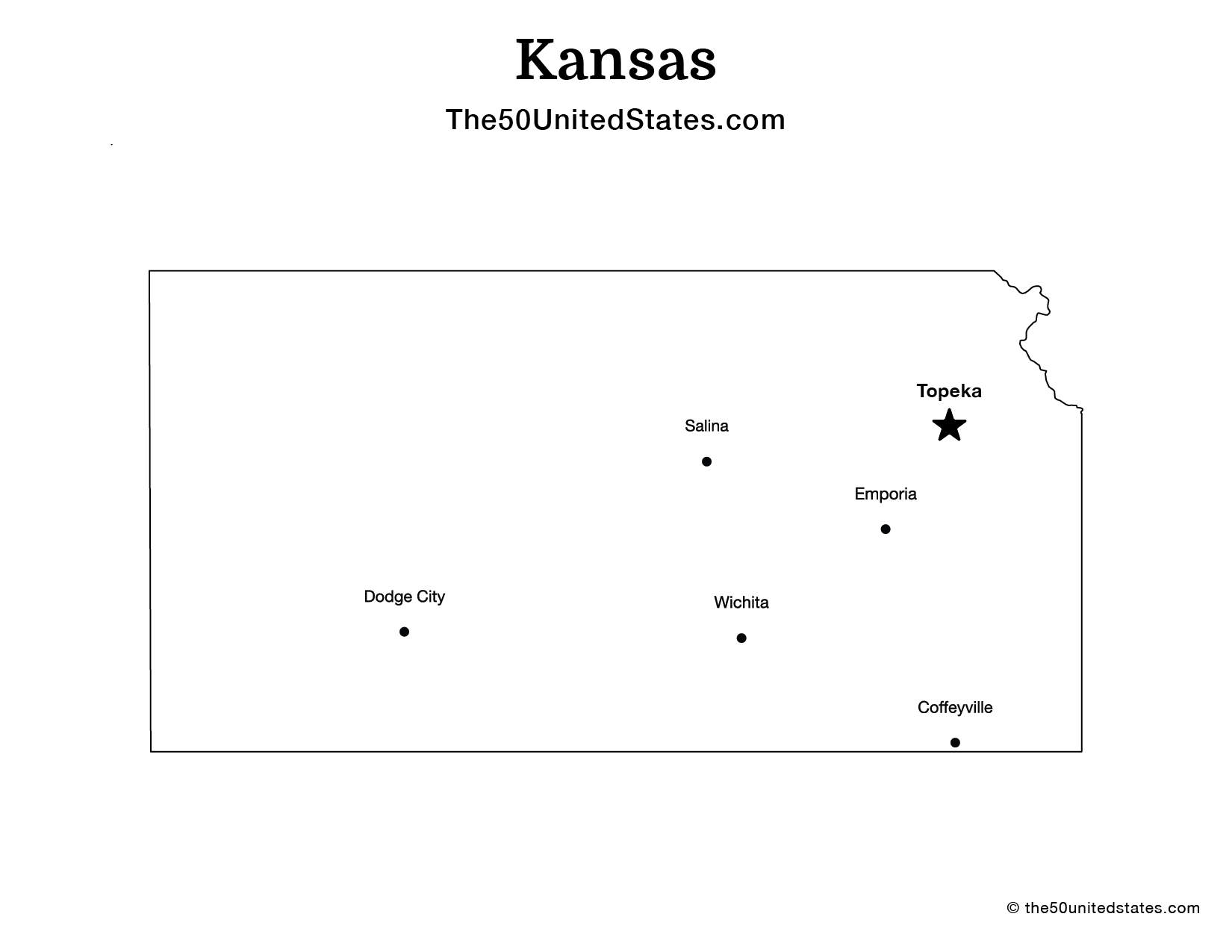
The state of Kansas, known officially as the Sunflower State, boasts a rich history deeply tied to the American frontier, agricultural dominance, and aerospace innovation. Centrally located in the United States, it spans over 82,000 square miles of diverse topography, ranging from eastern rolling hills to western high plains, supporting a population of nearly 2.9 million residents as of the mid-2020s.
Introduction to the Sunflower State
When exploring the state of Kansas facts, observers quickly discover a territory that transcends the common stereotype of flat, monotonous farmland. While agriculture forms the beating heart of the state's economy and cultural heritage, Kansas plays a vital role in national aviation manufacturing, technological advancement, and American political history. Admitted to the Union on January 29, 1861, as the 34th state, Kansas emerged from a turbulent pre-Civil War era marked by violent sectional conflicts known as "Bleeding Kansas."
Understanding Kansas requires examining its foundational pillars: its precise geographical boundaries, its complex and pivotal history, its agricultural and industrial economic drivers, and its cultural contributions. This guide breaks down these dimensions systematically, providing an authoritative resource for researchers, students, and travelers alike.
Geographical Profile and Topography
Kansas occupies a unique physical position in the United States, sitting squarely in the American Midwest and Great Plains regions. It is bounded by Nebraska to the north, Missouri to the east, Oklahoma to the south, and Colorado to the west.
Elevation and the Great Plains Myth
A widespread misconception is that Kansas is entirely flat. While western Kansas features a flat, high-plains landscape that gradually rises toward the Rocky Mountains, the eastern portion of the state is characterized by rolling hills, forests, and river valleys.
- Lowest Point: Verdigris River near Coffeyville, sitting at 679 feet above sea level.
- Highest Point: Mount Sunflower, located in Wallace County near the Colorado border, reaching 4,039 feet above sea level.
River Basins and Drainage
The state is drained primarily by two major river systems: the Kansas River (often called the Kaw) basin in the northern half and the Arkansas River basin in the southern half. These waterways historically provided critical routes for exploration, settlement, and irrigation, shaping the modern distribution of towns, cities, and agricultural fields.
Historical Evolution: From Territory to Statehood
The history of Kansas is inseparable from the broader narrative of westward expansion and the abolition of slavery. Long before European contact, the region was home to several Native American nations, including the Kansa (Kaw), Osage, Pawnee, and Wichita peoples.
The Louisiana Purchase and Territorial Strife
Following the 1803 Louisiana Purchase, the land that would become Kansas was explored by Zebulon Pike and Stephen Harriman Long. The passage of the Kansas-Nebraska Act of 1854 proved to be a watershed moment. Authored by Senator Stephen A. Douglas, the act allowed local settlers to determine through popular sovereignty whether Kansas would enter the Union as a free state or a slave state.
This policy triggered a rush of abolitionists and pro-slavery activists into the territory, leading to violent guerrilla warfare known as Bleeding Kansas. Figures like abolitionist John Brown gained national prominence during these skirmishes, which served as a direct precursor to the American Civil War. On January 29, 1861, after southern states seceded, Congress admitted Kansas as a free state under the Wyandotte Constitution.
The Cattle Trail Era
Following the Civil War, Kansas became the epicenter of the American cattle industry. Railroads pushing westward intersected with legendary cattle trails—such as the Chisholm Trail and the Western Trail—creating booming, lawless cow towns like Abilene, Dodge City, and Wichita, where iconic figures like Wyatt Earp and Wild Bill Hickok enforced frontier justice.
Economic Pillars: Agriculture and Aviation
The modern economy of Kansas is diversified, but it remains anchored by two primary sectors: agricultural production and aerospace engineering.
Agricultural Dominance
Kansas consistently ranks among the top agricultural states in the nation, earning its moniker as the "Wheat State."
- Winter Wheat: Kansas is the leading producer of wheat in the United States, producing hundreds of millions of bushels annually.
- Cattle and Beef: The state maintains a massive livestock sector, ranking near the top nationally in cattle and calves, supported by extensive feedlots and meatpacking facilities in the western and southwestern regions.
- Other Crops: Beyond wheat, Kansas produces significant quantities of sorghum, corn, soybeans, and hay.
The Air Capital of the World
In addition to farming, Wichita, Kansas, earned the title of the "Air Capital of the World" due to its historical and contemporary dominance in aircraft manufacturing. Companies such as Textron Aviation (Cessna and Beechcraft), Learjet, and Spirit AeroSystems established deep manufacturing roots here, producing a substantial percentage of the world's general aviation and commercial aircraft components.
Key Demographic and Statistical Overview
To contextualize the state's infrastructure and governance, the following data table outlines core statistical markers for Kansas.
| Category | Statistical Detail |
|---|---|
| Statehood Date | January 29, 1861 (34th State) |
| Capital City | Topeka |
| Largest City | Wichita |
| Total Land Area | Approximately 81,759 square miles |
| Population Estimate | ~2.94 million residents |
| State Nickname | The Sunflower State, The Wheat State |
| State Animal | American Bison |
| State Bird | Western Meadowlark |
| State Tree | Cottonwood |
| State Flower | Native Sunflower (Helianthus annuus) |
Culture, Education, and Landmarks
Kansas offers a rich cultural landscape blending pioneer heritage with modern arts and academic excellence.
Higher Education
The state is home to several prominent research and regional universities. The University of Kansas (KU) in Lawrence and Kansas State University (K-State) in Manhattan are flagship public research institutions recognized nationally for their academic programs, agricultural research, and collegiate athletic traditions. Wichita State University serves as a key engine for innovation and engineering partnerships.
Iconic Landmarks and Museums
- The Cosmosphere (Hutchinson): A world-class space museum housing an extensive collection of U.S. and Russian space artifacts, including the actual Apollo 13 command module Odyssey.
- Dwight D. Eisenhower Presidential Library and Museum (Abilene): The final resting place and presidential library of the 34th U.S. President and Supreme Commander of the Allied Expeditionary Force.
- Monument Rocks (Gove County): Massive chalk formations rising from the high plains, designated as the state's first National Natural Landmark, showcasing prehistoric marine fossils.
Frequently Asked Questions
Why is Kansas called the Sunflower State?
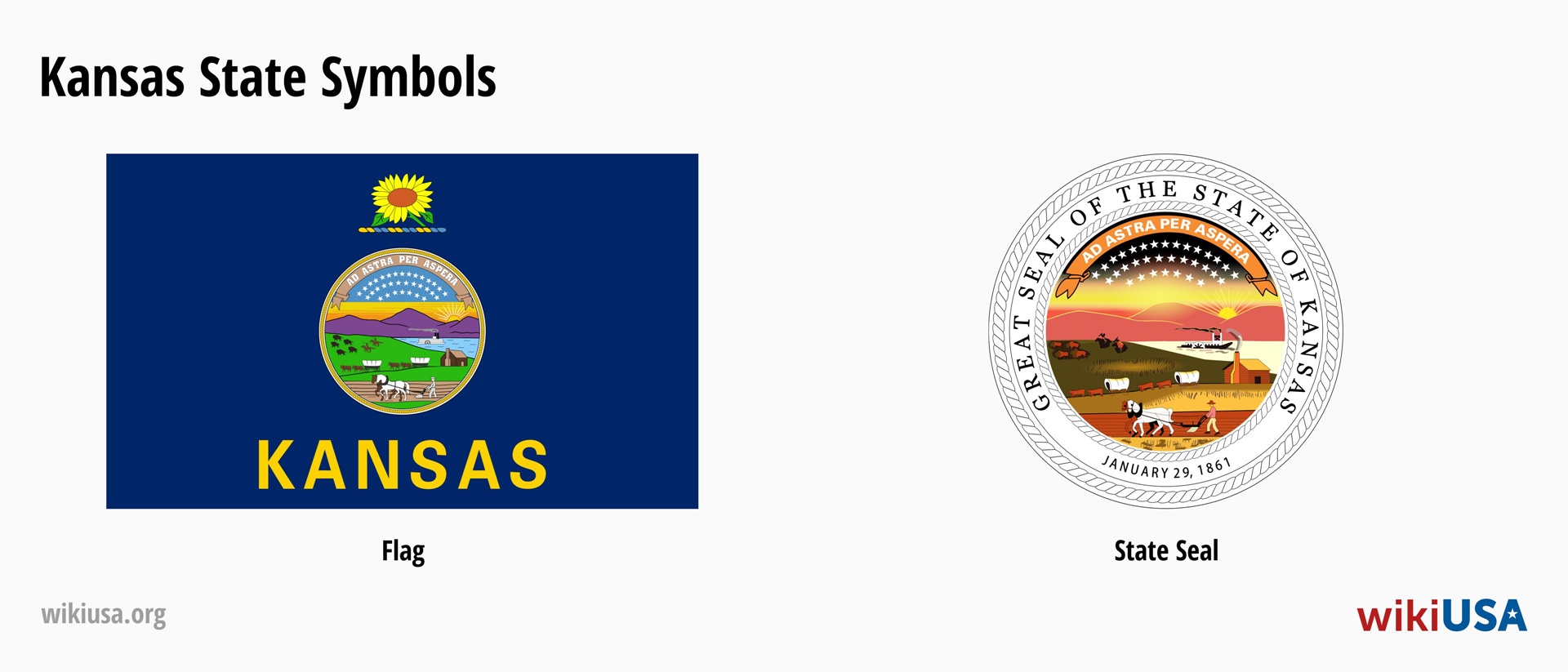
Kansas is known as the Sunflower State because native wild sunflowers (Helianthus annuus) grow abundantly across the plains and prairies of the region. The native sunflower was officially designated as the state flower by the Kansas Legislature in 1903 and serves as a prominent symbol on the state flag.
What is the capital of Kansas, and when was it established?
The capital of Kansas is Topeka, located in Shawnee County along the Kansas River. Topeka was founded in 1854 by a group of anti-slavery settlers and was chosen as the state capital upon admission to the Union in 1861, edging out rival cities like Lawrence and Lecompton.
What role did Kansas play in the Civil Rights Movement?
Kansas was the epicenter of the landmark 1954 U.S. Supreme Court case Brown v. Board of Education of Topeka. This historic ruling declared racial segregation in public schools unconstitutional, overturning the "separate but equal" doctrine established by Plessy v. Ferguson in 1896.
How does Kansas rank in national wind energy production?
Kansas ranks among the top states in the United States for wind energy potential and actual generation. Due to its consistently windy, flat terrain across the western and central plains, wind turbines generate a significant percentage of the state's total electricity, making it a leader in renewable energy adoption.
Is Kansas primarily a rural state?
While Kansas has a strong agricultural identity and numerous rural counties, a majority of its population resides in urban and suburban areas. The primary population centers include the Kansas City metropolitan area (specifically Johnson and Wyandotte counties), Wichita, Topeka, Lawrence, and Manhattan.
Next Steps for Researchers and Visitors
For those looking to explore Kansas further, engaging with official state resources provides the most accurate and up-to-date information. Travelers should consult the Kansas Department of Wildlife and Parks for state park recreation guides, while historians and researchers can utilize the resources of the Kansas Historical Society for primary documents concerning territorial settlement and the Civil War era.